blog
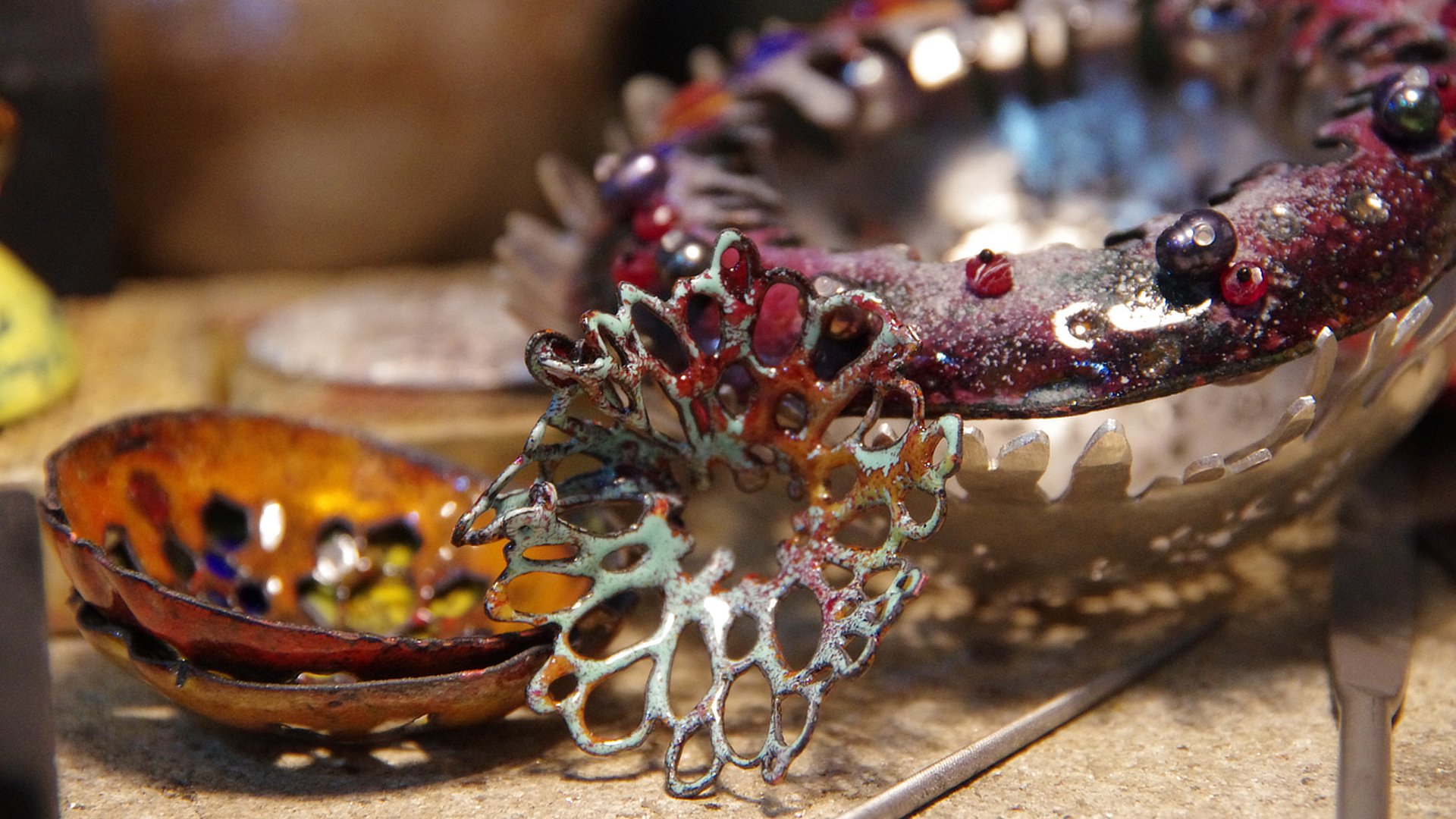
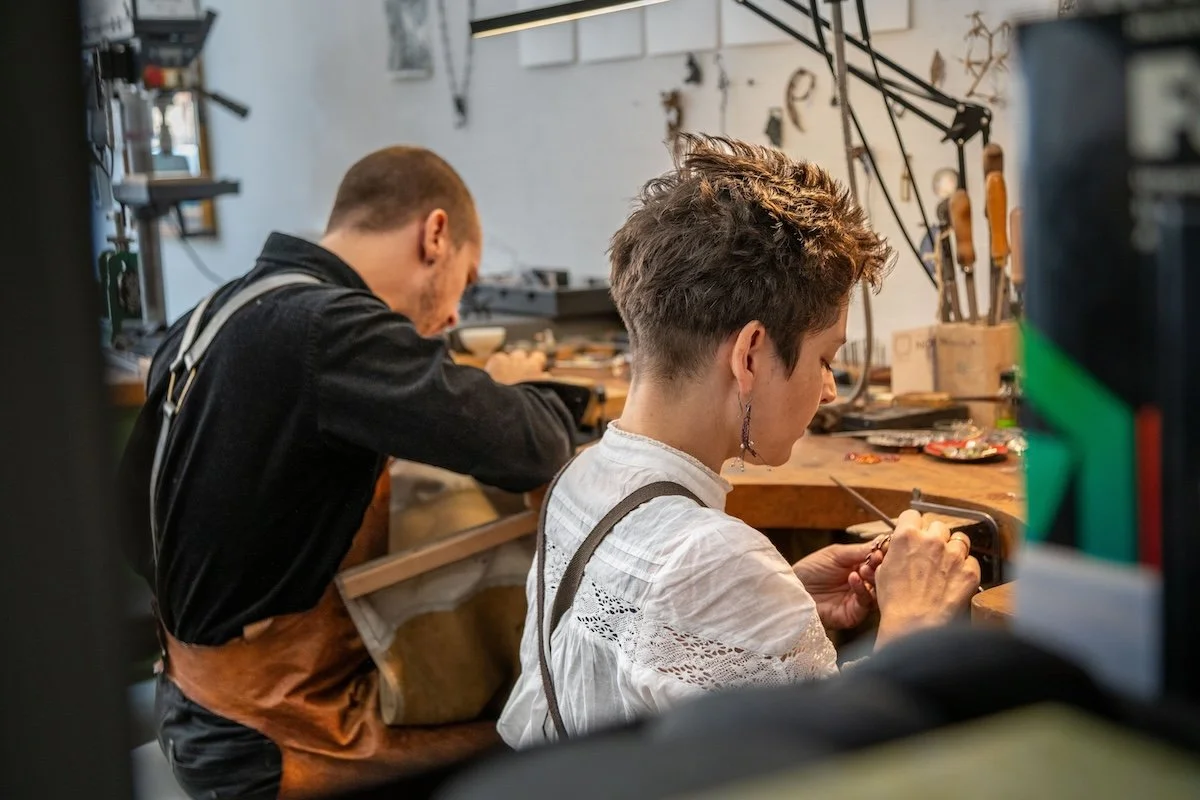
Welcome to my blog. This is a place where I think out loud, show you what I’m up to in the studio, share impressions of inspiring events or everyday moments that moved me. Some entries are carefully curated essays, others are just a few thoughts, sometimes written in English and sometimes in German.


Featured posts
newest blog entries:








FULL BLOG:
An Attempt at the Autumnal Garden
The spectacle of autumn is overwhelming in its urgency and intensity, pushing me to sculpt words around experiences - although I know how every attempt to render that deep, tearing honey-sweet pain of autumn into text will always feel insufficient.

An Attempt at the Autumnal Garden
Musings and meanderings concerning autumn.
Written in English.

Snapshot of a shrivelled rose along my path.
The spectacle of autumn is overwhelming in its urgency and intensity, pushing me to sculpt words around experiences - although I know how every attempt to render that deep, tearing honey-sweet pain of autumn into text will always feel insufficient.
For a while, I have felt mute; busy, perhaps too overwhelmed with all the bits and pieces of my everyday life to really manage deep-thinking-writing time. But now, with the beauty and brevity of these golden weeks so palpable, I feel I have no choice but to carve out a few hours to think on paper.
My work centres around in the inner Garden (which I think of in capital letters), embedded in humanity’s collective being, and around all the metaphors attached to this image, such as the idea of paradise. Autumn means death in the Garden. And it is a conscious, flamboyant kind of death.
Every year, I’m swept off my feet by the emotional force of it all, the luminosity of the colours, the shrivelling rose hips and un-picked blackberries, the darkening edges around leaves, the slow creeping of yellows into greens, and oranges into yellows, the evening cold, the sunset pinks, the slanted light, the confused crocus I discovered on a walk, the wild apples and walnuts crowding the riverbank.
It’s harvesting time. Time to collect, time to roam the fields, to follow those small winding paths along the river to look, look, look at the world, observe nature with your entire being; time to absorb the colours and store them deep in your soul for later.
It is also a time for a strange kind of pain, a time for a conscious contemplation of death. Every exquisite yellow leaf is a slither of lived life, a slice of death; it will be decaying soon, magically broken down into its components by fungi, bacteria and other precious agents of change. But it will also be a leaf-shaped space for something new in this world, next year, in the next cycle. It will be transmuted, made into nutrients for other life forms. It is given freely.
We humans are astonishing creatures. I believe that we have the unique ability to hold paradoxes in our mind, and this balance of seemingly irreconcilable opposites is exactly that place where our humanity flourishes. It’s that moment of inner freedom, where we are detached enough not to succumb to self-pity and emotional enough to feel real empathy, where we hold birth and death, joy and sorrow in one and the same space, with grace and dignity and (self-)love. This is my ambition for these upcoming weeks: practising to hold that difficulty within myself, being a witness, becoming really comfortable with paradoxes.

Here, in this moment of joyful pain, and melancholy gratitude, I think there is a grand lesson to be learned from nature. The search for a good life is closely tangled into the search for a good death. Death looming, invisibly and inevitably, is the most life-affirming impulse there is. It transmits the urgency of living in imperatives: Do! Make! Craft! Love! Fall! Build! Dream! Cry! Bleed! Share! And if I may, when my time comes, face my own death with the graceful surrender of the Autumnal Garden, it would be a good death.
Below are the manifestations of my wanderings and wonderings in the fields and forests around my (still-new) hometown of Bamberg, observing the close-knit fabric of nature, watching the wildflower calendar carousel through the seasons, and the yellowing of the forest, the migration of birds. By collecting, composing and creating, I attempt to channel my emotions into this visual Garden.
Above:
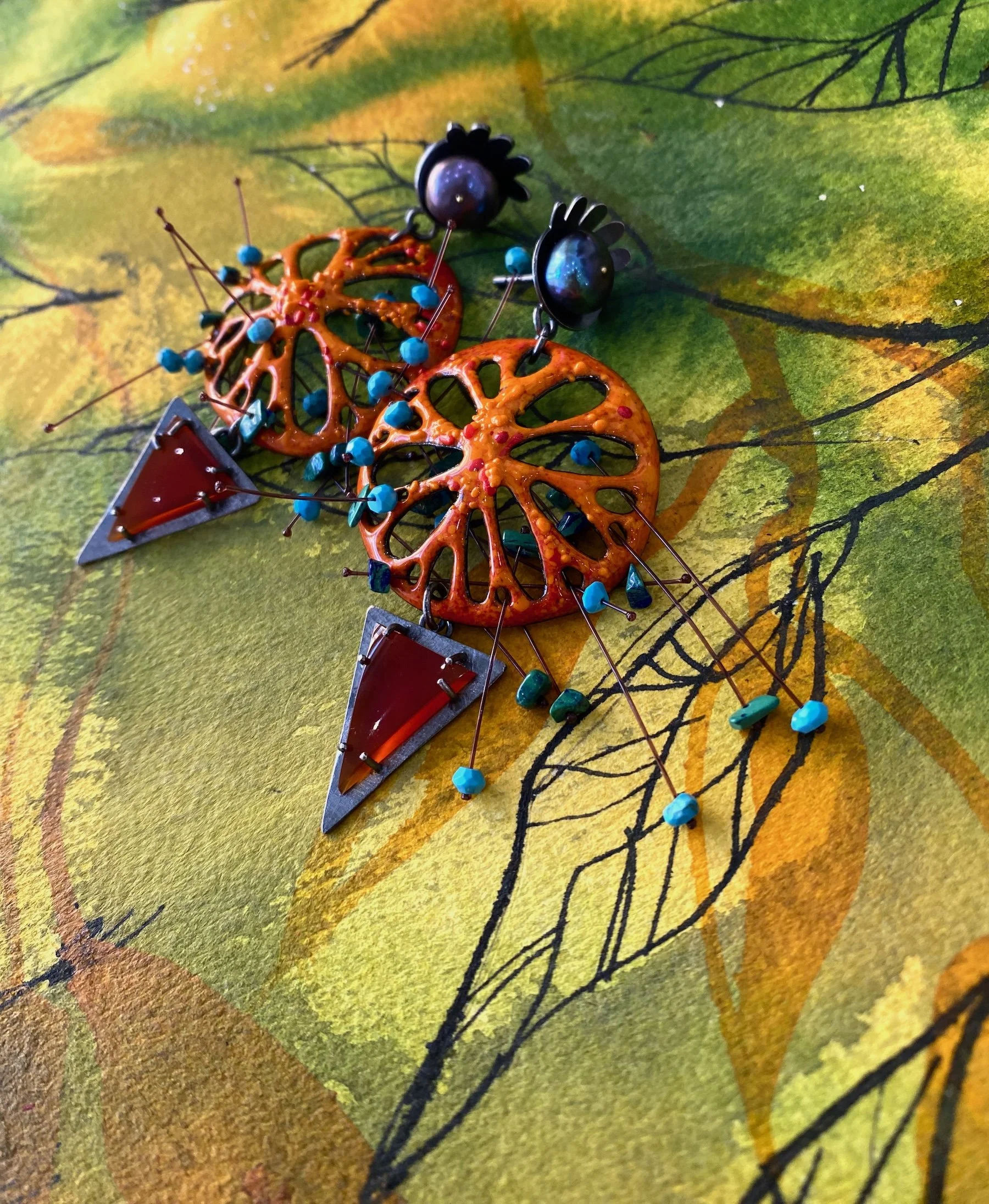
SPATTER: DEEP FOREST, available here. Enamelled statement earrings housed in a watercolour painting. With my overgrown forest landscapes I'm creating a dense, imaginary jungle of shapes and colours and symbols that draw the viewer into its thicket. It's all about the complex garden we carry within ourselves, the ambivalence of our souls - cultivated and wild, dangerous and gentle, a space that is hazardous and safe at times, both present in the now and eternal, both human and divine.
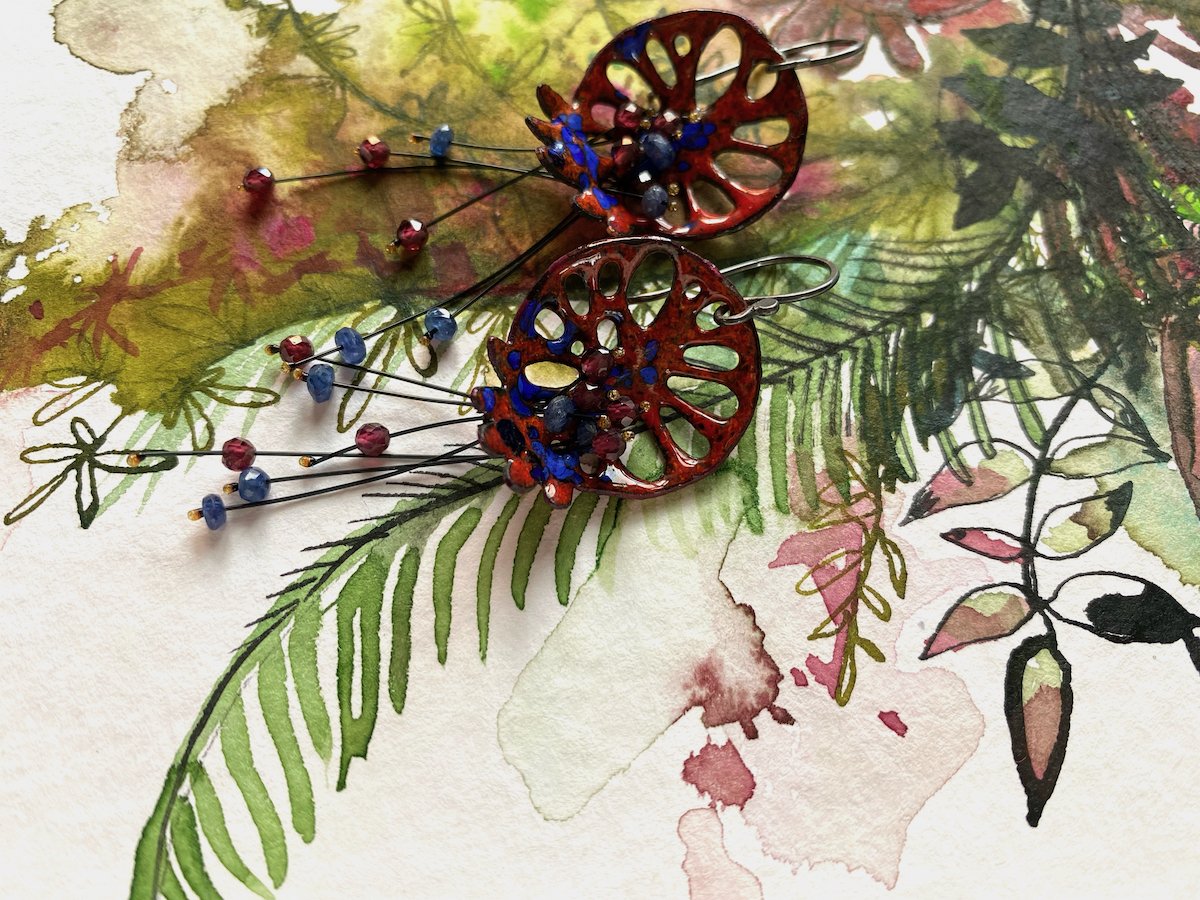
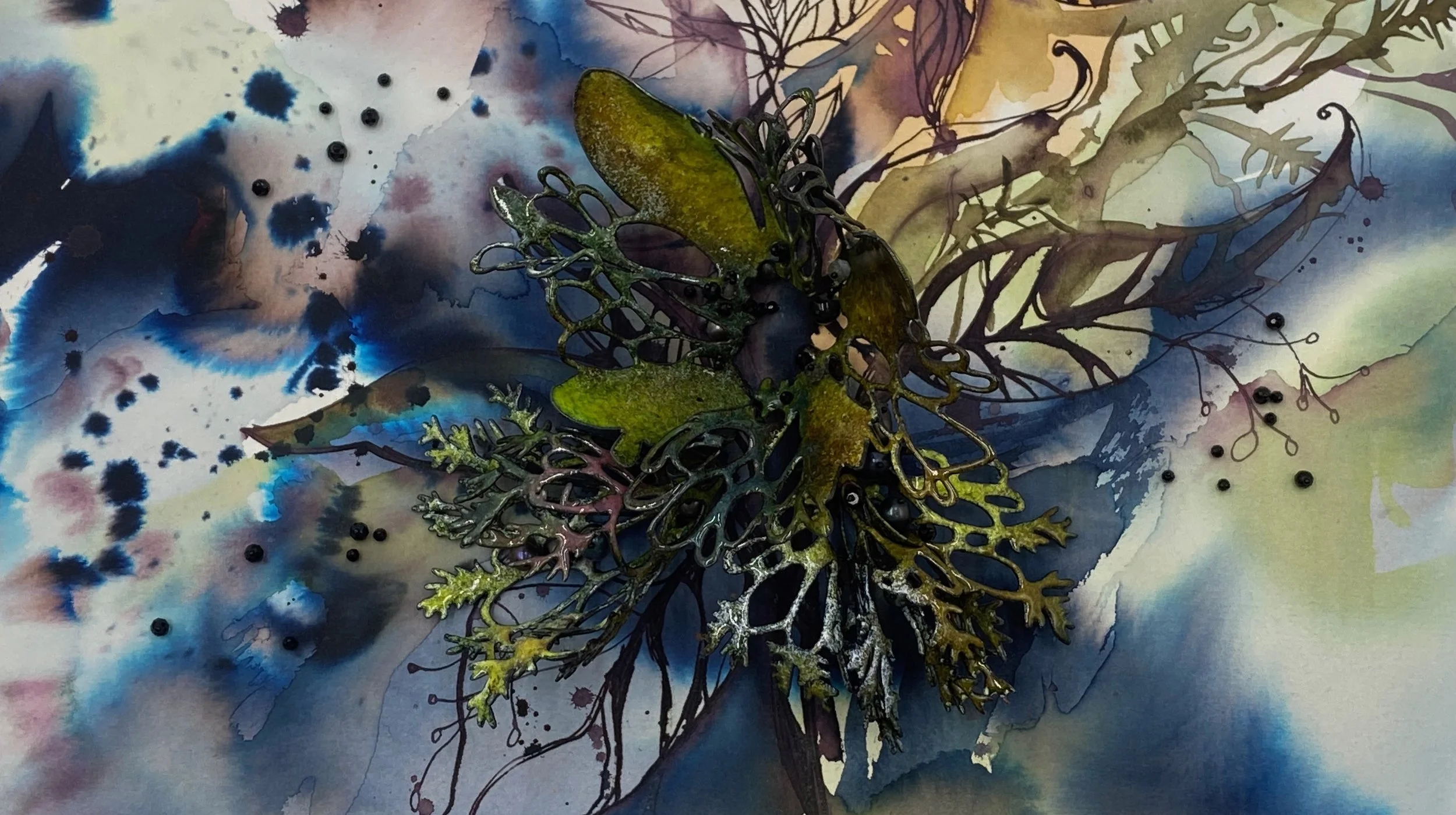
Detail of SPATTER: DEEP FOREST; see the entire art work above.

UNDERGROWTH, an impression of a walk by the river. Watercolour, ink & beeswax painting - available here.

This is harvesting time. Finding patterns, colours.

Still clinging, surrounded by siblings.

BOTANIST’S HALF-DREAM JUST BEFORE DAWN, available here in my online-shop or at the studio in Bamberg.
Statement neckpiece. Carefully kiln-enamelled disks, concave side in a variety of mottled dreamy greens and autumn colours and convex side a deep burgundy red.
Autumn will forever stay the most inspirational season to me. The colours flood me, dominate my mood. I feel as if I'm walking on mottled gold, eating slices of autumn, breathing wild-grapevine-purples and falling asleep into a sea of oranges at night. Colour buoys me up, and seeps out of me into my work.

GREEN LEAFEATERS. Bright statement earrings.
My LeafEater series is inspired by the intricate patterns on leaves left ravaged by hungry insects. As I paid closer attention, I noticed how different plants attract different predators, and how they each have their unique patterns. Like most humans, leaves are comparable, but never ever actually the same. In an attempt to get to know one leaf intimately, I play with these patterns, subtle colours, jagged edges, and lace-like cutouts. Each leaf is hand-sawn and kiln-enamelled.

Above:
SAFFRON POMEGRANATE, available here. Pendant showing off the marvels of enamelling as a contemporary jewellery technique.
These abstracted pomegranates are vibrant fruit stolen from an imagined paradise, a garden of dream-like spaces and lost mythological treasures. Wear them to carry a small token of Persephone, the goddess of springtime, vibrant botanicals and the dark underworld.

HEDERA, statement earrings. Enamel on silver, silver hook, faceted pink garnet drops.

A CONSCIOUS GARDEN, being assembled on my jewellery bench.

Dog roses, mummified memories of last summer.
NONNE 11: A NEW CREATIVE HOME
I have a vision for this studio: This will be a space that allows me to continually stay curious, to keep exploring, to blur the boundaries of my different modes of making and to become a nexus of connectivity for other creative souls. I want this space to feel interesting, inspiring and safe to those who visit us. A space where my partner and I can live out or contribution to the world, where we can hand-craft unique pieces that will add value and meaning to people’s lives.

NONNE 11
Finding a new studio, a new creative home.
Written in English.
It’s May, and Bamberg has risen from hibernation. Branches are suddenly clad in luminous green; red-tipped brambles and roses are competing for space on the riverbank, racing towards bloom in an explosion of life and energy. Crowds are thronging their way through the market stalls, small beer-drinking groups scattered along benches and railings just people-watching.
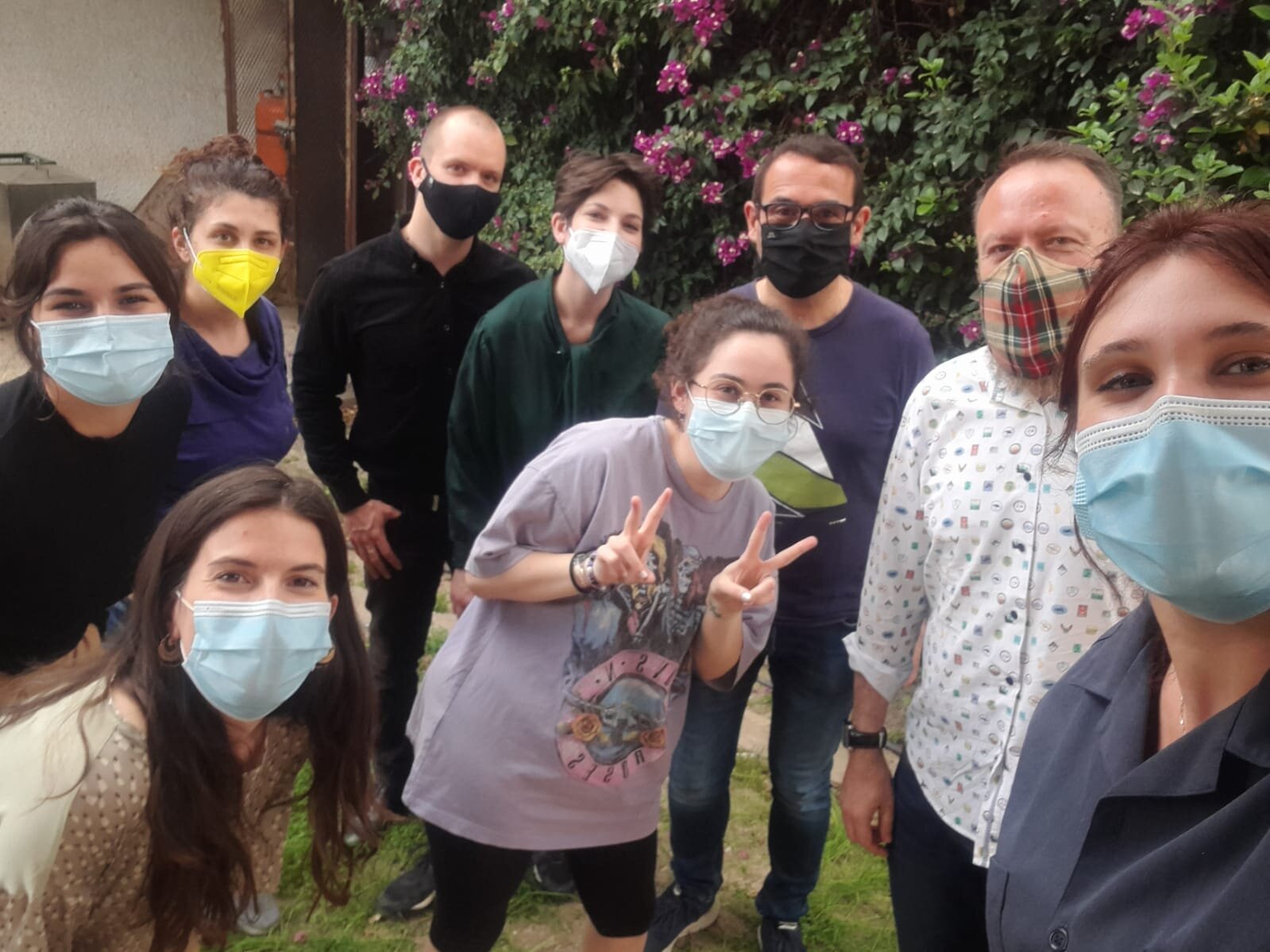
The obligation to wear masks outdoors in the city centre has been lifted a few days ago, and our faces feel strangely naked and unprotected from sunlight. Over these few months, un-masking one’s face has become an intimate act somehow, a revealing of a slither of self that was hidden before. I won’t miss the wearing of masks, but I might miss that strange thrill of seeing the lower half of someone’s face for the first time, making a half image whole, often in surprising ways.
My twenty minute walk to the new studio is lit by the chestnuts’ generous cream-coloured candelabras. As my new surrounding crystallise into familiar paths and structures, I can feel myself easing into this space. After months of renovating, building things and managing temporary situations, with an excess of uncertainty about life in general, I am slowly beginning to feel more grounded. With that, there is a sense of inner opening, a tightness released in my chest, with a gushing stream of creative ideas pouring out.

It’s impossible the capture the canopied ball-room feeling of standing under a flowering chestnut tree, all perfect and new in spring, untarnished by the spotty brown deadness of chestnut blight that will appear later in summer.

Alvaro embarking some ceiling painting wearing the most amazingly horrible orange t-shirt imaginable, the type of clothing appropriate for this kind of messiness.

Sugar candy houses on my way to the studio. Here, the magnolia in all its stateliness is still in flower; now towards the end of May it’s long wilted and greened.
Once again – because realisations return in a cyclical way - it is just so clear to me how stress is an absolute killer for creative output. And another thing: Home is where I can express my true self safely and creatively.
Whether this refers to a physical space, a corner in my apartment, a relationship, or a larger geographical area: Home is where I feel unguarded enough to unlock those inner sluices of creativity. Then, I can use that energy to sustain myself, to manage stress in a healthy way, to have each breath reach deeper filling up my entire lung capacity, and ultimately, to flourish as a human being.
With this new studio in Bamberg, a new home is born. It is by far the most spacious, light-filled and personally meaningful studio I’ve ever had, mostly because I have been able to co-create this one from scratch.
The studio space, nicknamed NONNE 11, will officially open its doors on the 18th of June, ready to embrace summer in its full force. To celebrate this significant step with us, have a look at my calendar for dates, the location and Covid-19 details.
While my path has been windy and unforeseeable up to this point, I certainly think there was a direction to it; it’s as if I am following a scent trail, invisible but clearly intuitable. Opening my own studio-gallery – and in such a stunning location - is a truly important mile stone on that windy path, and while I don’t know what the future holds, when we can travel and trust strangers again, how long this moment will last and how exactly we will make this project work, this is the right place to be now. This is where I will plant my feet, create, build, connect, love, be present and bring my energy to now. Over time, I am sure the studio will take on a life of its own - you can follow our stories and events here.
This will be a space that allows me to continually stay curious, to keep exploring, to blur the boundaries of my different modes of making and to become a nexus of connectivity for other creative souls. I want this space to feel interesting, inspiring and safe to those who visit us. A space where my partner and I can live out or contribution to the world, where we can hand-craft unique pieces that will add value and meaning to people’s lives. A space to practise emotional articulation through art, both to improve my own being in the world and to touch the lives of others.

Just around the corner from the studio, next to the Regnitz river, there’s a perfect picnic spot for spring lunches.

Rivers and canals mark this area of Bamberg, and our studio is built on an island inside an island. The canal sides are worn and picturesque and make me want to lie down on the lychen-covered stones.

A favourite lunch spot opposite a steep set of stairs leading up the hill. There’s a ferry, which seems to operate occasionally although I’m not aware of any discernible schedule.

Our workbench, massive and heavy, the most difficult piece of furniture to move by far. This will house a parade of power tools when everything is installed.

The studio: A space of possibilities, to be filled with ideas, events and droplets of everyday living.
Sea Salt & Enamels: A Teaching Experience in Murcia
An enriching teaching experience at the Escuela de Arte de Murcia in Spain.
Teaching in Murcia
A teaching experience in the South of Spain.
Written in English.
Travelling during pandemic times is difficult, if not outright impossible. Usually, my job involves a fair amount of travelling and with that, the vibrant and joyful exchange of sharing a common passion in different cultural environments.
With those pale Covid-months stretching across a barren 2020, with no exhibitions, craft fairs, symposiums, workshops and other events to participate in, I feel almost starved of the exhilarating opportunity to exit my own bubble and taste some other reality elsewhere. Travelling, and more importantly, in-person contact with other creative minds, has become so rare that its value has increased dramatically.
So, an opportunity to teach a five-day enamelling workshop at the Escuela de Arte de Murcia this past week was a welcome and precious gift. The school, which actively encourages students to travel internationally via Erasmus exchanges and offers Erasmus staff mobilities to teachers and lecturers, focusses its jewellery course on contemporary art jewellery, especially exploring alternative materials and new techniques. In the midst of our bleak and never-ending lockdown, the jewellery department reached out to me and my partner Alvaro to travel to Murcia via an Erasmus mobility grant and teach a workshop there respectively; Alvaro’s course centring around creative wax modelling techniques for casting, and mine exploring a more experimental and perhaps intuitive approach to enamelling.
The region of Murcia is situated in Southern Spain, bordering Valencia and Andalusia, with the Mediterranean Sea to the East. Travelling to this light-bathed, unknown spot of land really did something for our souls – for both of us, there was an immediate shedding of the darkness that had muted our efforts to create something wholesome and bright during the winter.
Alvaro’s workshop explored a range of different wax-working techniques, starting with several distinct kinds of modelling wax with their own unique purpose each, and becoming more experimental with the inclusion of plastic objects and organic materials, emphasising the particular preparation of dried plant parts to enable proper casting. The workshop combined all these different wax-working techniques in a final project: creating a modern chimera, an imaginary beast, a creature of all walks of life giving voice to any pluralistic interpretation the students wished to express.
My workshop expanded on basic enamelling techniques with an experimental approach, starting with easier techniques such as dry-sifting and layering enamel, and working towards more complex techniques using vitreous enamel, foil or graphite. Finally, the course encouraged participants to create completely unique and often surprising enamel effects using sand, aluminium, fine silver, organic materials to burn in the kiln, or anything else that might cause a chemical reaction with interesting results during the firing process. The students were tasked to identity and express a particular emotion in their final pieces, one that no single word exists for and that can only be described by explaining the situation it is experienced in. The spectrum of emotions presented in the end – many of them dealing with our current Covid-19-situation – revealed just how rich and varied the scope of individual experiences can be.
To teach a alongside my partner Alvaro was a unique gift in itself. Even though we both have a history of diverse teaching experiences, this was the first time for us presenting workshops side by side, being able to discuss the studio set-up, the coherence of our planned activities, and the progress of our students. There was a sense of intense, creative flow, in unison. The tapas bar nights and extended walks through the city of Murcia were filled with conversations, ideas, plans for future projects. The unbelievable food experiences here were certainly also responsible for our enthusiasm: Tomatoes that tasted of ripe sun, and perfect olives, and the most exquisite fried octopus, sea food paella, oranges that were so fresh you could smell them from across the street, and everything augmented by the most umami sea salt (which is produced in this area of Spain near Cartagena) and toppiest top quality olive oil.
We vowed to find new way to keep chasing this positive energy and vibrant life force we felt here, not to allow others with a more negative disposition to drag us down back home.

An outing on the weekend to the beautiful Ricote Valley near the city of Murcia: Alvaro in an orchard of peach trees.

We began our workshops with a presentation of our own backgrounds, our work and its philosophical underpinnings.

Alvaro explaining different wax samples and their different uses.

It was incredibly rewarding to see the students become more and more bold and experimental in their work during my workshop.

Final presentation: The students show and discuss their test plates and final pieces.

Caught mid-explanation: Although the language barrier proved to be quite a challenge, we managed to explain, describe, translate and generally communicate in the most creative way. Definitely a rewarding and mind-expanding experience.

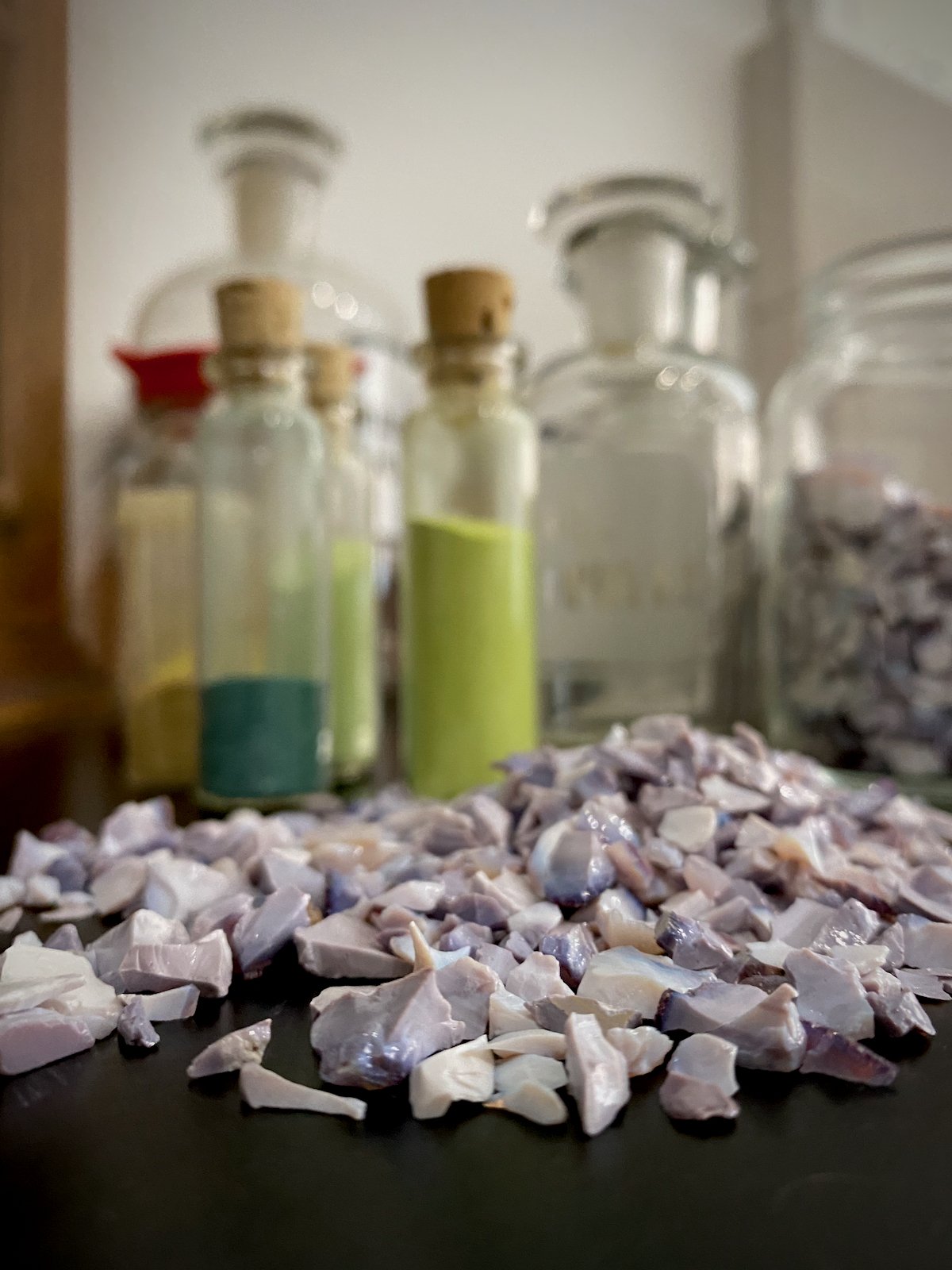
My wonderful course of second years for this workshop: On the far right is the jewellery department’s coordinator Noelia García Gallego, on the far left Verónica, who will visit my workshop as an Erasmus intern for two months this coming summer 2021.

Our workshops were followed by a boat trip on the river, organized by the school and our kind Erasmus coordinator, Rocío. Jakaranda trees, Oleander, figs and Tipuana tipus crowded the streets and brought back tender memories from my childhood garden in South Africa.

A local fresh produce market in Murcia, where every vegetable stall seemed to have at least sixteen different types of tomato for sale.
Blätterfresser
Die Blätterfresser erzählen vom tödlichen Leben, vom lebendigen Sterben. Sie erinnern daran, dass nichts ewig ist, und doch alles immer wiederkehrt. Daran, dass auch wir Narben und Fraßspuren sammeln, die oft nur den Überlebenswillen anderer Wesen auf unseren Körpern und Seelen markieren.

BlätterFresser
Die Geschichte meiner BlätterFresser/LeafEaters Kollektion.
Auf Deutsch.
Auf dem Unikampus, den ich täglich überquerte, entdeckte ich eines Tages eine Hecke mit von Insekten zerfressenen Blättern. Die löchrigen Fraßkanten bildeten ein filigranes Muster, das gleichzeitig von Leben und Tod erzählte. Manche Blätter zeigten nur ein paar verstreute Löcher wie zufällig fallen gelassene Perlen, andere waren bis auf ein Skelett abgenagt. Die Fraßspuren wurden beim längeren Hinsehen zum sich wiederholenden aber doch immer neu ausgeprägten Muster, zum Ornament.
Hier waren zwei Lebenswillen ineinander verzahnt: Ein kleines Knabberwesen auf der Suche nach Nahrung, und ein größeres Pflanzenwesen auf der Such nach Licht. Ich sah ein für unsere menschlichen Ohren stilles Drama, eine Geschichte von Geben und Nehmen und Überleben, vom Trotzen. In einer Zeit in der ich mich selber manchmal etwas un-heil fühlte, war ein Blatt, das Verletzungen wie Schmucknarben trug und doch lebte und funktionierte und photosyntierte, für mich ein starkes Symbol.
Ich schuf daraus die Kollektion Blätterfresser: Ohrringe, Broschen und Taschenglücksbringer, handgesägt aus Silber, Gold oder Kupfer, in bunt schillernden Farbtönen einzigartig emailliert. Bis heute sind viele Stücke für diese Kollektion entstanden, und jedes einzelne hat einen ganz individuellen Charakter.
Die Blätterfresser erzählen vom tödlichen Leben, vom lebendigen Sterben. Sie erinnern daran, dass nichts ewig ist, und doch alles immer wiederkehrt. Daran, dass auch wir Narben und Fraßspuren sammeln, die oft nur den Überlebenswillen anderer Wesen auf unseren Körpern und Seelen markieren.
Mit meinen hellgrünen Blätterfressern aus Gold und Emaille fühle ich mich stark. Sie erinnern daran, dass wir durch unsere löchrig gefressenen Lebensgeschichten manchmal sogar schöner, interessanter und vor allem eigener werden.

Eine Auftragsarbeit entsteht: Rote Blätterfresser als Anhänger, hier durch eine passgenaue Silberrückseite verstärkt, um das Emaille zu schützen.


Winzige fliederfarbene Blätterfresser mit Rubinen und schwarzen Süßwasserperlen auf dem Werkbrett; darüber verschiedene Arbeiten im Entstehen.

Hier eine Variante in leuchtendem Grün, verspielt und lebendig, mit facettierten Smaragdperlchen, Goldblättchen und Perlen vervollständigt.

Die von Hand gesägten Blätter werden versäubert.

Persönliche Lieblinge aus Gold und grünem Emaille, hier von Lydia Schröder fotografiert.

Das grüne Lieblingspaar auf einer Tusche- und Aquarellzeichnung.

Spätsommerliche Blätterfresser mit herbstlichem Einschlag.

Eine festlich gekleidete Trägerin mit ihren lila-rosé-bordeauxfarbenen Blätterfressern.
Das Sieb für Ängste
Ich wollte wissen, wie Angst unterm Mikroskop aussieht. Wie soll man sich Angst überhaupt vorstellen, was ist das eigentlich? Ich stellte sie mir als kleine Körner vor, die sich zusammenklumpen und sammeln, Angstkolonien bilden können. Oft, fand ich, ist die wahre Angst noch von einer schwammigen, schemenhaften Masse von Ungewissem umgeben. Eine algenartige, undurchsichtige Angst-vor-dem-Unbekannten, eine klebrige Angst-vor-der-Angst, die schwierig zu fassen ist und manchmal sogar bedrohlicher als die eigentliche Angst selbst.

Ein Sieb für Ängste
SCHMUCKSTÜCKE UND IHRE HERKUNFTSGEDANKEN.
Auf Deutsch.
Ich wollte wissen, wie Angst unterm Mikroskop aussieht. Wie soll man sich Angst überhaupt vorstellen, was ist das eigentlich? Ich stellte sie mir als kleine Körner vor, die sich zusammenklumpen und sammeln, Angstkolonien bilden können. Oft, fand ich, ist die wahre Angst noch von einer schwammigen, schemenhaften Masse von Ungewissem umgeben. Eine algenartige, undurchsichtige Angst-vor-dem-Unbekannten, eine klebrige Angst-vor-der-Angst, die schwierig zu fassen ist und manchmal sogar bedrohlicher als die eigentliche Angst selbst.
Mitten in der Pandemie merken wir umso mehr, wie diese schleimige Schlammschicht aus Ungewissheit um uns herum wächst und alles zu verschlingen droht. Die verschiedenen Ängste verschiedener Menschen geraten hier deutlich in Konflikt miteinander.
Um an den Kern der Angst zu kommen, müsste man sie irgendwie säubern, fand ich, sieben, entschlacken. Wie ein Goldwäscher, der den Schlamm geübt in sanften Kreisen ausspült, bis nur noch die glitzernden Nuggets am Boden übrig bleiben.
Dazu fertigte ich also ein Sieb für Ängste. Eines der ersten Siebe war für meine Freundin Nicola, die damals in Shanghai lebte, wo die Welt manchmal überwältigend groß und weit und bedrohlich sein konnte. Das Sieb, in filigranen Mustern handgesägt aus Silber und anschließend magisch-schillernd emailliert, lässt sich als Anhänger tragen, Talisman und Werkzeug gleichzeitig. Dieses besondere Sieb birgt einen großen, tief tannengrünen Turmalin in seinem Innern. Denn der Kern der Angst, wenn man sie entschleimt und entschlackt und von aller schmierigen Ungewissheit befreit hat, stellt sich oft als kleiner Schatz heraus. Wenn wir beispielsweise Angst davor haben, jemanden zu verlieren, bedeutet das ja, dass diese Person uns sehr wichtig ist. Angst ist also auch – manchmal – eine Kehrseite der Liebe.
Inzwischen sind einige Siebe für Ängste entstanden, manche schlicht, andere aufwändig, als Objekt, als tragbares Schmuckstück, mit Edelstein im Herzen und ohne. Die folgenden Bilder zeigen eine Reihe dieser Seelengeräte, im Entstehen und als fertige Kreationen.

Nicolas Sieb für Ängste, im Entstehen. Der Stein soll hier in Gold mit einer Krappenfassung genau an die richtige spannende Stelle platziert werden.

Hier ist bei Nicolas Sieb nun auch die emaillierte Oberseite fertig, die von der filigran handgesägten Unterseite aus Silber gehalten wird.

Nicolas Sieb für Ängste an seiner Trägerin.

Ein Sieb für Ängste als Objekt. Das Sieb selbst besteht aus unzähligen zarten Blätteröffnungen, die wie eine Verwirbelung von verstreuten Zweigen ein Muster bilden. Gerahmt wird das Sieb von einem Ring aus rosa-grauem Emaille mit Akzenten aus Rubin und schwarzen Süßwasserperlen.

Detailaufnahme. Hier sind die magischen Sprenkel der Emaillefarben zu sehen, deren geheimnisvolle Entstehung im Feuer mich so faszinieren.

Das Blättersieb im Entstehen: Hier wird als Grundlage eine Schale aus einer Scheibe Silberblech aufgetieft und anschließend planiert.

Grünes Sieb für Ängste mit geschwärzter Silberfassung.
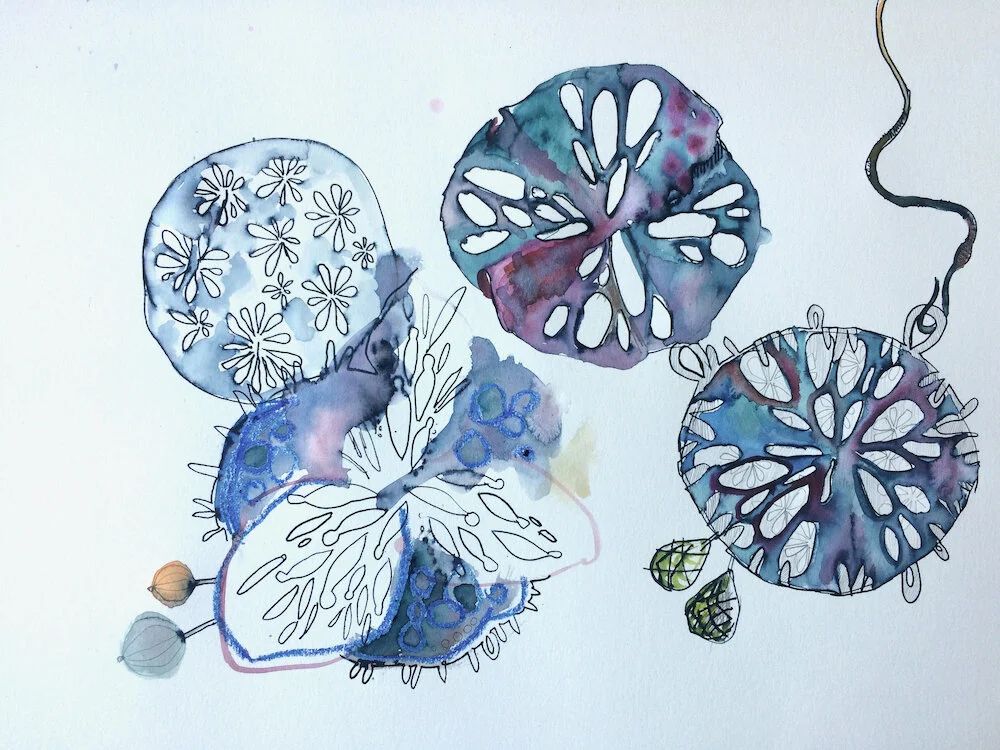
Entwurfszeichnung in Tusche, Aquarell und Wachsstift.

Ein vollständig emailliertes Sieb für Ängste. Durchmesser der Schale ca. 13 cm.

Für jedes Sieb wird ein einzigartiges Muster von Hand ausgesägt. Dafür muss jede Öffnung erst vorgebohrt und anschließend individuell mit der Handsäge ausgestochen werden. Zuletzt werden die Öffnungen mit winzigen Feilen versäubert und entgratet - eine Arbeit, die viele Stunden in Anspruch nimmt.

Sieb mit floralem Thema aus Silber.
Amphibian Living
But I have to admit: Personally, I feel a huge Munich-Jewellery-Week-shaped hole in the universe. There is something missing. What about all the energy? The field of art jewellery heavily relies on tactility, and it is incredibly difficult to fully appreciate these complex, three-dimensional art pieces on a flat screen or page - these pieces that often surprise us with a unique texture, an unexpected juxtaposition of materials that we simply can’t “get” without seeing (and sometimes touching) the real thing.

Amphibian Living
Thoughts on Munich Jewellery Week, jewellery in a digital world, and translations between spheres.
Written in English.
These past few weeks, I have been very preoccupied by thoughts about art jewellery in a digital future. How can tangible objects, made of “real” materials in the “real” world and defined by their relationship to the body, be translated into a virtual sphere? Can we have virtual bodies? And can jewellery exist on our screens and in our imaginations only?
I have no answer; these questions crowd my brain as I try to fall asleep at night, making me wonder about the future of my art and craftsmanship in a world that has been catapulted into digitalization by Covid. In Germany alone, some companies have leapt ahead five years in a only couple of months, others still send faxes and prefer to be paid in cash. This is no judgement, just a statement. Even looking at my own group of friends, colleagues and clients: Some are talking about NFTs, others refuse to utilize the internet. I believe that there is power in being fluent in the analogue as well as the digital sphere, a sort of amphibian in a changing world. It’s truly exciting to be alive in such times, feeling the shift beneath my feet.
To me, it’s also exciting to be faced with such an unknowable future – really, the only thing we can say for sure is that the future will be utterly, unimaginably different from our pasts. I don’t think we even understand how different life will be thirty years from now.
Meanwhile, Munich Jewellery Week has come and gone, the event obviously having been cancelled due to our current Covid-19 restrictions. Some institutions, groups and individuals have attempted to take the event online, hosting discussions, virtual exhibitions and talks, and distributing print magazines, most notably Current Obsession with their compendium of jewellery-related articles and editorials in this year’s Munich Jewellery Week 2021 edition.
But I have to admit: Personally, I feel a huge Munich-Jewellery-Week-shaped hole in the universe. There is something missing. What about all the energy? The field of art jewellery heavily relies on tactility, and it is incredibly difficult to fully appreciate these complex, three-dimensional art pieces on a flat screen or page - these pieces that often surprise us with a unique texture, an unexpected juxtaposition of materials that we simply can’t “get” without seeing (and sometimes touching) the real thing. More than that, these art pieces are exquisite little storytelling worlds that exude their own energy field, a mysterious force you can only feel when face to face with the piece.
I like to think that it’s not only the energy of the materiality that we feel, but the fact that it was hand made by a human being. You can detect the invisible human traces on it, the indistinct web of criss-crossing micro-movements of a highly skilled artist. It reflects the imprint of this particular artist’s visual language. Compare this to the image framed by your laptop’s silver screen (or perhaps even spiderwebbed by your broken smartphone display). While a jewellery piece is arresting and intriguing on the screen, it is not fully comprehensible in the same way.
So how can we, I wonder, learn to speak these two languages with the same fluency? How can we translate the tangible 3D into the digital? Should we even? How can makers use digital possibilities to amplify their stories, and analogue techniques to create an imprint of their being that will touch us emotionally on a level that digital art cannot? I do think we are moving into a world where neither one of these realms of being can do without the other. How can we become amphibians in this sense?

My POMEGRANATE FANTASY brooch in an imaginary orchard created by illustrator Benjamin Langford, featuring jewellery by Vika Tonu, Birgit Wimmer, Suyu Chen, Marina Voronina, Barbora Lexová, Anne Irving and Emma Rose Bennett, Geesche Arning, H2ERG, Arielle Brackett, Linsey Fontijn, Mercedes Palmer-Higgins, Dawoon Jeong, Cecilia Kesman, Idil Laslo, Mariangela Jewellery London, Zsófia Neuzer, Mayumi Okuyama, Dorothea Schippel, and Larissa Thiel.


My Otherbirthday
To say that those initial six months changed me is a gross understatement. The experience distilled my life in an instant, it filtered out a lot of bullshit. It is the single best thing that has ever happened to me in my life so far.
I think for my tenth anniversary it’s worth delving into the details of what this experience brought to life, got rid of, and how it has shaped my life for the better. Here are some of the thoughts I became aware of, as I dug deeper, and some of the learnings I took from it.

My Otherbirthday
Today I am celebrating my tenth otherbirthday. A day that’s been a silent private celebration up to now. It’s probably more important than my conception or my actual birthday, when I came into being, because out of this experience I am beginning to extract my purpose.
Written in English.
Today I am celebrating my tenth otherbirthday. A day that’s been a silent private celebration up to now. It’s probably more important than my conception or my actual birthday, when I came into being, because out of this experience I am beginning to extract my purpose. Despite its significance, I have never written about my otherbirthday in much detail publicly.
To be honest, I never had the right words to write about it. I’m not sure I have them now, but the time feels appropriate to share something so personal. We don’t only need to allow more emotion into our worlds, we need to learn to hold our emotions, those of others, to open up, and allow ourselves to be changed and weathered by our circumstances. To me, those who have lost their ability to be moved in life are somehow calcified by bitterness and disappointment, and need a good rinse of joy, like my coffee machine every couple of months.
On this day, ten years ago, I woke up in an ICU ward with no less than seven tubes stuck in my body. As I slowly drifted into consciousness, I became aware that I was incredibly thirsty; there was nothing but thirst, my world was thirst, the scratchiest sand-paper deepest desert thirst you can imagine, but I couldn’t make a single sound to cry out for water because there was a tube stuck down my throat as well.
I was edging back into a kind of awareness of my surroundings, although my vision was blurry with morphine. Ever so slowly, fragments of memory returned. I was waking up from an eight hour shoulder surgery, where an expert team of doctors had cut out my entire left shoulder joint and part of my left humerus, along with a sizeable tumour that had been growing there. They had replaced the bone with an artificial titanium shoulder joint. As I learned later, the procedure had been a little more complicated than anticipated (which was difficult enough); three separate lung emboli had forced the doctors to resuscitate me repeatedly, while I was losing grotesque amounts of blood. It must have been a serious eight-hour battle for those doctors to keep me alive, and I’m grateful to have been unconscious.
Before the operation, I had collected blood from seven different friends and family members who happened to share my blood type: Altogether 5,5 litres of that ultimate talisman, that mythical life force which I imagined flooding my body with their will-power, their strength, their tenacity, their complex love for me.

February 2011, the night of my twentieth birthday. A preciously fierce snapshot showing next to one of the kindest and most beautifully brittle souls I know, dear Louis.
About three months before, in November, just days after my last exam marking the end of my first year at university, I had been diagnosed with an aggressive, fast-growing type of bone cancer in my left shoulder joint and upper arm. An invasion of needles, medicines, poisons, facts, fears, fictions, hopes and strange odours followed. The boundaries between “good” and “bad”, and between “mine” and “not mine” dissolved quickly; the chemotherapy was good because it killed those rampant cells mercilessly, but it was also killing other fast-growing cells. “Cytotoxic,” it said on neon yellow stickers on each gelatinous bag dangling from my drip stand. I lost my hair. It didn’t matter. I lost my teen chubbiness, fifteen kilos in two months, which felt fantastic. I lost my appetite for food, my ability to concentrate, to work towards a larger goal. I lived day by day, eternally grateful for the neat slicing of time into mornings and afternoons and evenings, marked by sunrises and sunsets; a light-filled morning offers a new opportunity, every time. Was I fighting a grand fight? Was I fuelled by anger and a sort of combat-energy? Not really, no. It didn’t feel like fighting anything at all, simply because almost everything took an indescribable amount of effort. To concentrate on a book was an effort, to will myself to be interested in the interestingness of life, to watch a movie, to have a meaningful conversation. I was certainly not joy-less in that time, but filling my day with anything at all was exhausting. Everything was an act of rebellion.
It was both a time of intense aloneness, because I was living through experiences I struggled to articulate to others, and also a time of the sincerest and most intimate companionship I had ever experienced. The fragility you inhabit in such a situation allows for the greatest intimacy imaginable. When you allow others to see you in that bare, broken state, that moment of trembling weakness transforms into sheer strength: When you mobilise yourself to get up from your hospital bed for a bathroom trip, drip stand in tow, and two metres across the room transform into an arduous journey, an adventure almost, stretched over long minutes, and you let someone bear witness to that struggle. I remember feeling a new sense of precious connectivity with my mother, coming back and being a child again, being cared for with so much love, after having spread my wings at university for a year.
The operation to remove the by now grape-fruit-sized tumour was scheduled for the 11th of February. A period of convalescence followed, along with a second cluster of three rounds of chemotherapy. Since 2011, I have had another three shoulder surgeries, each improving on the previous model.
To say that those initial six months changed me is a gross understatement. The experience distilled my life in an instant, it filtered out a lot of bullshit.
It is the single best thing that has ever happened to me in my life so far.
I think for my tenth anniversary it’s worth delving into the details of what this experience brought to life, got rid of, and how it has shaped my life for the better. Here are some of the thoughts I became aware of, as I dug deeper, and some of the learnings I took from it:

2011. A snapshot at my mother’s house, one of those peaceful afternoons, about two months post-op.
1. I learned about facing my fear of pain and of death.
I believe our society (at least in predominantly Western cultures) has unlearned dealing with our own deaths well. We don’t speak about it, so the subject becomes unspeakable. We are all the more afraid of it because of its namelessness. Of course, losing someone isn’t made any less emotional if death is no longer euphemized; on the contrary. But one hopes that because the tempestuous force of death is acknowledged, one is perhaps a little better equipped to face the loss of loved ones and eventually one’s own departure.
Facing my own mortality in such a drastic way mostly killed my own fear of death. The idea of losing yourself, losing that conscious thinking inner voice, of dissolving into particles, can be absolutely terrifying. Something shifted there for me which is almost impossible to articulate. It is as if an impending sense of loneliness and lostness crystallized into a feeling of belonging and togetherness, ever so gently, a feeling of being caught, cradled, and embraced by the world, a feeling of porousness where I realize that the boundaries of my conscious self and my body might not be as real as I thought.
In my life now, I don’t evade the idea of dying, and it doesn’t make me uncomfortable anymore. Death, to me, now, will be like going home. It will happen eventually, maybe sooner or maybe later, when this journey has come to its end. And I hope that it will be okay.
For many, the fear of dying is tethered to the fear of pain. We tend to be very, very afraid of pain – with good reason from an evolutionary perspective, and we do all kinds of things to avoid pain. Yet, in my experience, our fear of pain is often much more magnified than the pain itself, once we brace ourselves.
There was pain too in my post-operation experience: The kind of incredible, breath-taking pain that really taught me how powerful my mind was, that became so much part of me that I had no idea where my body ended and the pain began. I remember the first night I was truly conscious after my operation, not being able to sleep at all, spending six hours inhaling waves of pain and releasing them out my back, making myself permeable, talking to the pain, being humbled by it and awed, imagining an endless ebb and flow, a sinus wave of pain, and eventually falling into a powerful trance where I was riding these waves triumphantly. I came to conclude that there is nothing more powerful than mastering pain; it removes most fears in life.

Childhood memories, escaping into inner worlds of infinite brightness. Watercolour and ink on paper.
2. I learned how to unearth adolescent shame, and to let it go.
What this experience really did was to eradicate my shame almost completely. To understand this, I had to delve a little deeper, further back into my growing up: My late childhood and early adolescence was profoundly marked by shame – a deep, irrational, shuddering sense of shame. Not even shame about things I did, although behaviour naturally adds another layer, but shame about the way I was. Like I had somehow become this never-good-enough, squishy disgusting thing that wasn’t worth the love and attention of others.
There is no rational explanation of this; it’s just the way I began to feel about myself around the age of 11 well until I was finishing school. I was ashamed of my un-slender body and my looks, I was ashamed of being too clumsy, too greedy, ashamed of any kind of desire I might have, ashamed of being unfashionable and ashamed of my love for fashion at the same time (secretly pouring over women’s magazines), I was ashamed of how little I knew about men and love, and at the same time afraid of being “improper” if I knew more. I was ashamed of bodily things like sneezes or teary emotional breakdowns in violin lessons, which originated from the shame of not having practised enough the week before. If someone complimented me, I would find a way of being ashamed too. It was a vicious spiral trap that sucked me into ever more ridiculous cycles of self-loathing and bouts of triumphant spitefulness. Mostly, I was also ashamed of my shame.
I found solace in literature and my school work, which was interesting and offered countless alternative worlds, and which I could excel at. Above all, I found safety in my scintillating internal world, brought to life with watercolours and inks and paintbrushes, and populated by wild and colourful characters.
After my experience of facing my mortality, my trapped-ness in that sense of shame shattered like a frozen lake bombarded with rocks. It’s difficult to untangle what exactly caused that change, but I believe it brought me to the brink of humanness, a place of utter helplessness and fragility, of inner and outer limits, a place of nakedness that does not stop at your skin level but penetrates even deeper, a place of bodily fluids and tubes in weird places and strange odours that had nothing to do with me, and at the same time, everything to do with me.
The thought of having something foreign growing within me left me in an ambivalent state where I was feeding friend and enemy cells alike with every bite I took, with every ounce of willpower I mustered. The enemy was undiscernible, it was part of me.
I believe you probably have two different options in that situation.
Either you turn on your own body, you make the entirety of it your enemy, you hate yourself, you distance yourself, you feel contaminated or dirty or broken and eventually disassociate from yourself so much that you somehow give up on yourself.
Or, and this was my story, you embrace that badness in your body. Because I was able to believe – miraculously – that none of this was my fault, I was able to learn to tolerate and live with those “evil” cancerous cells. I felt a kind of empathy for my failing immune system and my own limits, my fragility and my humanity, for my breathlessness as I was climbing stairs and for my bouts of nausea. And every bit of creative work I could do became the biggest gift. By extension, I had to embrace my entire other shadow side too. I developed a strange sense of compassion for my younger self, I wanted to go back in time and hug that poor trembling-little-bird-version of my inner self and tell her how strong and beautiful she could become. And, I learned to accept limitations in others too.
I think this attitude has made all the difference – in a much more impactful way than I could have guessed at the time. I’m not suggesting that you think away your cancer. But you have to start somewhere.

2015. A search for colour, for life, for small amulets stolen from then colourful internal paradise. Photograph of my LeafEater jewellery by Lydia Schröder.
3. I learned to search for Eros.
My desire to die well implies a desire for living well too, and this question has caused me to seek out the kind of life and the kind of relationships I want to pursue. Questions and answers around what it means to lead a meaningful life have presented themselves in turn, causing me to think, rethink and revise my life on a regular basis.
Above all, I want my life to be in search of Eros – in its full, all-encompassing original meaning: life energy and vitality in all its facets. I want to feel with all my heart, I want to dance, to fill my world with vivid colour and smiles and tears; I want flowers, I want fantastic food, music, exquisite art, I want beautiful hand-crafted things to surround me, I want books filled with secret yearnings und shadowy fantasies, I want feasts and chocolate and red shoes, I want champagne and lacy underwear. I want to be in Nature and watch her petals unfurl and flourish and decay again with the seasons. I want to see achingly beautiful sunsets on my evening walks, I want to see my paintbrush dip and twirl, I want to watch my enamels melt in glorious mottled patterns. I want to write letters to people and capture a bit of that by-gone preciousness. I want gold, and delicious deep-sea-coloured gemstones and ancient myths in my life. I want to work hard and be tired at the end of my day, I want to sweat, and laugh until my sides hurt.
With my partner, I get to pursue a precious romantic partnership where we both truly own our desire for each other: It’s a multi-faceted bouquet of love, made of stability but also adventure, of caring tenderness and wild passion, of freedom and security, of familiarity and surprise. Sexual desire is stripped of its poisonous shame and self-deprecation that trickled through the cultural cracks of my childhood, stealthily und unnamed, and instead, imbued with a sacred energy. In my ideal world, sex energy is transformed into a life force that becomes fuel for the creative and the magical in us, in me and in the way I live.

My pursuit of the good things in life has lead to a great enthusiasm for flavours and cooking. It’s another type of alchemy. Here, at university, one of the many meals I shared with Nicola Fouché - lover of herbs, maker of exquisite art books, illustrator of stories, painter of emotions and grower of unconditional friendships.
4. I learned about the vital importance of relationships and friendships.
This experience has really taught me the importance of relationships. Of giving, and above all, taking. Taking from others is incredibly difficult for me because somehow, I felt, it implied that I couldn’t do things myself, that I was weak, broken, insufficient, or pitiable. But – inevitably – life has taught me the opposite: The more I was able to open myself, reveal my humanity, and to accept help from others, the deeper our connection would grow. My experience broke down protective barriers and taught me to hold my own emotions and those of others much more gracefully. Still, emotions – and living in and with them – are quite messy, there is no such thing as “handling” them, although I believe we can always learn to experience our emotional lives in a richer, more nuanced way.
I imagine our social selves like vast, glistening networks of possibilities, glued together by gooey emotion synapses, centres of shared experiences that touch us in a deeper, more archetypal way. Simple gestures can open the floodgates of emotional tenderness, strengthening these connections in a way that adds meaning to the existing and the doing we busy ourselves with here on earth.
I remember, shortly after being diagnosed with cancer, having my over-seas uncle on the phone. He asked me if I needed him to fly over to South Africa and sit by my side to hold an umbrella open above my bed to shield me. I find this powerful image of an imaginary protective umbrella so moving, startling almost, that my eyes well up at the thought every time. It’s just a fantasy, just words, but it’s a human connection that touched something deep and therefore eternal.
Since then, I have had the privilege of meeting many wonderful people all over the world, and often, these lessons of learning to show my humanness, of being unembarrassed about my shortcomings, of being unmasked, yet hopefully not brazenly impolite, have served me extremely well. Building relationships well is hard work; it’s never easy, and it’s differently defined for each individual person. But it is something I aspire to and therefore want to prioritise in my life.

2018, in my Berlin studio. For a time, not only my future in general was threatened, but also more specifically my future as a jewellery designer. I had to face the question if and how I could continue working with my hands in such an active, taxing way as is required for jewellery making. What if I survived but had to have my arm amputated? Of course, I questioned my career choice, but then doubled down pursuing it after my convalescence. Photograph by Roberto Ferraz.
5. I learned to fight cynicism and meaninglessness wherever I encounter it (including in myself).
Coming out of such an experience has truly taught me the value of meaning-making. Telling stories about ourselves, our lives, our environments and our fellow humans colours the world and justifies our existence. Telling stories shapes our own futures.
A life stripped bare of meaning and made barren with cynical snarls and nihilistic shoulder shrugs is a poor, pale, fruitless life. Often, people who have trapped themselves in a place devoid of any deeper meaning tend to fall into a type of victimhood, where life happens to them, runs over them, crushes them. Things turn sour. Others are always the lucky ones. Sometimes, the only way to respond to such a dark world is to become caught up in an inner goldrush of egotistical consuming, taking, taking, taking, because none of it will matter anyway afterwards. Other times, a response is to give up on yourself completely and surrender all responsibility. This type of person, often without meaning any harm, can suck the light and laughter and optimism from their environment, until only bitterness, scorn, resentment, complaining and ultimately despair remain. That, to me, is true hell – not death or pain or loss or grief, but the idea of losing the ability to truly live.
I want to strive to oppose this attitude wherever I find it, including in myself on sombre days, and to counter cynicism with a bright and unbridled enthusiasm for life.

The garden is both dark and light. Darkflock, a wearable fragment of that garden hand crafted from blackened sterling silver and freshwater pearls.
6. I learned o stand for the power to create meaning; to flavour life with love, light, compassion, kindness, and a quest for beauty. I learned that gardening is the ultimate metaphor for life.
To be against something is only helpful if you have something else to replace it with. To tear down a structure is a destructive act. It would be much better to grow a garden around it, until the garden has all but swallowed the structure with its winding branches and ever-evolving floral meanderings.
I see myself as a gardener of sorts; a grower of things. This reflects my view of myself and my life as a dynamic and ever-evolving process of becoming, and encompasses my interdisciplinary way of working, weaving together the fields of jewellery making, sculpture, watercolour illustration, drawing, writing and storytelling.
Gardens can be metaphors for identities too, always growing, evolving, spilling over their boundaries. The image of the garden unites the desire to organize and discipline nature – that need for clean borders – with the equally human urge to be unconstrained, free, to break through boundaries.
A garden needs tending, it needs constant attention, love and gentle curation. A garden isn’t killed if individual plants die or are cut back – on the contrary, new plants only have space to grow if old ones give way. A garden is never right or wrong, but it is simultaneously dark and light. It’s both the seen and the unseen – worlds of microbes, tiny insects and vast mycelial networks that escape our notice. In a garden, everything is connected to everything else: It’s a composition of giving and taking, an eternal cycle of birth and death, of new hopes and failed ideas, of losses and grieving and jubilant new arrivals.
Being so acutely aware of how few days I have left to live (exactly 18 253 days if I’m lucky enough to turn eighty), I want to garden my life with an intense purpose, doing it fully and wholly with my entire being, and planting seeds of light, of joy, of surprise, of kindness and of beauty.
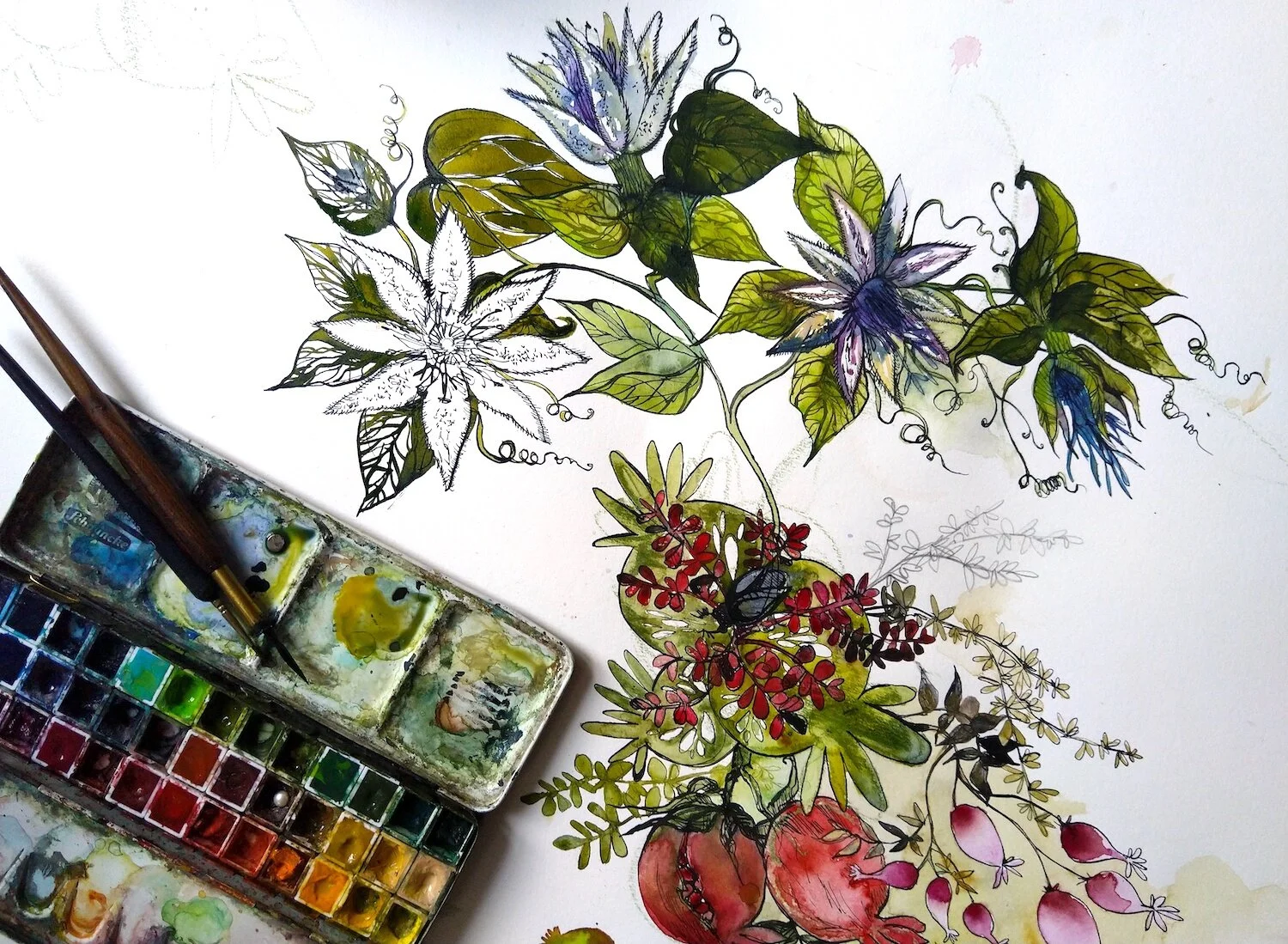
2020. A garden is born onto the page.

February 2021. A life awaits.
Newcomer
I’m new in town. So the natural thing for me to do is to explore, to go on long winding walks, criss-crossing the streets until I can assemble a map in my mind. Walks as long as my time and the limited daylight hours and our current lockdown curfew will permit.

Newcomer
Bamberg: I’m new in town. So the natural thing for me to do is to explore, to go on long winding walks, criss-crossing the streets until I can assemble a map in my mind.
Written in English.
I’m new in town. So the natural thing for me to do is to explore, to go on long winding walks, criss-crossing the streets until I can assemble a map in my mind. Walks as long as my time and the limited daylight hours and our current lockdown curfew will permit.
To live in a time with a government-imposed curfew! I never imagined it, it seems so bizarre. A curfew used to remind me of Second-World-War-stories, with grandmothers telling tales about blacking out windows with towels around the edges at night, stories of enemies out there, scared glances, and stealthy lovers sneaking home at night, carefully avoiding open stretches between houses. Now, we’re scared of a different enemy out there, an invisible one, all the more stealthy because we expect it in our neighbour’s friendly embrace, in our sister’s greeting and our business partner’s handshake.
I have lost myself in the narrow winding alleyways of one of Bamberg’s seven hills again, alleyways that provide barely enough space for a small waste bin, a parked (unlocked) bicycle and one human being passing by. The cobblestones are sloped towards the middle, catching puddles of ice-crusted water from yesterday’s now melting snow.

An imaginary parade of Bamberg’s oldest inhabitants, tilted in mutual support. In my mind, those remembered images of real houses from my meandering walks are fused together into imagined compositions, half fact, half fiction.
The city has a multitude of faces, that much I’ve seen already. As the winter landscape is drained of colour, and the last dregs of sunlight subside, my eyes become more attuned to these soft winter hues, micro-nuances of colour, much gentler than the glaring summer light. The eye learns to pick out and compare the most subtle differences. These are colours much too elusive, their only names might be obscure numbers on some highly technical colour chart. But how much more romantic to call the colour of the sky “swan blush” than “pantone 434M”.
These narrow streets are not as crowded as the main city centre: broad streets lined with stucco-covered historical buildings and shops. Although, even those are almost deserted now in comparison to the usual tourist bustle. There is something forlorn about these shop windows now, large posters with “SALE!!” written across them in bold red letters, “SALE 50% OFF” and “EVERYTHING NEEDS TO GO”. Some shopfronts are already empty like dark holes in the lit consumerist parade, rotten teeth. Some are dismantled, LED-signs hanging from a single wire, cardboard boxes stacked inside. Soon, the empty slot will be inhabited by another chain store.
Although, maybe not, who knows, since Bamberg’s citizens are heroically patriotic, supporting their local community businesses in ever more ingenious ways despite the national Corona restrictions. It’s a joy to watch.
To me, Bamberg features all those gloriously magical details I spent the siesta hours of my childhood discovering in gothic fairy tale books and glossy (and heavy) compilations of Romantic landscape paintings. It’s all here: The crumbling medieval houses – although the city centre is pristinely preserved and has certainly earned it’s UNESCO World Heritage status – so you have to search for those at the fringes; the moss-covered walls and stained roof tiles; the angular corners of houses unplanned and organically grown like bursts of mushrooms; the gilded church spires and patinated copper domes; the secret alleys and shortcuts; the river with its small surface twirls indicating treacherous currents underneath; the swans and waterfowl; the ancient oaks in the park that have survived wars and pandemics alike, and seem to be watching us with serious faces, branches weighed down with lichens and moss, in truth not single trees but a multitude of beings, inseparable now, tethered to their mutual network of lived history.
And the Altenburg Castle, perched on its hill above the town. Although it is neither as old nor as crumbly as some other castles in the area, it is undeniably very castle-like and quite beautiful, especially now, lit in an orange halo in the blue snow dusk. There is the forest all around, silent and loud at the same time with trees whispering, watching. There are golden sandstone walls and buildings and statues and carvings in an astounding luminous ochre the colour of golden local beer (which is plentiful), honeyed stones revealing their true splendour in the slanted sunlight.
There are so many stories layered here, dark-edged stories, stories that seep out of the mossy stones and pool black and menacingly around your feet as you pause. And there is lightness too, stories of relentless building and rebuilding, of crowning things, of preserving things, of weathering out storms and chiselling sacred knowledge into maps for future generations to rediscover.
There are cries trapped in the rough stone, burnt witches’ cries and zealous believers’ cries and shouted salutes to the Führer, cries of pain and joy, panic at the sight of the next shattering ice flood thundering down the river and tearing away bridges and houses in its path, peasant uprisings, foreign conquests, ancient ideologies. And as the brittle stones erode in our current-day tornado, I can almost watch those trapped cries escape like frozen particles in Antarctic ice melting. All those criers, I remind myself, they were all brought into this world by a mother, hopefully they were loved, and loved others in turn, they ached for safety and beauty and hoped to care for those closest to them, they grieved, they trusted in something, and they all crafted away at their intimate little dreams.
To be part of a multitude like this, and stand alone at the same time, feels infinitely powerful. I am quite excited to roam these streets until every corner is familiar, and then to watch the familiar change with the seasons, and then some more.

Altenburg Castle cushioned on its snow-topped hill above the city.
Watercolour and ink illustrations by Nora Kovats.
Fire · Colour · Light – On Enamelling and Becoming is a book about engaging with the art of enamelling, about my work set between meticulous craftsmanship and creative intuition, about a mysterious inner source of creativity, Nature as a teacher, and the search for meaning through artmaking.