blog
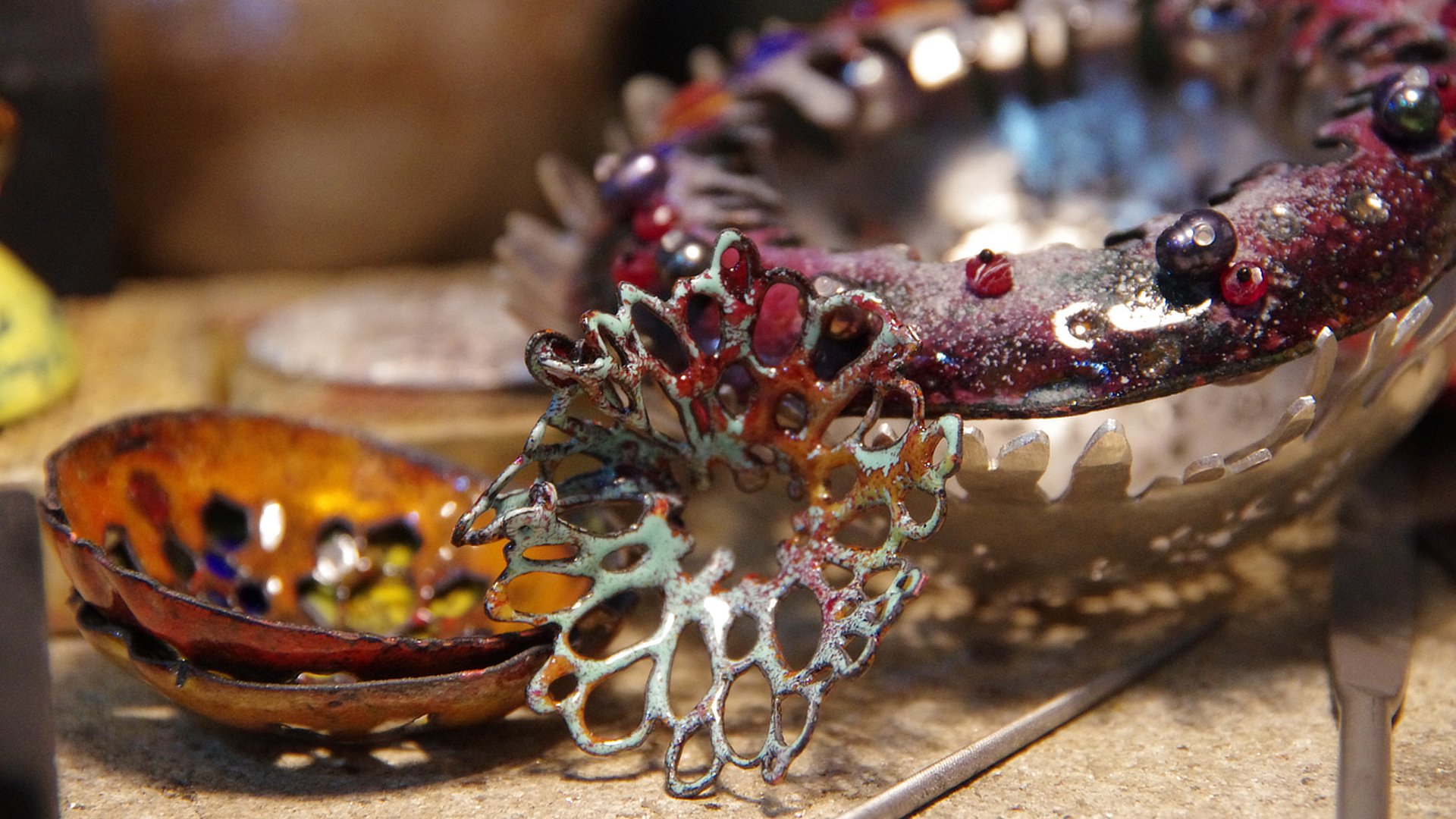
Welcome to my blog. This is a place where I think out loud, show you what I’m up to in the studio, share impressions of inspiring events or everyday moments that moved me. Some entries are carefully curated essays, others are just a few thoughts, sometimes written in English and sometimes in German.
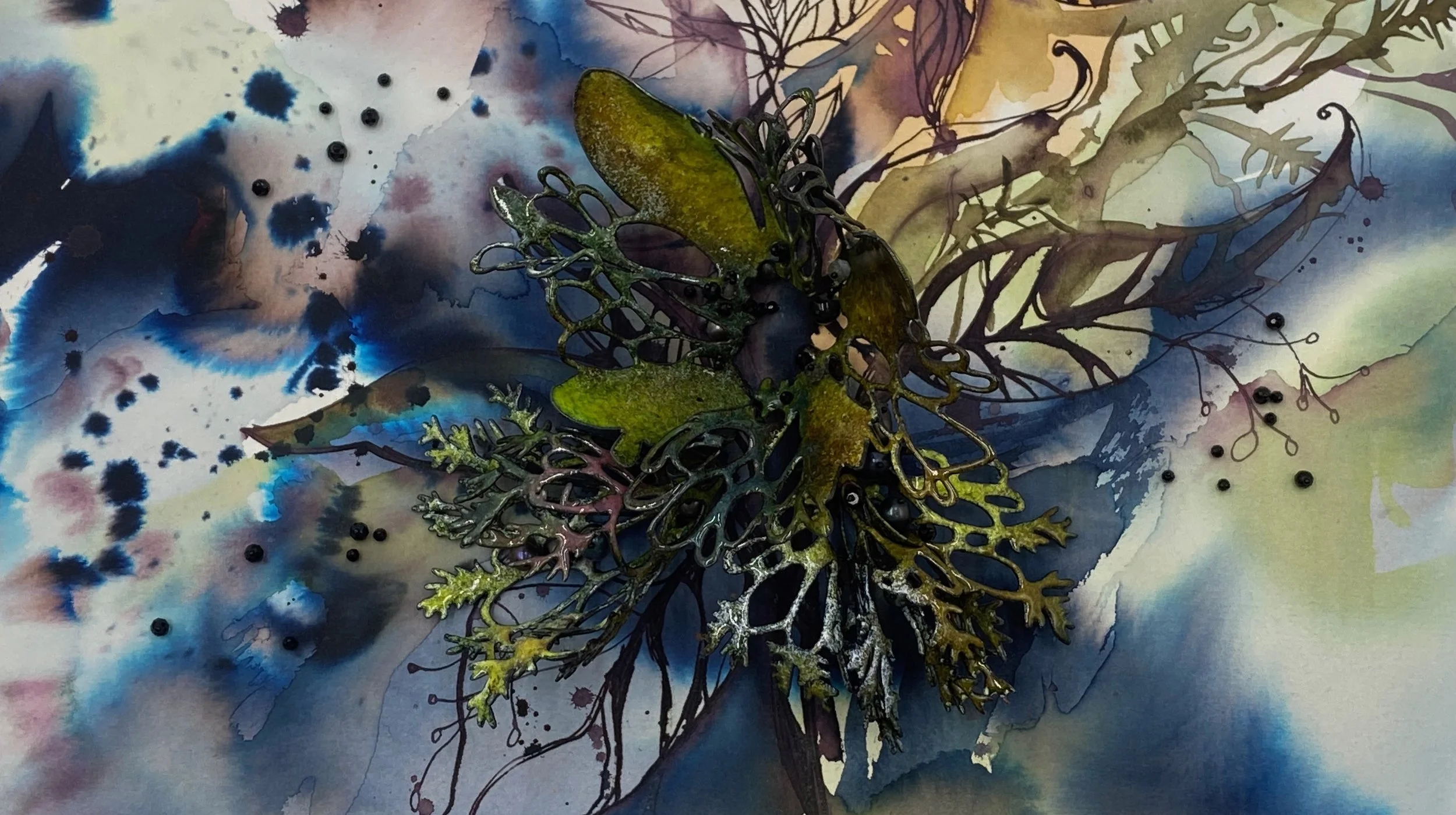


Featured posts
newest blog entries:

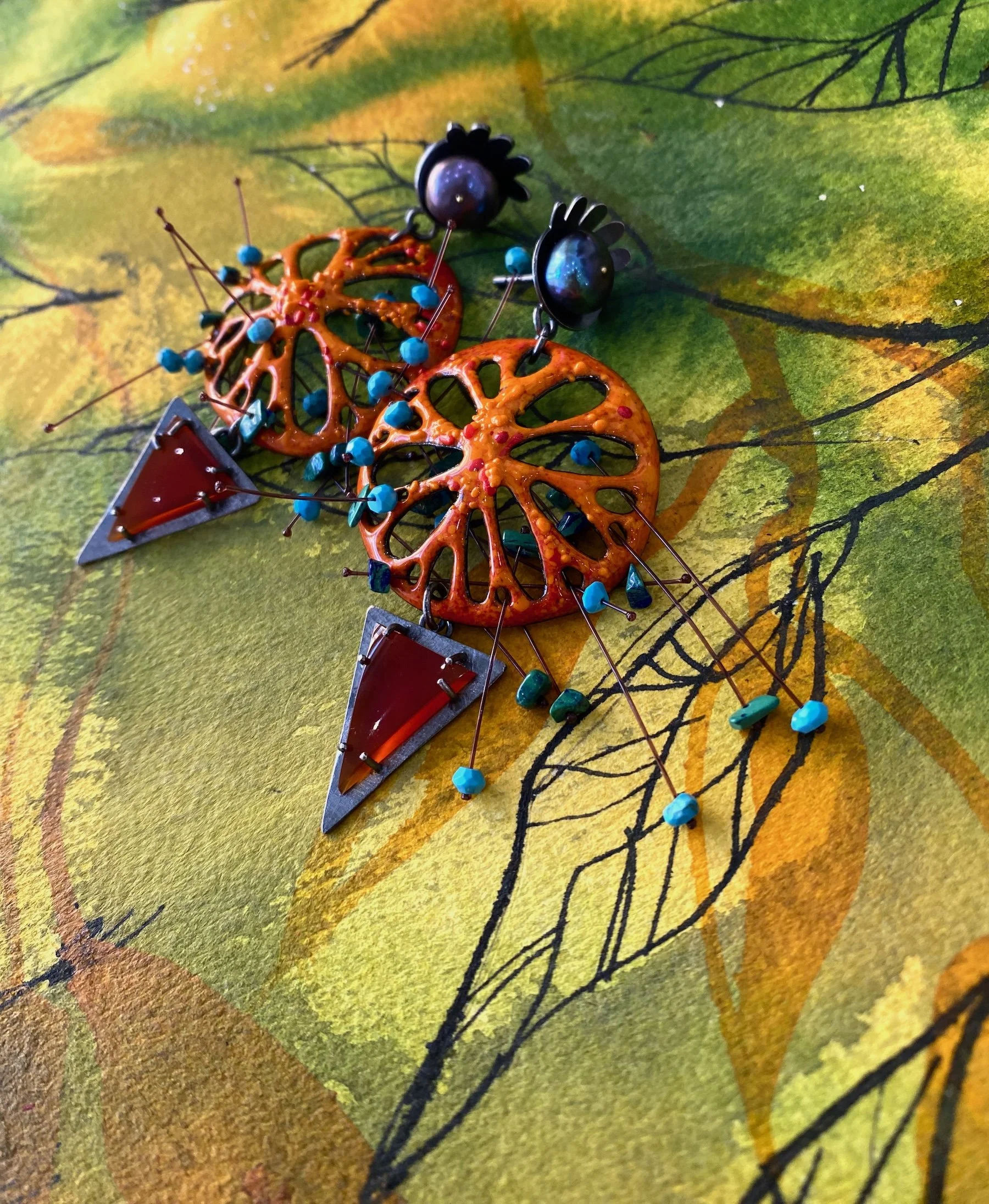

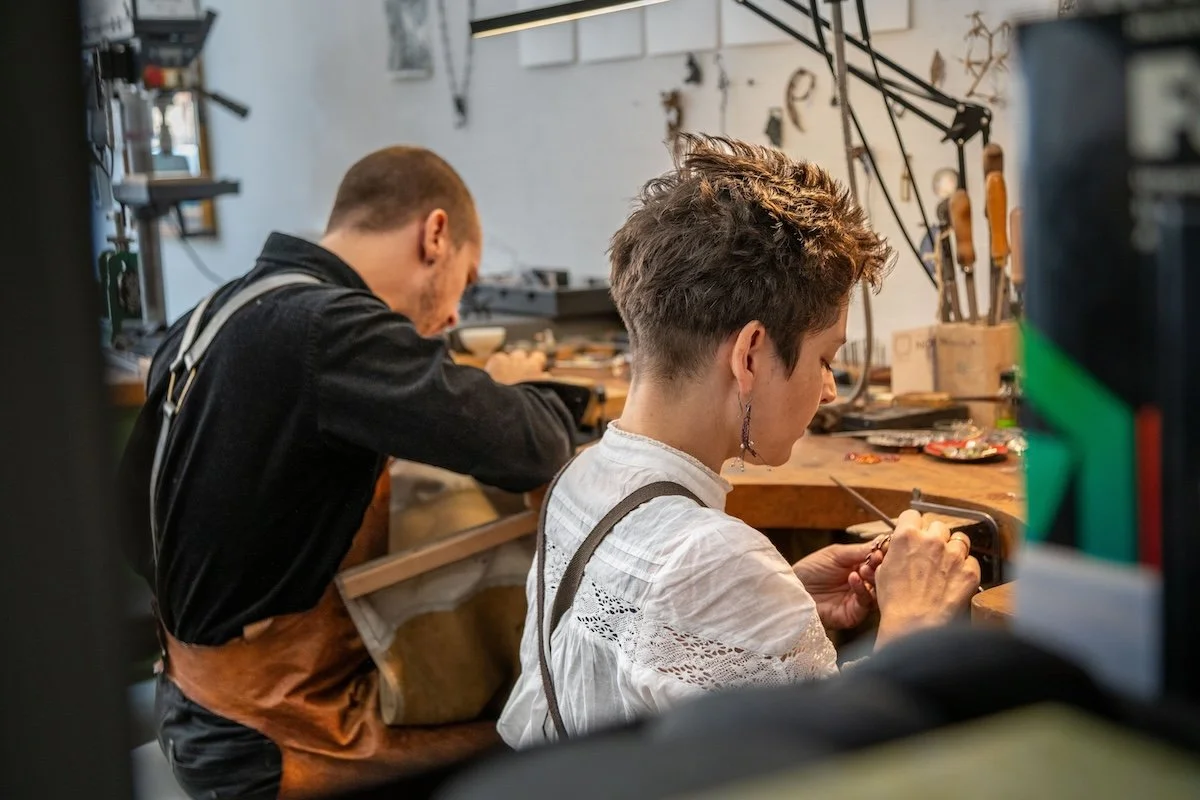






FULL BLOG:
FLORILEGIUM 2020
This year, in the absence of any “real” Christmas exhibitions, I have collected my favourite pieces in a digital FLORILEGIUM to browse and explore. It is reminiscent of medieval florilegia, where poetic snippets and images where curated and collected into new compositions.

FLORILEGIUM 2020
This year, in the absence of any “real” Christmas exhibitions, I have collected my favourite pieces in a digital FLORILEGIUM to browse and explore. It is reminiscent of medieval florilegia, where poetic snippets and images where curated and collected into new compositions.
Written in English.
This year, in the absence of any “real” Christmas exhibitions, I have collected my favourite pieces in a digital FLORILEGIUM to browse and explore. It is reminiscent of medieval florilegia, where poetic snippets and images where curated and collected into new compositions.
Join me on a stroll through these past seasons, measured in the greening and browning of things, and populated with surprising encounters, botanical dreams and an eternal yearning for the perfect garden.
This collection is designed to celebrate human elegance with an edge of joyful eccentricity. Every jewellery piece is uniquely hand-crafted and one-of-a-kind. Combined with precious metals, pearls and unusual gemstones, these botanical treasures look as if they have been gathered on a dream-like journey to that internal imaginary garden.
Here is a sneak peak; the entire collection is made up of twenty-five carefully selected treasures. If you wish to view the entire document, please contact me at info@norakovats.com.


Mobilia Gallery Exhibition
Covid-19 has taught us artists and galleries to diversify our sales channels, and I am curious to see how this trend will evolve, which technologies prove to be useful and which are less helpful, which alternative methods of communication have the ability to truly touch people.

Mobilia Gallery
Exhibition titled JEWELLERY FROM ARCHITECTURE at Mobilia Gallery.
Written in English.
A small collection of my work is currently part of an exhibition at Mobilia Gallery in Cambridge, Massachusetts titled JEWELLERY FROM ARCHITECTURE. The gallery has created a delightful digital catalogue to accompany their exhibition. If you are interested to see it, please contact me or email Libby and Jo Anne directly at mobiliagallery@gmail.com. Alternatively, see the online design store Mobilia has put up on their website.
Covid-19 has taught us artists and galleries to diversify our sales channels, and I am curious to see how this trend will evolve, which technologies prove to be useful and which are less helpful, which alternative methods of communication have the ability to truly touch people. To me, it seems that the digital catalogues and online collections we are creating now also function as beautiful chronicles of the work we make, perhaps a sort of 21st century florilegium to gather and curate that which emerges from our creative practices.
Here is a screen shot of the gallery’s online display, and a selection of pieces specifically created for Mobilia Gallery:

Screen shot: Mobilia Gallery’s DESIGN STORE.

Red Closed Garden.
Pendant/Neckpiece. Vitreous enamel on copper, sterling silver (partially oxidized), orange-brown hand-stitched silk thread. Hand sawn, enamelled, fabricated.

Red Tilia.
Earrings. Vitreous enamel on copper, oxidised sterling silver hooks, black freshwater pearls, cubic zirconia drops, garnet, black nylon. Hand sawn, enamelled, fabricated, constructed.

Phoenix. Neckpiece. Vitreous enamel on copper, oxidized sterling silver clasp, silver cable, garnet, carnelian, onyx. Hand sawn, enamelled, fabricated.

Poeletjie II.
Brooch, also wearable as a pendant. Vitreous enamel on copper, sterling silver back, steel needle, faceted citrine and phrenite drops.Hand sawn, enamelled, fabricated.

Poeletjie III.
Brooch. Vitreous enamel on sterling silver, sterling silver back, steel needle, faceted phrenite drop. Hand sawn, enamelled, fabricated.

Tilia.
Earrings. Vitreous enamel on copper, sterling silver hooks, steel wire, citrine-smokey-quartz drops, peridot, pyrite, green garnet, 18 ct gold wire accents, nylon. Hand sawn, enamelled, fabricated, constructed.

Conscious Garden.
Brooch/Sculpture. Vitreous enamel on copper and sterling silver, blackened sterling silver back, steel needle, grey freshwater pearls, moss agate, and carnelian. Hand sawn, enamelled, fabricated, constructed.
Current Moods and Suffocations

Current Moods and Suffocations
On Thought-Cages and the terrible state of affairs.
Written in English.
I can feel this tightness in my chest. This is all so terribly wrong. But it’s all been wrong for a long time. In fact, I don’t know that it’s ever been right before, definitely not, but that state of perpetuity does not condone the wrong in the least.
As we are all watching the world unfurl its limbs tentatively after ducking down in the face of Covid-19, we can see it stretching in worryingly asymmetric ways. Although all have taken an unexpected hit to the gut, some countries, some people seem to be much better equipped to recover - some seem to almost carry on where they left off before this epidemic constricted daily life, commerce and our personal dreams.
Other people, other countries are left economically crippled in its wake, and with poor leaders to guide them, we can see the world rip apart even more. Certainly, almost no-one on this planet is completely unaffected by this Corona virus.
I feel a tugging worry that even the reality I used to know in my native South Africa, the place many of my family members and friends still call a home, is gliding away. My two worlds are being separated even more; a phone call with my mother sometimes leaves me saddened by the prospect of our worlds drifting apart even further, if only in the physical spaces we inhabit. Of course, engaging with another’s reality is uniquely enriching too, but it means we have fundamentally different concerns in our daily lives.
And this feeling cements the choice I have made four years ago to forge my own path in Germany for now. Perhaps to continue in our family’s peculiar pendulum legacy of switching continents every few decades: one generation, born in South Africa, moves to Europe, the next, born in Europe, moves back to South Africa. Perhaps we are each looking for the mythical country passed on to us in the stories of our parents and grandparents; be it fairy tale castles in dark enchanted forests, or vast horizons on the open savanna and sunsets behind naked desert dunes. There is a sense of charged wilderness to both, but of course, the mythical country is an oscillating Fata Morgana of our inherited memories.
How do we even begin to fight this wrongness around us, amplified by our current crisis? It’s such a crippling question, a paralysing one, too large a mountain to climb. It’s a mountain of greed: When our own reality – inflated by social pressures and responsibilities - is more real than someone else’s reality, constructs like status, lifestyle, luxury and a false sense of grandeur can be more important than another’s life. It’s a mountain of pain, of jealousy, disdain for human rights and disrespect for another’s dignity, it’s a mountain built from fear of never being good enough and of losing all, with veins of suffering seeping through its rocks like underground rivers. It’s a mountain with air so thin that it’s becoming quite difficult to breathe.
But this IS life, it’s never been different, just the types of injustices were different over time. Perhaps it’s all about a choice we make even as we and the world around us collaborate to shape our own personalities: Do we take, or do we give, primarily? Are we asking the question “what can the world offer me?”, or rather, “what can I offer the world?”?
Maybe it is our calling, as humans, to struggle against all that feels wrong, to answer the pain of the world not with anger, but with kindness and compassion, with the poetry of everyday small actions.
While this mountain feels so toweringly high, the immensity of it taking my breath away sometimes, I honestly believe I can climb a fair bit of it by noticing the small things along the path. While I kneel over a wild flower here, admire a perfectly curled infant fern over there, stop to gather small pebbles of kindness and slithers of shared stories, memories to pin into my personal herbarium, I never notice the steepness of the path I am conquering.
In my dreams, as I turn to look back, I see thousands of lived-life-fragments behind me - those most precious treasures of all. And as I look around me, I can see brothers and sisters, climbing, climbing on a thousand different paths up the mountain, climbing on, despite the fact that the precipice is tucked away in the clouds, out of sight.

Sunday Lunch Blues: Miniature Bobotie Parcels

Turmeric is a very potent pigment for painting, as well as a delicious and healthy way to spice up food.
In a fit of nostalgia and longing for some place unknown that might be the idea of home, I decided to make miniature Boboties - a traditional South African recipe that exists in a thousand different varieties. Here is my version, tucked into small phyllo pastry parcels. Perfect for small one-person portions, or finger-food at a tapas buffet.
I had tremendous fun not only making the food, but taking time to prepare ingredients and create a watercolour drawing or two on the side.

Here is a list of ingredients you will need, enough for a four-person Bobotie or plenty for a whole muffin pan. If you have any of the mixture left over, freeze it for future use.
500g mince meat (ideally a mixture of lamb and beef if you can get it)
25ml olive oil & a spoonful of butter, plus some to grease the pan
2 white & 1 red onion
2 crushed & chopped garlic cloves
a teaspoon of chopped fresh ginger
1 small grated apple
3 teaspoons of apricot jam
a slice of brown bread soaked in 125 ml beef stock
3 teaspoons curry powder
1 teaspoon turmeric
1/2 teaspoon cumin powder
1/2 teaspoon coriander pwder
salt, pepper & lemon juice to taste
phyllo pastry
250 ml milk
three large eggs
bay leaves or lime leaves to decorate

Magical colour combination.

This small bowl is made by my grandmother, Konstanze Harms, whom I had an exhibition with last year in South Africa.
First, fry the mince in a little butter and olive oil. Remove from pan.
Then chop and fry the onions, add the garlic and ginger.
Preheat oven to 180 degrees Celsius.

That smell….
Add the meat to the onion mixture, then the spices (turmeric, curry, coriander, and cumin). Grate the apple and sprinkle with lemon juice. Add that to the mixture too.

Sometimes I use whole coriander seeds as well as ground coriander - because I love the flavour so much.

Add apricot jam, and the soaked (and broken into bits) slice of bread. Finish with salt and pepper. Let everything simmer for a bit.
Traditional recipes call for raisins as well, but honestly, I hate them. Up to you!

Grease the muffin pan and layer phyllo pastry (cut into small squares with your kitchen scissors) into the individual moulds. Three to four layers of phyllo pastry are ideal. Alternatively, grease one large casserole dish.
Spoon the meat mixture into the pastry shells.

Now, for the topping, mix the eggs and the milk with a fork. Add a lot of pepper, and a little salt.
Spoon this mixture over the Bobotie parcels to create a smooth eggy layer on top. Decorate with bay leaves.
Bake in hot oven for anything between 25 and 45 minutes, depending on the size of your casserole dish or muffin pan.
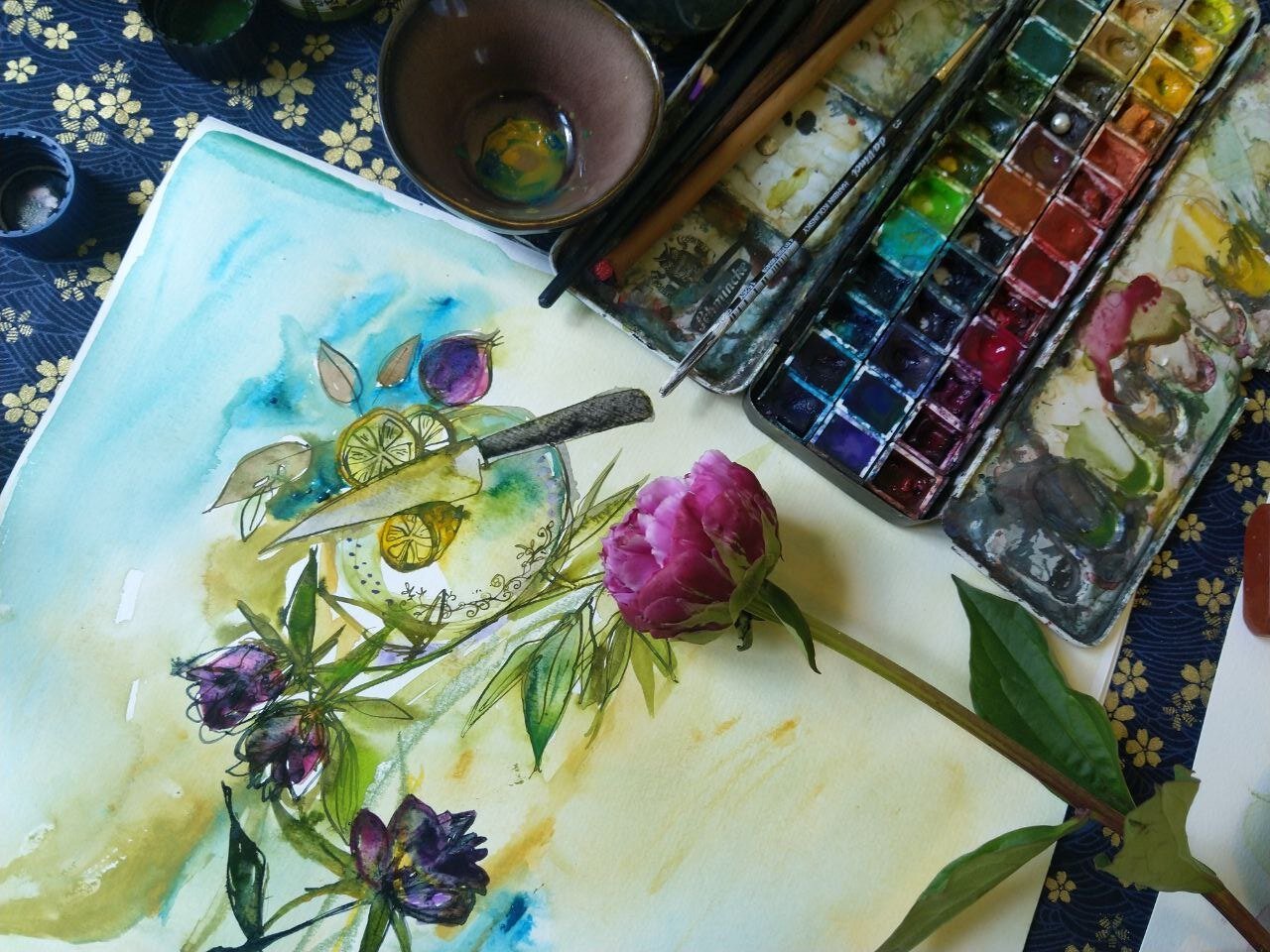
Meanwhile, open a craft beer or a crisp chardonnay. Sit down and contemplate things. Do some watercolour drawing. Check your Instagram for nothing in particular. Check the oven to see whether your miniature Boboties are browning on top yet, the egg becoming all fluffy and puffed-up. Do some more drawing. Maybe, make a salad or some tomato salsa.

Bobotie is traditionally served with rice, chutney, grated coconut and sliced banana, sometimes with a finely chopped tomato and onion salad. But you don’t have to do that at all if you don’t feel like it - get creative, these are compatible with so many side dishes.

And there you go.
Enjoy! Lovely to share, and lovely to eat on your own.
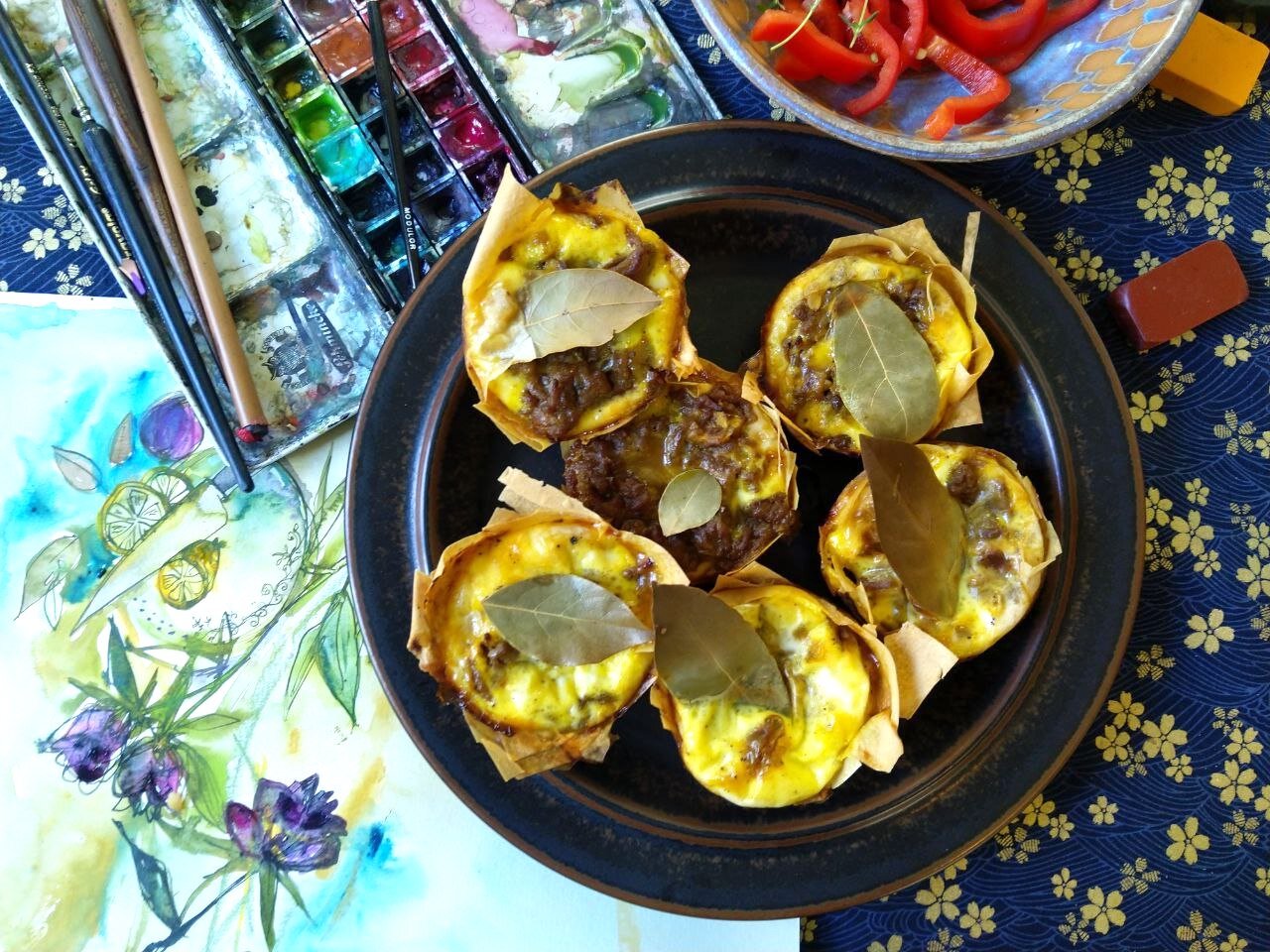

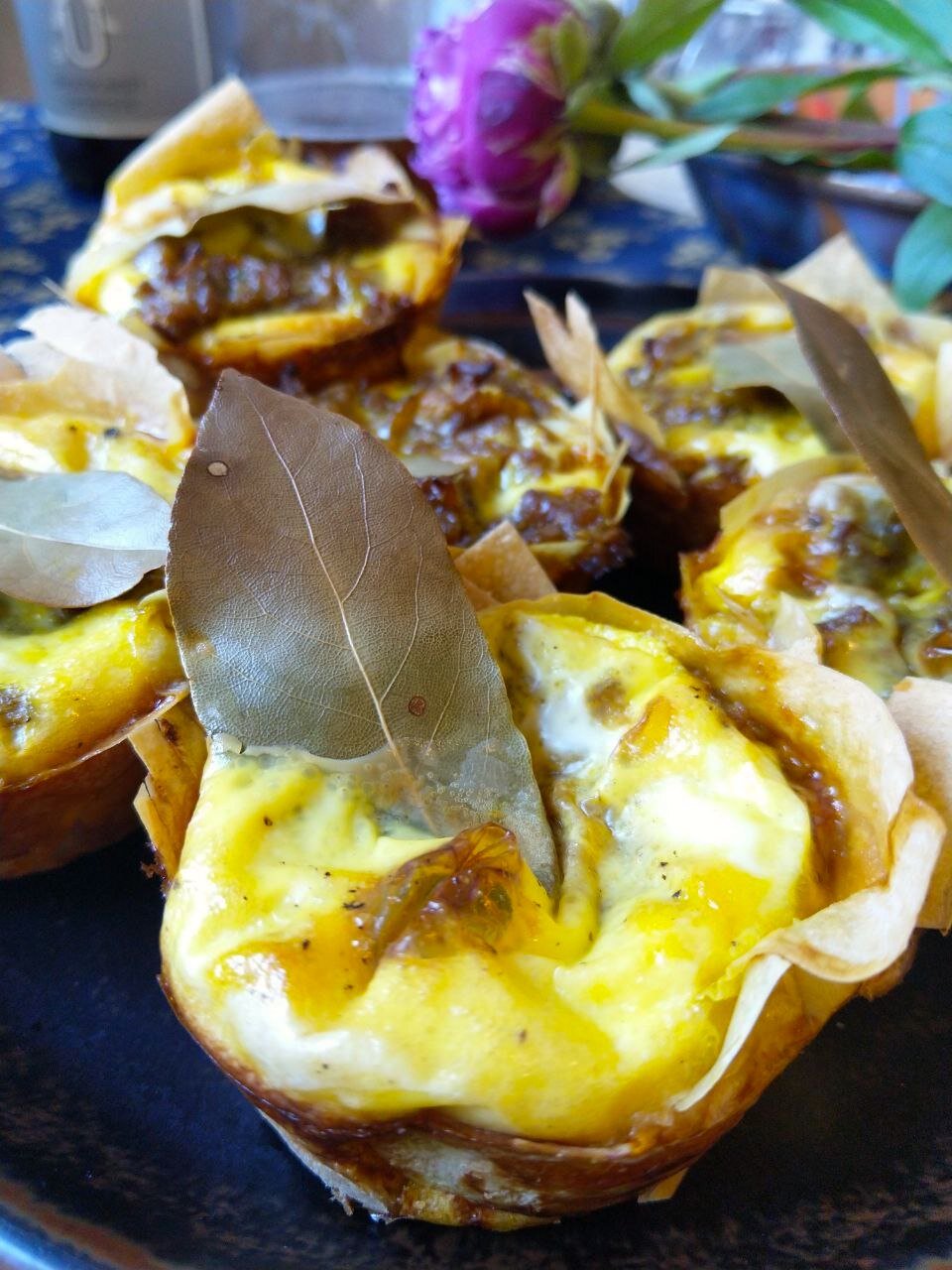
Ta-daaaaa!

Spatter. Summer earrings. Enamel on sterling silver, reconstituted carved coral, freshwater pearls.

One Red Flower
Today, on an extended walk meandering through the streets of Friedrichshain in Berlin, I found a neglected, forgotten graveyard - weathered, skew headstones and completely overgrown with tree saplings and ivy. There, probably planted long ago and deciding to thrive now and here, was a bright red tulip. Solitary, blooming for nothing and no-one in particular. Just by herself. Strong and straight and true, doing her tulippy tulip thing quite formidably.

Today, on an extended walk meandering through the streets of Friedrichshain in Berlin, I found a neglected, forgotten graveyard - weathered, skew headstones and completely overgrown with tree saplings and ivy. There, probably planted long ago and deciding to thrive now and here, was a bright red tulip. Solitary, blooming for nothing and no-one in particular. Just by herself. Strong and straight and true, doing her tulippy tulip thing quite formidably.
I want to have this flower’s strength, blooming for itself and itself only, not caring a dime about other flowers being or not being around her, and giving all the more joy to passers-by because of it. Whenever I stray from that path of making art because I truly WANT to make art, I wish that moments like these would push me back to my true inner WHY.
I wish I could give all of you a bright, red flower.
Happy Earth Day!!


Finding Solitary Safe Spaces
I’ve chanced upon another safe space for my treasury. I collect them like other people collect film posters from the nineties or vintage toy cars. As far back as I remember, I’ve always had these safe spaces; as a child, they were small and cave-like, or up on my favourite climbing tree.

A magnolia tree, ancient walls, and a decorative Baroque bell tower.
The stone archways are shady and pleasantly cool after my brisk walk in the sun. They seem to swallow all sound; the outside world is shut out completely except for the cooing of pigeons in the rafters and the call of a bird that might be a hawk high above. I’m breathing the quiet air of a square church courtyard with a perfect row of sturdy rough-stone pillars forming a cloister around a fairly simple garden. A white magnolia tree in full bloom and a statue of Mother Mary balancing on a sickle moon are at its centre.
I’ve chanced upon another safe space for my treasury. I collect them like other people collect film posters from the nineties or vintage toy cars. As far back as I remember, I’ve always had these safe spaces; as a child, they were small and cave-like, or up on my favourite climbing tree. Now they tend to be wider, often on hills or high vantage points. In a world that requires so much of my energy and attention, I need them. These are spaces where I feel confident that I am enough, right now. For my own sanity, to be at peace in my body and in harmony with the world around me, I seek them out and visit them regularly. I can highly recommend this practice to all of you.
This particular courtyard belongs to a small church in Hildesheim, perched on a hill, called St. Mauritius. According to findings from archaeological excavations, it might have been a pre-Christian place of worship before the area was colonized by the Franconian Empire. St. Mauritius’ ancient Romanesque walls, built between 1058 and 1072, were added onto the foundations of an even earlier chapel commissioned by Bishop Godehard, or Gotthard of Hildesheim, in 1024. This very chapel, under the walls of St Mauritius, is the spot where the famous bishop - one of the most significant medieval Catholic saints - chose to die as he felt the end of his life approaching in 1038.

The courtyard at St. Mauritius: a simple garden of box hedges and trees.
All of these historical layers I researched only later, at home. But back in the courtyard, I was struck by a sense of presence and peace and solitude that cocooned me in cold eternal stone, despite my current (future-oriented) insecurities, and rendered my fears ludicrous. I felt invited to linger, to sit, to sit with myself and my fears and my accomplishments and my strangeness and my love and my weaknesses.
What makes a safe space safe? And I mean safe for yourself, not necessarily safe with regards to interacting with others (that’s a whole different story). I spent some time pondering this since that day on the hill at St. Mauritius. Of course, that depends on the country you are in, it depends on your personal needs and preferences, and on your intuition. But here’s what characterizes a safe space for me:
Energy
The most important attribute of a safe space is its energy. Plainly put, it needs to feel right. This is quite difficult to articulate, and if I were a physicist I’d feel confident enough to explain the complex workings of magnetic fields and electric charges to you, how they build up and, most importantly, interact, around all kinds of things made up of particles – which is literally everything around us, including us. But since I’m not, I’m simply going to say that some places have invisible charges, which we can feel and measure but not really grasp or see. I think this is what gives a place a mood, a meditative friendliness or a menacing aura, a sense of being welcomed or not. I feel safe in places with energy fields that embrace me in my imagination, beckon me, invite me to stay and wait and listen to the world.
Solitude
I feel safe in spaces where I can go alone to gather myself as a human and reassemble all the bits that have fallen into disarray. Even though I am a very social being, I recognize that my energy field is different when I am alone. Large groups of people are not conducive to the kind of contemplation you expect to find in a safe space – their energy fields would start interacting with each other, multiplying each other to create a sense of directed (at)tension. This might be wonderful at a musical concert, but less so when I want to be undisturbed.
Silence
This does not mean no sounds at all, it means the right kind of sounds, pleasant and unobtrusive sounds that allow us to listen to our own thoughts. Sounds such as birdsong, distant music, bells clanging, laughter drifting on a breeze. Away from the clutter and bustle and noisy traffic of everyday life, away from profit-hungry business dealings and the clack-clack of high heels on marble and the sound of souls drowning their own guilt and shame in productivity. Perhaps we find sounds pleasant that wake a sense of nostalgia in our depths and remind us of a mythical lost Golden Age, when things were in harmony.

Trees are these magical beings outside of human time, to me.
Agelessness
Quite often, safe spaces have an ageless, eternal feel to me, or at the very least ancient – marked by structures that have been there for generations like a thousand-year-old stone wall, or trees that might have been saplings at the time of the French Revolution (I had a tree measuring phase not too long ago, where I would measure the circumference of particularly large trees I came upon to calculate their age with a species-specific formula[1]). These structures are often something large to lean against, to lean into. Often, I find there is this sense of something so huge and incredibly ancient and unfathomable that I feel awed by it. Put in my spot as a speck in the universe, not meaningless, but just very, very tiny and rather insignificant. There is a sense of continuity, of stone walls having watched people giving birth and dying, loving and aching, over and over and over again. A feeling of solidity and stability in all this dynamic change. And a sense of belonging, despite my insignificance - a sense of owning my place in this long chain of events that is part of a larger web.
Peacefulness
Above the silence and solitude, you need to be able to actually feel safe in a space like this. There needs to be a sense of peacefulness in its truest meaning, a deep knowledge and trust in the world that no-one can come here to harm you. As if a safe space like this is also sacred, to be left clean and unsullied by malicious thoughts, so awe-inspiring that even ill-minded beings sense its sanctity and enter a kind of truce with the world here. I need this space to be so safe enough for me to dig into my own shadows and bare my own faults to myself, a space where I can be vulnerable and weak – and I can only do that if I can let down my guard in a physical sense as well. It’s difficult to find a physical safe space in countries that are collectively traumatized by crime or war.
Rhythm
Lastly, I often find that safe spaces have a kind of meditative rhythm or monotony about them, like a visual pattern of archways in regular intervals, or a sound like ocean waves crashing on rocks, the tugging of the wind at tall trees, an endless horizon, the flickering of a candle flame or open fire. We as humans have an affinity for pattern and rhythm, we like repetition because it creates a sense of harmony. It soothes us.

Ancient stones have a unique capacity to store history inside themselves, like sponges of layered meaning. There is something powerful about a road built by the Romans two millennia ago.
Of course, these traits of what makes a safe space overlap and interweave and influence each other; it’s difficult to pick them apart or discuss them individually. Often, I don’t have time to go out and actually visit a physical safe space – as might be the case with all of you in different lockdown situations now. Obviously, it’s possible to recreate these spaces in your mind.
I’ve had an imaginary safe space, my ultimate safest of all safe spaces, in my mind for years now. It’s a garden – sursprise!! – on top of an ancient stone tower, with a vast and spectacular view of an untamed and unfarmed circular horizon of hills. This place is a refuge, a source of energy, a space so intimate and private and sacred to me that I will never take anyone with me there in my process of imagining it. There are other imaginary gardens and spaces for social encounters. This is mine alone, in my very centre. A space where I can only reach on my own, which no-one could ever find, not if they could enter my mind, and not in all the parallel worlds of all universes, because I have to travel through myself to get there.
You can have your own physical and imaginary safe spaces too. A space where you recharge your batteries, where you learn to breathe until that knot in the pit of your stomach slowly unclenches. A place outside of time or space, where you sit with your vices and virtues, where you get the energy to decide to make something meaningful out of your life.
All illustrations and photographs by Nora Kovats ©.
[1] This is a great site for European trees: https://www.baumportal.de/baumalter-schaetz-o-meter.

An interview: Diving into infinite imaginary worlds
Recently, Klimt02, an online platform and network for contemporary jewellery, published an interview with me about my work process and sources of inspiration. It was a wonderful opportunity to rethink the way I work and re-articulate my “why” and “how” to myself in these turbulent times.
Recently, Klimt02, an online platform and network for contemporary jewellery, published an interview with me about my work process and sources of inspiration. It was a wonderful opportunity to rethink the way I work and re-articulate my “why” and “how” to myself in these turbulent times.
I thought I’d share part of the interview with you here:
1. What's local and universal in your artistic work?
Since I was raised in South Africa by a German-South African mother and a Hungarian father, I don’t just have a single identity. I have always been very aware of the fragmented, fluid way identities are built, and how important the role of one’s environment is. I can trace this thought in the way I work: there are fragments of my inspiration pointing back to so many different sources, splinters and glimpses of all the places I spent time in. I think the fact that there is this interwoven tapestry of references and inspiration in my work makes it somehow local and universal at the same time, if such a thing is possible.
There are echoes of European fairy tales and Germanic legends, but also African colours and that very South African skill of improvising in the moment; the flavour of Hungarian paprika; details of the Cape Fynbos flora; a purple Table Mountain and the aching beauty of the Wild Coast; classical double bass music; barefoot childhood memories in the vineyards; almond blossoms; hateful school uniforms; a great search for freedom and adventure. In all the visual chaos there is a search for an inner dream world, a garden that is both the origin and end, an internal fountain of inspiration, and a place to move towards.
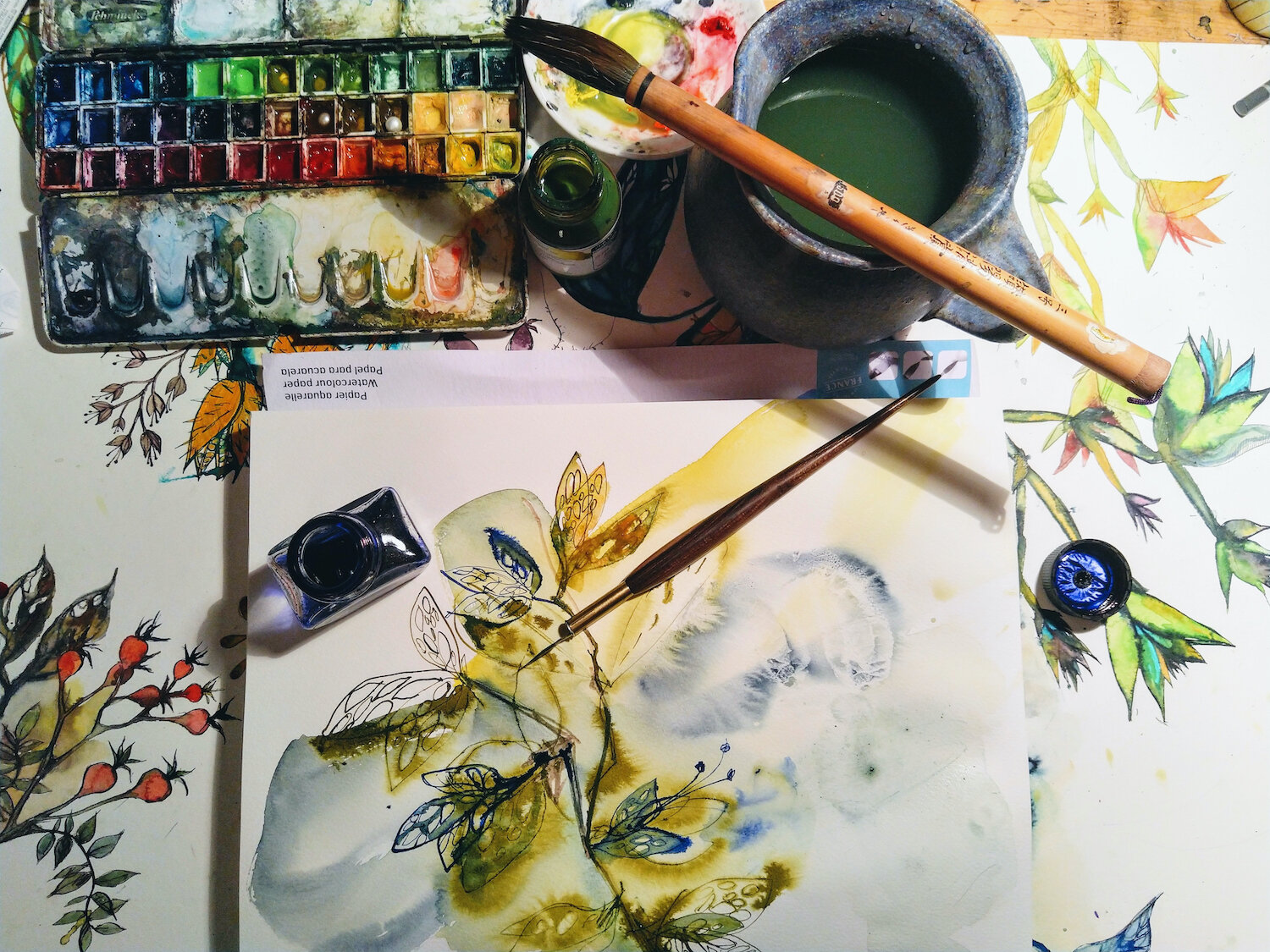
Imaginary botanical painting with watercolour, pen and drawing ink. Drawings like these are searches for new shapes and design drawings simultaneously.
2. Are there any other areas besides jewellery present in your work?
My work is completely interdisciplinary. I paint, mostly in watercolour but also in mixed media, I work in collages, I write, I make jewellery and enamelled metal objects, or strange sculptural compositions from found materials. In all these aspects of my work, I try to speak the same langue, creating a recognizable flavour of an inner Studio Nora Kovats world.
3. When you start making a new piece what is your process? How much of it is a pre-formulated plan and how much do you let the material spontaneity lead you?
My drawings are entirely spontaneous, as if I’m tapping into a wild imaginary garden inside myself, bringing out treasures to shape into compositions. This is where I first developed my visual language.
When making contemporary jewellery and metal objects, I generally have a more specific idea about the direction I am headed in. There’s a creative moment of composition where the elements are brought together, but the making of individual parts is often a very time consuming and laborious process that requires a lot of patience.
I never make just one piece at a time; it’s a creative process in several disciplines simultaneously, and I usually work on up to twenty pieces at the same time.
I mix precious and non-precious materials (such as copper, plastic, nylon and enamel in combination with gold and gemstones) and use symbolically laden resources and forms, yet aim to create something that has become precious above all because of its uniqueness – a distinctiveness born from my personal intrinsic visual language and the meticulousness of my labour. I definitely do believe that a creation of mine should strike the viewer as a precious object; however, this should be due to the skill and time invested. Because real value in this fleeting world of ours does not lie in gold or gemstones, but in human time, in devotion, passion and sincerity.
Jewellery-making offers the possibility to create entire worlds – contained miniature environments, secret spaces, autonomous ecosystems functioning in complex webs of meanings. When creating a piece, the artist pores over the small artwork in such a way that the centre of his or her world temporarily shrinks to a physical space measured in centimetres, but the metaphorical and imaginative space may be vast: a whole world of symbolism and emotion. Like with the containment of a garden in comparison to the vastness of the universe, the world in a jewellery object shrinks to a microcosm. Preciousness, usually ascribed to a range of metals and gemstones, is to some extent a quality of smallness too. A small object can be cradled in the hand; it can be more easily lost than a larger item and thus requires safe-keeping.
The size of my work is determined by several considerations: it does not consist of massive installations because of certain practical limitations, such as the size of the enamelling kiln and the extreme labour-intensity of the work; however, I also aim to evoke a sense of a miniature contained world that activates the viewer’s imagination and begs for intimate visual exploration. Smallness, of course, creates a sense of intimacy; the work displays marks of my hands on it – filing marks and hammer dents, fingerprints, perhaps even bits of my DNA and most certainly a small portion of my soul. This idea might seem overly romantic, but it embodies my personal approach to my work, conceived through the process of making.

Adding a gemstone cluster of iolite and garnet to these silver and enamel earrings to complete the composition as I imagined it in my mind.
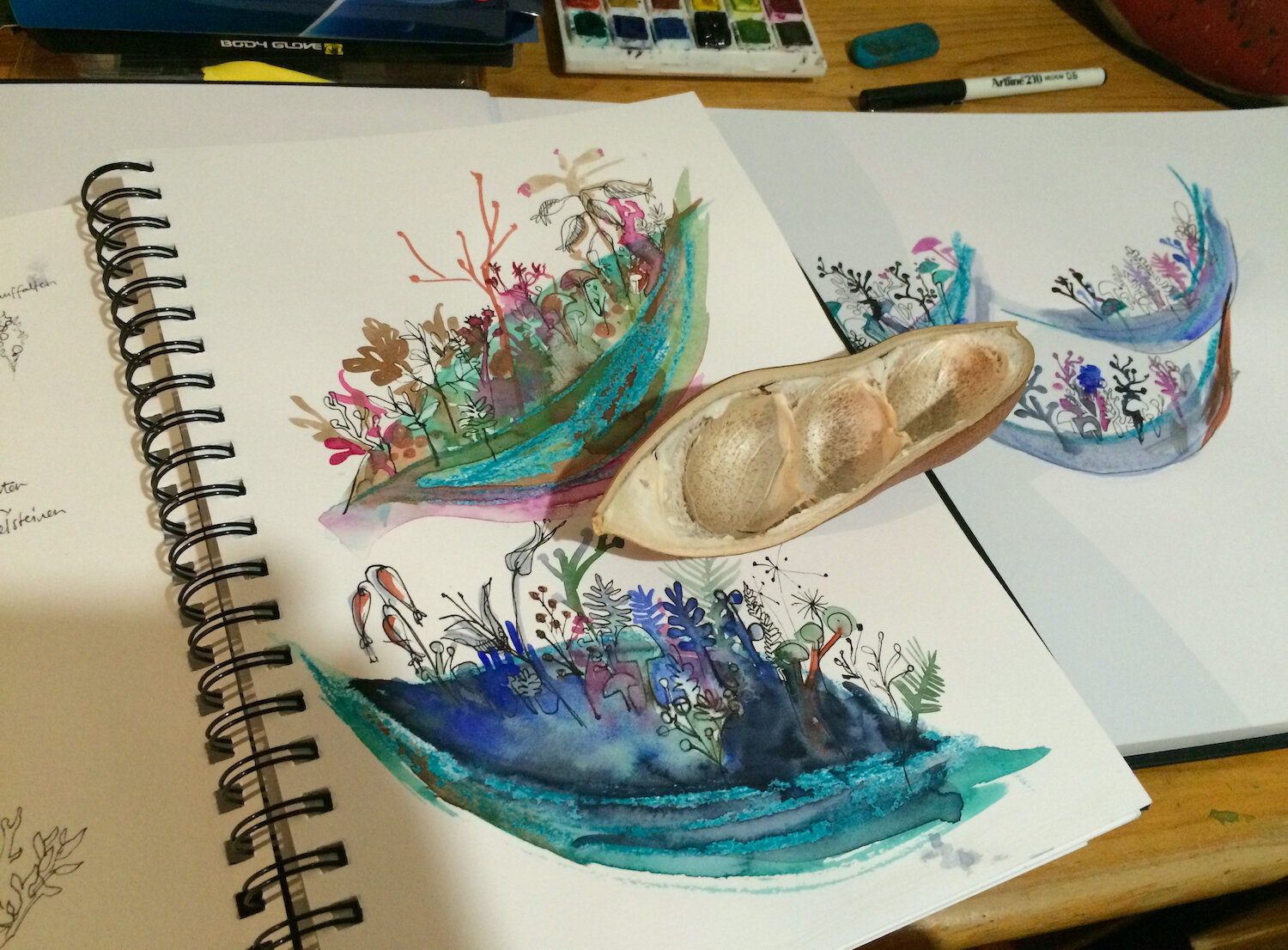
Late-night watercolour and ink sketching inspired by a seed pod I found on one of my extended walks.
4. How important is the handmade for you in your development? What role do techniques and
technology play in your development?
Although I recognize the importance of new technological developments in general, I am a strong supporter of hand-crafted as opposed to machine-made work. I believe that we enshrine some part of ourselves within an object if we spend hours laboring over it.
My hope is that we will be moving into a time – perhaps accelerated now due to the Covid-19-crisis – where we can move away from the useless consumption of meaningless, cheaply made, trendy objects and towards a sensibility where quality, aesthetics, true craft skills and manual labour are highly valued again. Perhaps we can rise from the ashes of this upcoming severe recession as phoenixes who can forge emotional value in the form of artistic expression and express humanity in a way that creates meaning for people.
My favourite jewellery techniques include sawing out of metal, soldering to construct shapes, and enameling. My thoughts keep returning to the process of enamelling and the complete devotion it demands of its practitioner. This creative process, with its vivid possibilities of colour, its laborious ritualistic method and its ties to alchemical practices, inspires a creative drive in me that compels me to make. The making, in its quality of searching, almost becomes more important than the finished work. Making becomes a rhythmic ritual, demanding respect and reverie, as well as the need to be patiently observed, step by step, without rush. To me, the enamels are governed by their own rules, almost taking on a life of their own.
As I make, I am concerned with growing something from nothing, and with controlling that created something to a certain extent. A contradiction exists between the tight control imposed on the contained microcosm of my work, or on the enamel kiln as closed environment, and the spontaneity, impulsiveness and freedom required to permit a truly successful result – one that lives. This duality intrigues me – a constant balance between tight control and letting go. A dance. It has allowed a particular style to emerge in my work: with an emphasis placed on intuition and playfulness, I focus on growing, twisting, branching botanical shapes and vivid, unexpected colour combinations, dark and twisted as well as vibrant and playful.

Sawing stylized pomegranate shapes from a textured sheet of silver with my beloved jeweller’s saw. Here, the saw becomes an extension of my hand: a drawing tool to trace lines.
5. How important is wearability in contemporary jewellery? And in your pieces?
I think that my work changed quite a bit with regards to wearability. I used to make these crazy, spiky jewellery objects that really didn’t focus on wearability too much. They were fascinating, but rather uncomfortable to wear. As I started to earn money with my designs, my work had to be split into two distinct directions by necessity: I developed simpler, more wearable jewellery pieces such as earrings and pendants that echoed the turmoil of more intricate, entirely unwearable objects, meant to function as art in their own right.

Enamelling still life showing some of my tools like tweezers and a sieve, enamel powders and a stylized pomegranate that I am working on.
6. Which piece or job gave you more satisfaction?
There are two types of satisfaction I get in my work. Depending on my mood, I seek out either of them.
The first is a crazy, creative state of flow where I try new things, create compositions or quick sketches. This type of work flow needs a lot of momentum and energy, and although it is highly enjoyable, I cannot sustain it for too long. It’s a fast-burning, fire-like inspiration that exhausts itself after a couple of hours. This is where I create new ideas, put together final pieces, enamel pieces in quick succession or paint and draw in fast, fluid strokes.
The other is a slower, more purposeful state of meditative work, which I enjoy when I am in a more peaceful state of mind. This is where I spend hours hand-sawing intricate patterns and then finishing them off with my Swiss needle files, burnishing edges or polishing little details. Most people experience these kinds of laborious activities as frustrating or wasted time, but to me, they are essential to balance out my creative practice. It’s a space where my mind wanders, where I can listen to podcasts and audiobooks, and vaguely dream about new ideas.
7. What do you expect when you show your work to the public (for example, with an exhibition)?
I hope to open a little window into my own creative thinking, I hope to touch people emotionally and activate their imagination to develop the piece further and invent their own paradises. I love when people really take the time to look at my pieces, which are often very intricate - as if they were turning into miniature versions of themselves and going for a walk inside the sculptural shapes.
My realistic expectations at any exhibition are that many people will not understand my work or want to engage with it, but that a few viewers will stop and be drawn in by it, truly fascinated and inspired. You can’t make everybody happy, and I really don’t want to appeal everyone at once.
_
To read the interview on Klimt02, have a look here.

Work bench still life with tools and half-finished pieces. I usually work on several pieces at the same time.
Reset Button

Around the kitchen table.
Like many of you, I suppose, I can see my thought patterns revolving around different Covid-19-related topics these days, circling around the same ideas again and again in ever-tighter spirals.
When the full weight of this crisis hit me about four weeks ago - that is, when I realized that there was no going on as if nothing had happened, that it was more than a major inconvenience causing events to be cancelled – my priorities began to shift drastically in my mind. I started wondering what was actually important and relevant to me. I asked myself two big questions: with whom do I want to be during these times, and where? The answer was clear and immediate: with my partner (who happens to live in a different city), and somewhere closer to nature than my flat in Berlin. So I packed a couple of things into a large bag, most importantly my watercolours, paper, notebooks, laptop, inks and pens and brushes, and left for a little while.
So many people, like most of my acquaintances in Berlin, live alone. My thoughts have been circling back to loneliness a lot, lately, and the significance of human connectivity in our lives, especially in times of insecurity, distress and social distancing. My heart goes out to those who have no-one to talk to.
As I grow older, I can see my stubborn independence, my lone-wolfiness and one-woman-show-ness becoming increasingly less important, with relationships and symbiotic systems with others gaining significance. Just a couple of years ago I would have raged against this thought, would have thought it a matter of personal pride to prove that I can make a life for myself alone, with help from no-one. I suppose I was pretty lonely at times in my life, in my years at Stellenbosch while I was studying and later, when I moved to Berlin. I really thought I was happy then, I liked the anonymity and autonomy of doing what I wanted when I wanted to. I had meaningful friendships and romantic relationships, of course, but looking back, I think I was still lonely in those relationships.
Now I feel priorities shifting like tectonic plates in my soul. I can sense the experience of the past two weeks leaving some profound mark: As I am experiencing the opposite of loneliness, living in quasi-quarantine with three other beautiful souls in fairly close quarters, one of whom is my partner, we are slowly becoming fused into an interdependent human ecosystem. Because these are challenging times, we are forced to be quite vulnerable with each other, more transparent with our fears and weaknesses than we might have been in different circumstances. It’s a moment where our respective weirdness and strange coping mechanisms become fused into one of those excruciatingly beautiful instants of true humanness. This feels real, and raw, and present.

It’s a moment in our lives where we are granted the opportunity of long conversations, where we are allowed to hold each other’s emotions, to listen, to be forgiving with ourselves, to share our fears, to laugh until our ribs hurt, be serious and severe, or make terrible jokes and play games. There is no rush. Things have to be done, but not now. None of us can predict if and how our skills will be relevant in the future, and how we will go about forging a career path after this crisis.
There is a lot of talk around the dinner table about the future. About a resetting of values. Since we are all in the creative sector, our dreams ping-ponging across the table are focussed on finding new systems to present our work to the public, new interdisciplinary ways of making meaning. We are moving into the most serious recession of our young lives yet, right at the beginning of our careers. It will force all of us to have less, need less, want less, travel less, do less. Having many fancy things will become quite uncool; having read books and learned “useless” skills, however, rather trendy. Creativity will matter, spontaneity and the ability to improvise; humour and poetry and deep knowledge and the capacity for empathy.
Each night, as I fall asleep, I ask myself how we can emphasize the importance of storytelling, how we can reach people emotionally, create mirrors of our souls and those of others in our art, how we can add value to everyday life, and re-invent an age where things matter again and human time and manual labour are cherished above everything else.

Poetic Fantasy on Lost Gardens and Being Human
I miss my garden.
The last garden I had was back in 2032, that narrow walled garden at the back of our apartment. I remember walking barefoot down the stone steps, I remember birds hidden behind layers of foliage, and the taste of early summer radishes. I miss being separate but still part of the world in that tranquil microcosm.
Below is a poetic meandering of thoughts, written as an artist statement to accompany my newest series of brooches titles “Memorabilia”.
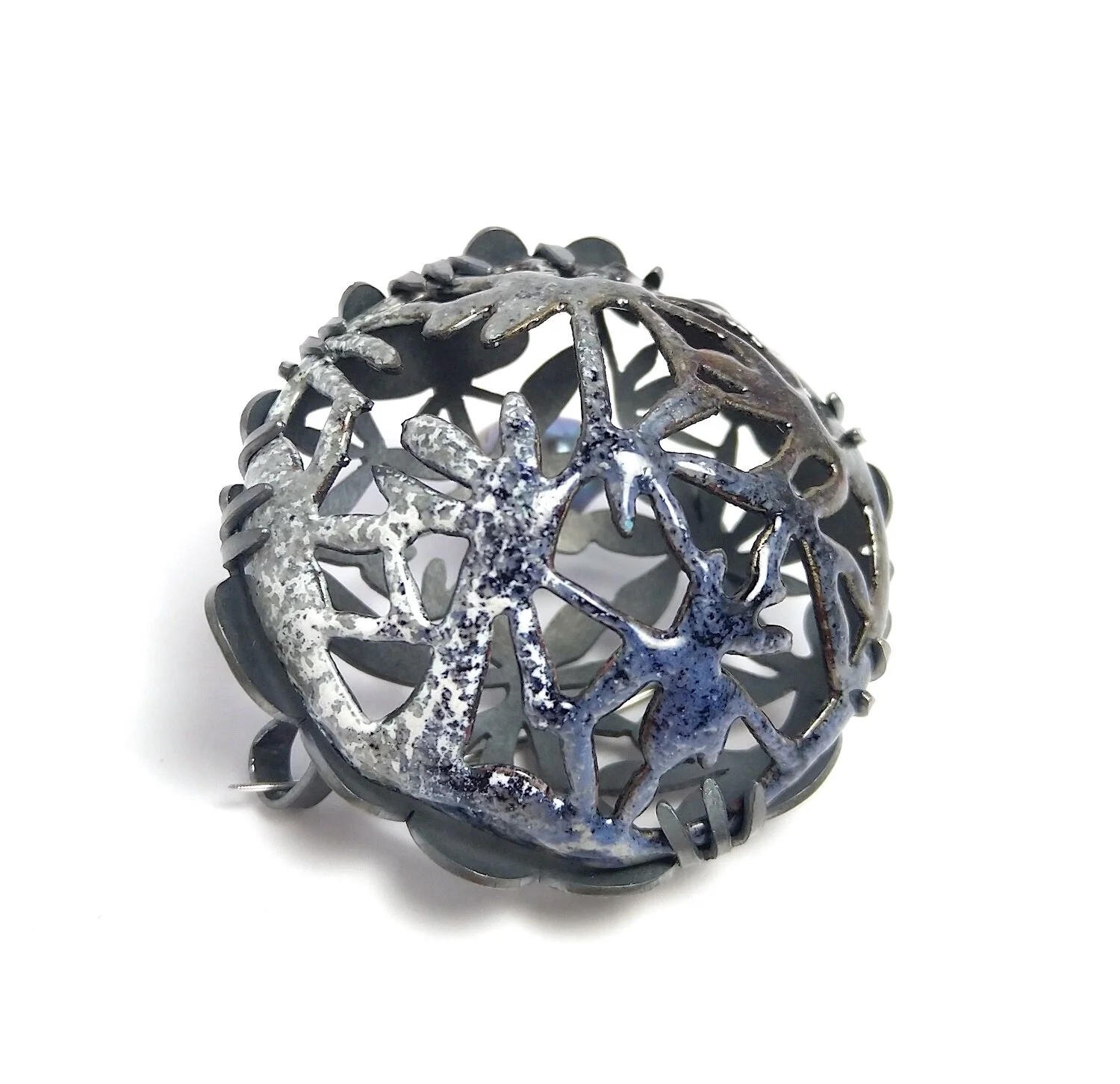
Memorabilia I. 2020. Brooch. Sterling silver (blackened), enamel on copper, steel pin, black baroque pearl. Hand sawn, constructed, enamelled.
I miss my garden.
The last garden I had was back in 2032, that narrow walled garden at the back of our apartment. I remember walking barefoot down the broad flagstones, I remember birds hidden behind layers of foliage, and the taste of early summer radishes. I miss being separate but still part of the world in that tranquil microcosm.
My garden was an inner sanctum that freed something in my chest, that carved out patterns of meaning for my life and the lives I touched. It allowed me to face the outside with courage. It was beauty, and perhaps unnecessary, although its unnecessariness made it an utter necessity in itself. It was order, and it was chaos, it was decay and love and frilliness, it was a glimpse of a splendid room that allows you to imagine the entire palace; it was a throbbing, ever-growing metaphor for our most precious human skill - the use of our imagination.
It was a space where small gestures mattered, where our humanness was reflected in a personal pantheon of fragile dreams: the furriness of moss on stone, in the twisted branch of something dry, in the post-rain puddles on the garden path.
Now that almost nothing of that mythical space remains, now that we have destroyed and scorched, wallowing in dispassionate inaction while our capacity for kindness shrivelled, while we waited, we have lost the language of imagining meaning.
We remind ourselves of our humanity in the memories that remain, held together in the blackened bone reliquaries of that sacred garden.

Memorabilia II. 2020. Brooch. Sterling silver (blackened), enamel on copper, steel pin, black baroque pearl. Hand sawn, constructed, enamelled.

Memorabilia III. 2020. Brooch. Sterling silver (blackened), enamel on silver, steel pin, black baroque pearl. Hand sawn, constructed, enamelled.

Times of Corona
For my own sanity, I’m attempting to pick the positive details out of this situation, and I’d like to share a few of my thoughts with you today. This crisis, with all its threatening fear and floundering insecurity, is also a sort of retreat, a detox from the daily input overload and stress out there.

Botanical explosions on our kitchen table.
Suddenly we have all been thrust into a sweeping wave of incredibly disorienting and troubling times. As commerce, work and public life in Germany are slowing to a complete standstill, the air is thick with anxiety.
For my own sanity, I’m attempting to pick the positive details out of this situation, and I’d like to share a few of my thoughts with you today. This crisis, with all its threatening fear and floundering insecurity, is also a sort of retreat, a detox from the daily input overload and stress out there.
Hundreds of outwardly successful people pay good money for retreats to avoid mental breakdowns, confining themselves to some remote mountain village to meditate for days and limit their social contacts. Now, we’re being presented with this opportunity for free. I know that I could get lost in an ocean of fear and anxiety – a future fear that is all the more scary because it is vague and unspecific. I could also choose to train myself in trust, in becoming centered, in focusing on our shared humanity and gaining a larger perspective of our world, where our daily squabbles seem so trivial and useless.
We humans are amazing creatures. I believe that we have the unique ability to hold paradoxes in our mind, and this balance of seemingly irreconcilable opposites is exactly that place where our humanity flourishes. It’s that moment of inner freedom, where we are detached enough not to succumb to self-pity and emotional enough to feel real empathy, where we hold birth and death, joy and sorrow in one and the same space, with grace and dignity and (self-)love. This is my ambition for these upcoming weeks: practising to hold that difficulty within myself, being a witness, becoming really comfortable with paradoxes.
One of the most unsettling questions that is always posed by a real emergency is the question of relevance. Is what I do actually important? Is my work necessary for our society to survive and flourish? How is it relevant in a crisis? To answer that question for myself I have to be able to reconcile another paradox: my life, and what I do with it, is both impermanent and forever. We all are unimportant specks of dust in the universe and our lives are over in the blink of an eye, yet, at the same time, our actions have consequences in the here and now, and there are people who care about us deeply and our moved by us.
So I find myself thinking what matters most to me. Working for myself. Rediscovering that deep joy I feel when I am creating something, composing a piece of writing, painting a watercolour, imagining a sculpture or an intricate piece of jewellery. Cooking. Reading. Sharing stories around our kitchen table. Building an empire, a castle of imaginative output, that empowers people to learn to use their own creative imagination again.
Bearing all these thoughts in mind, this is what I am going to do (since all events such as craft shows, fairs, symposiums and exhibitions have been cancelled for the next couple of months):
1. I will draw as much as I can, trying to regain that spontaneity I had in my drawings as a child, back when drawing was my story-telling tool, before I became aware that my work could be judged by people. I will create really large spreads of tangled botanical fantasies and imaginary paradise gardens.
2. I will work on my online shop, which is now finally live on my website, to tell stories with my work and spread small slithers of joyful hope in the world.
3. I will establish a more regular blogging practice than I have had so far, publishing something, even if it’s only a short piece, every Friday, in an attempt to become a better writer and storyteller.
4. I will read all the books on my reading pile (reading Seven Fry’s wonderful retelling of Greek mythology at the moment, and Campbell’s Hero with a Thousand Faces, with slithers of Kafka in between).
5. I will design outrageous jewellery pieces with an unlimited imaginary budget.
6. I will design enamelled, jewelled, vertical-garden like botanical installations.
7. I will go for a walk every day, if I can, and watch nature wake up to spring.
8. I will pay more attention to my yoga practice and attempt to centre myself in my body, in the here and now.
9. I will plan future exhibitions and apply for shows later in the year or next year, since life will go on eventually.
10. I will have long conversations with people and talk about things that matter.
11. I will NOT worry about money now. I will not obsess about not being able to pay my bills in August because life is tough now. It’s just money, just numbers. Imagine this for a moment: what if the construct of money lost its value to us? What worth does money actually have, once we strip it of its meaning? Money is just a place-holder for real value. What value should we imagine instead? Things like kindness, nourishing food, good quality useful everyday things, hand-made beautiful objects, books and the treasures they contain, good quality content on the internet, music, art, films, poetry, games, laughter, our own time.
In this spirit I hope that all of you are doing well, that you can use this time to do all the things you ever wanted, that you can stay curious without becoming overwhelmed, and that you can take care of yourself and your loved ones.
The Pomegranate
The pomegranate is a treasury of symbolism: it is not only emblematic of passion, sensuality and sexual love, but also speaks of a very powerful and perhaps threatening knowledge: a liberating sense of sexual self-reflection and confidence, the very opposite of innocence.

The Pomegranate.
An exploration of a powerful and ancient symbol.
Written in English.
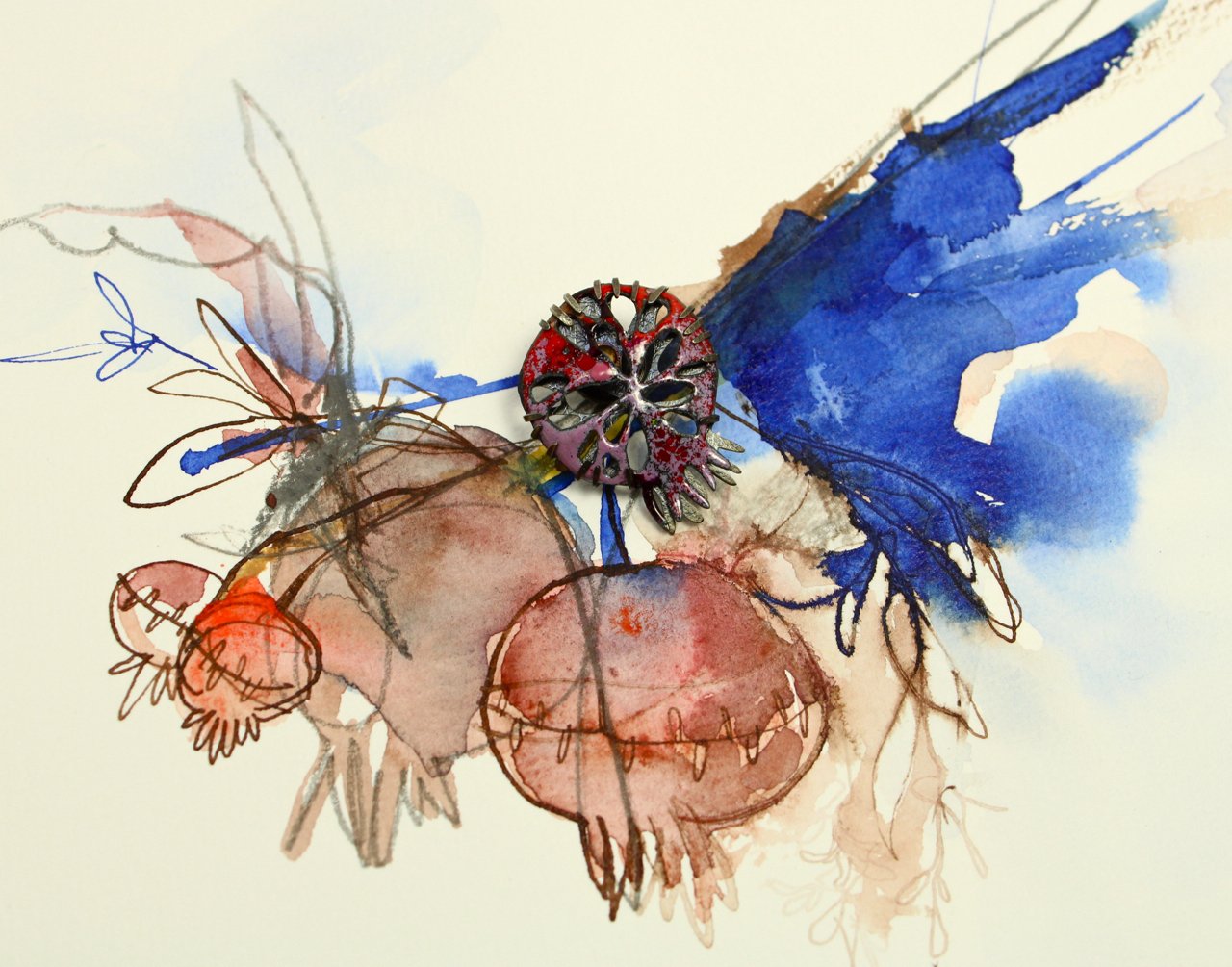
Pomegranates, to me, are the ultimate symbol for the sacred feminine. They tend to feature heavily in my botanical watercolour paintings and jewellery.
The Pomegranate
The pomegranate, more or less abstracted, has established itself as the most prevalent shape in my creative practice over the past six years. It has become the blushing red thread connecting my art jewellery to my sculptural objects to my miniature and large paintings, and a central feature in my botanical compositions. Perhaps even more surprising, the conglomerate of pomegranate-associations has become a cluster of ideas that are omnipresent in my life, my search for self-knowledge and my need to make sense of our world and its cyclical systems. As I started to trace the origin of this pomegranate fascination – even obsession – of mine, I dove deeper and deeper into the fruit’s cultural history and mythological significance.
I grew up with pomegranates. Even though it’s not one of South Africa’s most important exports, I was aware of its existence from a very early age: my grandparents had several trees (still do to this day), the oldest of which is a gnarled drooping thing next to their front door. The pomegranates used to grow and shape themselves into green orbs slashed with magenta and later crimson as my birthday was approaching. I remember always hoping that at least one would be ripe and ready and bursting with gemstone seeds for my birthday celebration, but they never quite managed to comply. The fruit clearly captured my imagination from this early age on and still continues to do so today.

My first Pomegranate Fantasy brooch, an enamelled ode to Persephone, to summer, to colour, and to Eros in its multitude of meanings - an antidote to dying.

These tiny pomegranates for your ears, hand-crafted in oxidized sterling silver, are available in my online shop here.

Pomegranate Storm, enamelled statement earrings adorned with peacock freshwater pearls and faceted garnets.

My grandparents' pomegranate tree that I was familiar with as a child.

One of my favourite books to browse in these days: "A Garden Eden - Masterpieces of Botanical Illustration". This is the work of Giorgio Gallesio, who lived in Pisa from 1817 - 1839.
The exotic looking fruit, Punica granatum, entered the orchards and mythology of the ancient world before most others. The pomegranate is indigenous to modern-day Iran and Northern Africa, from where it spread throughout the Mediterranean region. As I followed the pomegranate’s trail through history and myth and stories, I discovered how omnipresent it really was and still is in our cultural symbology canon.
With its plump rose-coloured exterior, its red juice and its abundance of gleaming ruby-red seeds that burst from the inside when the fruit is split open, the pomegranate is a powerful symbol of fertility and female sexuality. For many cultures, it represents sacred feminine power: the power of creation in all its forms. It was considered an aphrodisiac and therefore often presented at weddings. Ancient Sumerians believed that the souls of the dead ate pomegranate seeds to become immortal.[1] The Bible describes the pillars of King Solomon’s monumental temple decorated with complimentary male and female fertility symbols: lilies with their long narrow shafts, and pomegranates.[2]
In Jewish tradition, pomegranates are traditionally eaten on Rosh Hashanah (Jewish New Year), as it was believed that pomegranates always have the same number of seeds – 613 – coinciding with the 613 commandments of the Torah. In all major monotheistical faiths, scholars believe the pomegranate, rather than the apple, possibly to have been the forbidden fruit in the Garden of Eden. In Roman times, pomegranate blossoms and fruits were worn as wreaths at spring festivities and other fertility celebrations. In a similar fashion, Buddhists believe that the pomegranate is one of the ‘Three Blessed Fruit’, denoting fecundity and prosperity.[3]

A Persian or Indian velvet tapestry from the early 1600s depicting a mother-and-child scene next to a pomegranate tree. From a book called "TEXTILIEN" by Mary Schoeser.
Many ancient goddesses, and occasionally gods, are depicted kneeling on pomegranates or carrying pomegranates in their hands as ‘sacred orbs’[4]. Mystery traditions all over the world who venerate the Great Goddess or the Great Mother, giver and taker of life, associate her with the pomegranate up to this day, and devote offerings of apples, peaches, almonds and pomegranates to the deity. Interestingly enough I once stumbled upon a pomegranate offering in Berlin, piled high in a flat metal bowl under what must be one of the oldest living trees within the city. In some traditions, the pomegranate as an offering to the Great Goddess denotes the powerful and sometimes dark forces of the subconscious, and the painful but rewarding confrontation with the seed of the self in a psychological sense.[5]
My first literary encounter of the fruit was my grandmother’s reading of the ancient Greek myth of Persephone. Persephone is the daughter of Demeter, the goddess of harvest and fertility. Abducted by Hades, the god of the underworld in his chariot, Persephone finds herself in his dark, underground palace without her companions. She falls into a deep melancholy, missing the birds and flowers and butterflies on the meadows above. As an apparent gesture of peace, Hades offers her twelve pomegranate seeds, six of which she eats. When the other gods come to retrieve her, they find that they have been tricked. ‘Persephone has eaten fruit from my kingdom’, says Hades, ‘so she is bound to me forever’. Because she has eaten six out of twelve seeds, her fate from now on is to spend six months of the year above ground and six below. As Steven Fry writes in his brilliant retelling of the Greek myths, this is how “the seasons came about, the autumn and winter of Demeter’s grieving for the absence of her daughter and the spring and summer of her jubilation at Persephone’s return”[6].
For any adult imagination, the literal meaning of those pomegranate seeds is clearly to be interpreted sexually. Whether Hades gently seduced her or simply raped her as Greek gods sometimes do, or whether she discovered her own sexuality and innate power really depends on who is telling the story. But the pomegranate becomes a clear symbol of sexual awakening and speaks of the dual energies of sex, of both losing something and gaining something in return, unifying violence and tenderness in acute love. Persephone embodies this cyclical duality as she becomes, on the one hand, “the contented Queen of the Underworld, a loving consort who [holds] imperious sway over the dominion of death with her husband”, and on the other hand “revert[s] to the laughing Kore of fertility, flowers, fruit and frolic” for the remaining six months of the year.[7]

Another awe-inspiring favourite of mine: Azuma Makoto’s book called "Flora Magnifica - The Art of Flowers in Four Seasons".
Persephone has a host of different names elsewhere in mythology and folklore: she is Sheherezade who saves her kingdom by entertaining the king with storytelling over the course of one thousand and one nights; she is the princess who is abducted by Rübezahl, a folkloric mountain spirit of the Krkonoše Mountains (Giant Mountains, Riesengebirge), a mountain range along the border between the historical lands of Bohemia and Silesia.[8]

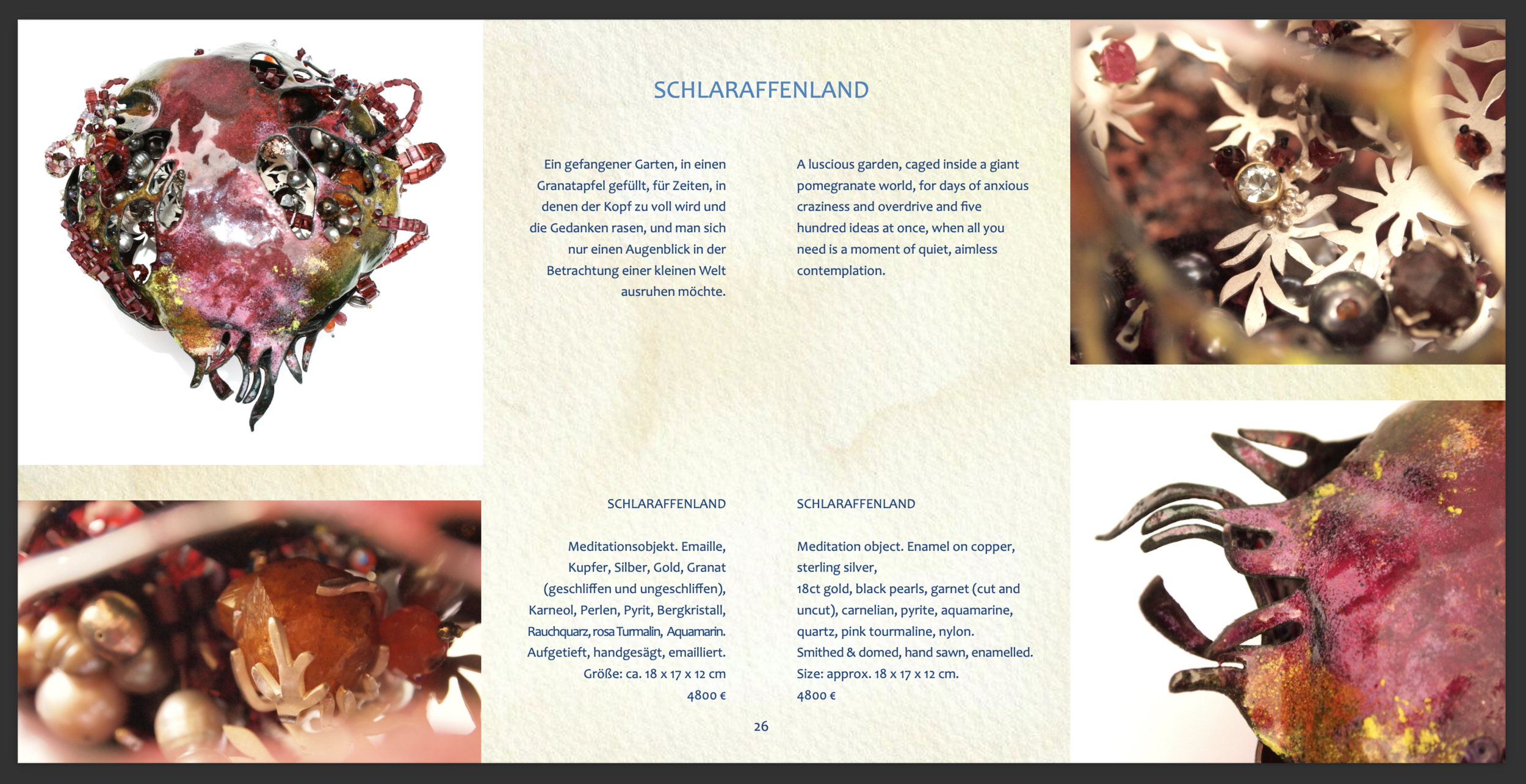
This creation titled Schlaraffenland was one of my bigger and most time-consuming objects to make (it’s about 18 x 17 cm in size) and is filled with precious metals and gemstones such as garnets, grey freshwater pearls, aquamarine, amethyst, carnelian and labradorite. It’s what I lovingly think of as my ‘Aladdin’s cave inside a pomegranate’.
Often, the pomegranate’s jewel-like interior conjures images of gemstone-encrusted precious fruit trees in fantasies of Islamic gardens. One particularly magical garden that I found mesmerizing as a child is described in the Arabian Nights story of Aladdin and the Wonderful Lamp. When Aladdin is sent down into a secret cave to retrieve the magician’s lamp, he discovers a garden in a crystal cave. Bizarre, contorted flowers and trees in a thousand vibrant colours grow out of clear streams full of fish, their scales studded with emeralds, rubies and diamonds. Living birds with velvety feathers sing to the glory of Allah. Low-hanging branches are burdened with glittering fruit, of which Aladdin picks some, which he later realizes are fantastically large cut gemstones the size of lemons and quinces. (I suggest you re-read the story in Sir Richard Burton’s translation – it’s salacious, gory and wonderfully adult.[9])

This is a pomegranate illustration by Elizabeth Blackwell (1707–1758). Read more about this extraordinary woman on Maria Popova’s blog The Marginalian - coincidentally one of the online spaces I usually go to if I need some poetry or uplifting philosophical meanderings in my life.
In a torrent of new Eastern treasures, including the Arabian Nights and the wisdom of Greek philosophy, pomegranates found their way to Europe during the late Middle Ages. However, they remained a rarity in Northern Europe until they could be sheltered in orangeries. As a new fashion for accumulating rarities – anything from exotic plant specimens to stuffed animals and so-called ‘primitive’ peoples’ weapons – overtook Europe in a feverish collecting mood, controlled climates had to be developed to house those foreign plants that needed heat to survive. The warmth and splendour of those glass-fronted orangeries and later multi-paned glass houses made them perfect spaces of leisure and entertainment. Lemon trees, figs, jasmine and pomegranate bushes became a perfect backdrop for 17th century operas, concerts and balls, and functioned as a status symbol. Royals and aristocrats impressed their guests by serving them rare exotic fruit at lavish banquets.
The pomegranate-sheltering glass house, in many ways, continues the somewhat earlier philosophy of cabinets of curiosity: as a contained collection, it can house a fraction of the known world, a small mirror of the universe. These new and improved miniature replicas of Eden were now heated with large stoves to create a humid, sauna-like effect. Such climatic interference had once been heresy: once, “a medieval alchemist named Ripley had been killed for the dastardly crime of making a pear tree ‘fructify in winter’”[10]. But such anachronistic fears had no place in a world that was driven by a new obsession – the notion of ‘progress’. The old ideal of everlasting spring was reborn in an interpretation of Eden where human dominion over nature (as interpreted during that time from Genesis) was reborn in a flood of exotic imports.[11] The pomegranate, bringer of spring and life, thus combines a still lingering exotic element, a whisper of an Eastern paradise garden, with an intrinsic mythological essence.
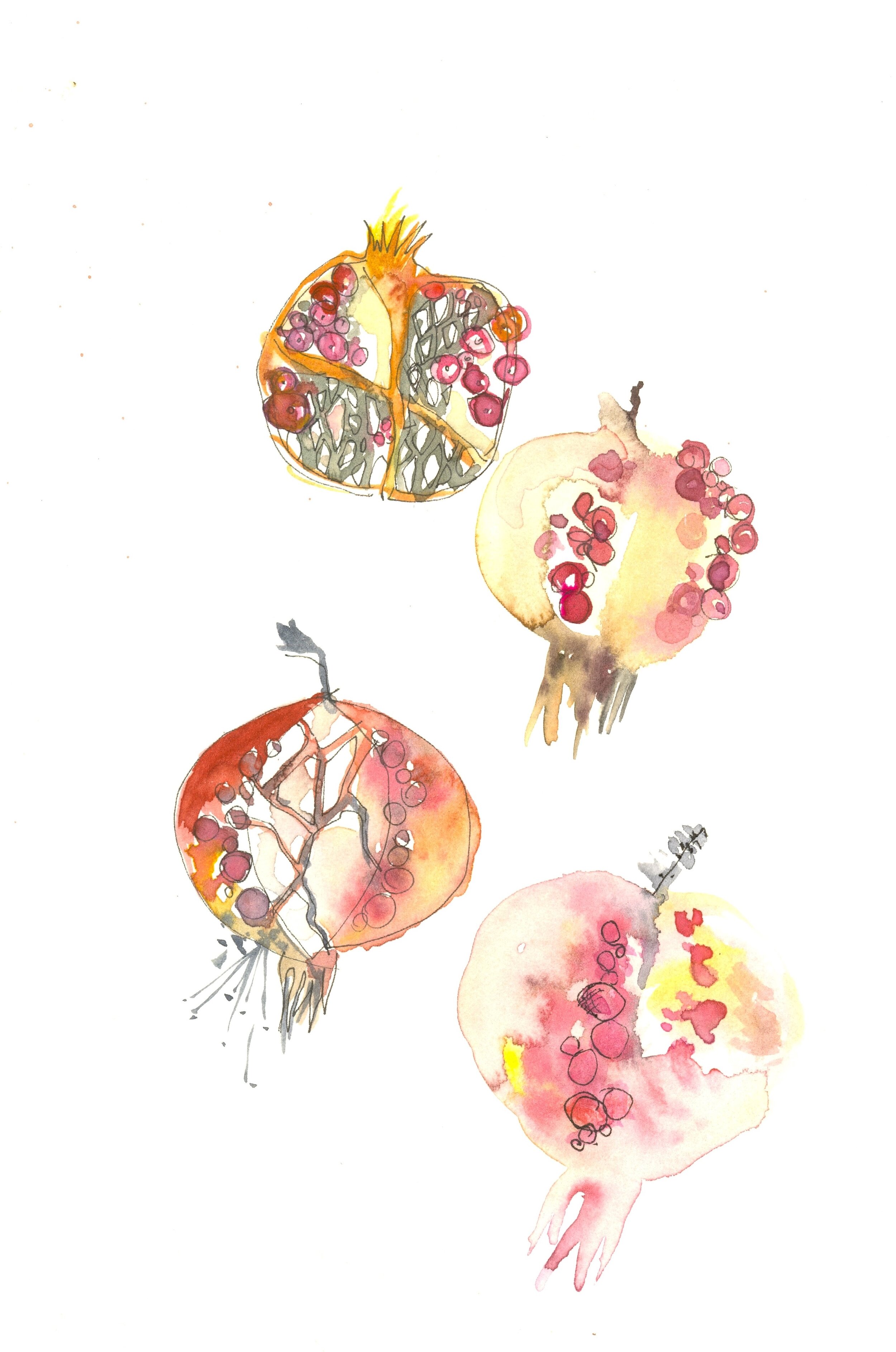
Nora Kovats. Early Pomegranate Study. 2015. Watercolour and pen on Fabriano.
The pomegranate, therefore, is a treasury of symbolism, and my sketching of it here is by no means exhaustive of the topic. It is not only emblematic of passion, sensuality and sexual love, but also speaks of a very powerful and perhaps threatening knowledge: a liberating sense of sexual self-reflection and confidence, the very opposite of innocence. The pomegranate stands for everything a Western woman from the early Middle Ages up to the mid 20th century was not allowed to be, was persecuted for, even, and that Western men attributed to the semi-veiled harem goddesses of their imaginations instead. In short, it is a symbol of a woman’s independence, never in striving for same-ness with a man, but in jubilantly asserting her own flowing feminine energy and embracing her own sexuality as a divine gift, a source of exquisite abundance, an oracle, a refuge and a free form of expression. More than that, the pomegranate is powerful in its duality: it embodies the light and the dark, death and blood and destruction, but also germination, the miracle of life, the tenderness of love, and the phoenix-like magical possibility of renewal.
My work seeks to embrace the pomegranate’s symbolic inheritance as well as its visual cogency while simultaneously re-interpreting it as a metaphor for the Western imaginary of an ‘orientalized’ paradise garden.
Although my work contains a plethora of symbols (the rose and rose-hip, the forest, the apple, the hand, the pearl, silver and gold, different colour symbolism… to mention just a few), the pomegranate holds a special place in my heart: I have embraced the pomegranate as my personal totem, my business logo and my north star; in a deeply personal way it reminds me of my own awakening, of my stepping into my own inner power, of my potential as a woman and a human being.
I explore this as I wonder where we are today, what meaning we allow our subconscious, our sexuality and our dreams to have these days. I do think that, in general in our society, we have lost a certain sense of reverence, an acknowledgement that there is something sacred and immensely powerful seated in our core. We are waking up, collectively, however. By touching that inner emotional space in people, I want to play a small part in restoring the sacred in our everyday experience of life.

An intricate, split-open Pomegranate Creature adorns the cover of my new book Fire · Colour · Light – On Enamelling and Becoming.
This pomegranate – half monster, half fruit, both dark and light – was crafted in 2026 and is almost the size of a regular basket ball.
The book is about engaging with the art of enamelling, about my work set between meticulous craftsmanship and creative intuition, about a mysterious inner source of creativity, Nature as a teacher, and the search for meaning through artmaking.
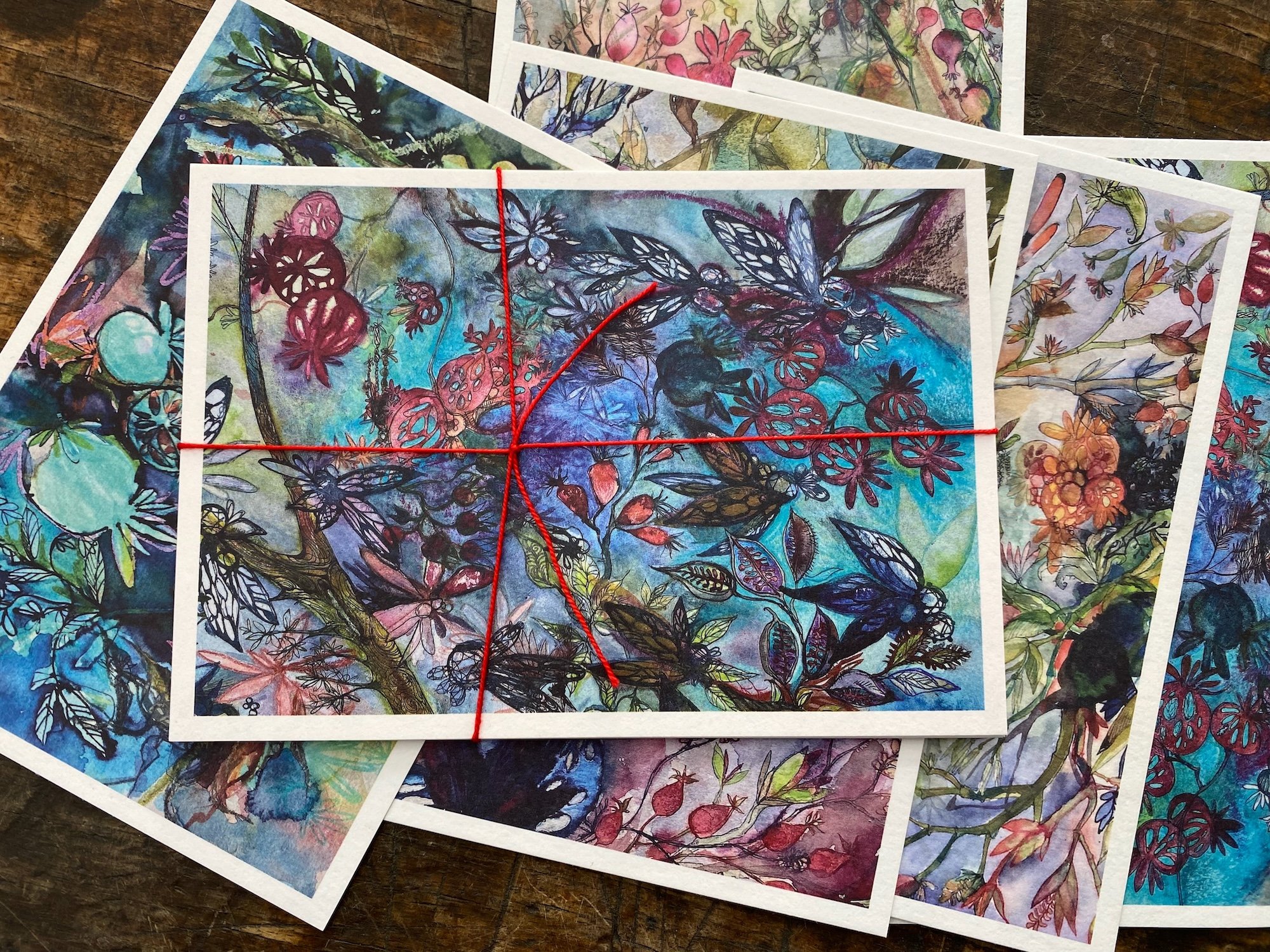
Abstracted pomegranates are a returning motif in my paintings. These are available as a postcard set of five delicious designs here in my online shop.

Close-up of the enamelwork on my piece Schlaraffenland.

Phoenix. Neckpiece.2016-2017. Enamel, copper, sterling silver (oxidized), garnets, carnelian, nylon. Hand sawn, enamelled.
SOURCES:
Allende, I. 2013. Aphrodite: Eine Feier der Sinne. Berlin: Insel Verlag.
Burton, R. 2011 (originally published 1885). Arabian Nights. San Diego: Canterbury Classics.
Fry, Steven. 2018. MYTHOS: The Greek Myths Retold. United Kingdom: Penguin Random House UK.
Lack, H.W. 2001. A Garden Eden – Masterpieces of Botanical Illustration. Köln: TASCHEN GmbH.
Nozedar, A. 2010. Signs & Symbols Sourcebook. London: Harper Collins Publishers.
“Pomegranate”. Wikipedia: https://en.wikipedia.org/wiki/Pomegranate [online].
Ronnberg, A. [Editor in Chief]. 2011. Das Buch der Symbole. Köln: TASCHEN GmbH.
“Rübezahl”. Wikipedia: https://en.wikipedia.org/wiki/R%C3%BCbezahl [online].
Rushby, K. 2006. Paradise – A History of the Idea that Rules the World. United Kingdom: Constable Publishers.
Walker, B. G. 1993 (originally published 1983). Das geheime Wissen der Frauen. Frankfurt am Main: Zweitausendeins.

An enamelled Pomegranate Fantasy, studded with Murano glass ornaments and gemstones.
Footnotes:
[1] Walker 1993:327.
[2] Walker 1993:327; 1 Kings 7, 18-20.
[3] Nozedar 2010:333.
[4] Ronnberg 2011:176.
[5] Ronnberg 2011:176.
[6] Fry 2018:153.
[7] Fry 2018:154.
[8] Wikipedia: “Rübezahl”: https://en.wikipedia.org/wiki/R%C3%BCbezahl.
[9] Burton 2011:301.
[10] Rushby 2006:146.
[11] Rushby 2006:146.

A split-open fiery orange pomegranate, on its way to becoming an earring, in the middle of its enamelling process.

Thoughts on Disappointment
So I’ve been thinking about disappointment all week. What exactly is this disappointment thing? How can we define it? It’s painful, yes, it has a lot to do with expectations that could not be met, but it’s not anger, it’s not really shame or guilt either. It’s sort of a hollow feeling, a space that would have held something glorious and sparkling and hopeful, and that is now empty.

When your way is blocked, suddenly, and you find yourself in a puddle of broken expectations. Photograph by Nora Kovats. Corridor flanking the courtyard at Hildesheim’s oldest cathedral.
So this year’s international trade fair in Munich, including all its special shows like Handwerk & Design and the SCHMUCK and TALENTE competitions, has been cancelled due to the corona virus threat. I’ve dreamed about showing my work at Handwerk & Design for years.
This year, I had forged my own opportunity to exhibit there by gathering a group of fellow artists from Berlin, envisioning and then organizing a group show that would have been more than just individual artists next to each other: it would have been a curated exhibition integrating eight different unique visual languages. For me, this was an ambitious project, one that has kept me increasingly busy since November, with the past six weeks becoming an organizational marathon. It was so wonderful to see this group of artists come together and give their time freely, discuss the most divergent ideas and reach conclusions and compromises, build tiny scale cardboard models of our display, render the display in 3D, then build the entire thing from scratch, even sawing the wood into pieces ourselves. Then, five days ago, this vision crumpled into sawdust as I received the news that the entire fair had been cancelled.
I wasn’t entire unprepared, of course not, with other trade fairs and large gatherings being cancelled all over Europe. But the disappointment was acute and real and painful, even though, honestly, the entire project might have been a failure even if the fair had not been cancelled.
So I’ve been thinking about disappointment all week. What exactly is this disappointment thing? How can we define it? It’s painful, yes, it has a lot to do with expectations that could not be met, but it’s not anger, it’s not really shame or guilt either. It’s sort of a hollow feeling, a space that would have held something glorious and sparkling and hopeful, and that is now empty. It’s a little paralysing, a melancholy type of inertia. It’s a vacuum that can now be filled - often with a squadron of negative emotions chasing each other into the ditch: frustration, self-flagellation, a crumbling self-esteem, disillusionment, bitterness and resentment.

The best place to observe your disappointment will always be nature. Going for long, aimless walks to fill empty spaces inside with simple grains of gratitude, watching nature grow and die and flower and crumble. Somewhere in Brandenburg. Photograph by Nora Kovats.
I keep asking myself how we ought to deal with disappointment? And what’s the point of it? Typically, I tend to react to disappointment with denial; I justify to myself that the disappointing event wasn’t really that important, I charge on with a new mission, never looking back, in a crazy storm of self-preservation. While that’s a great survival mechanism that has served me well in the past, I am not entirely convinced anymore that it is useful in the long run. I feel this process of extricating yourself from disappointment has a lesson to teach that I haven’t been ready to learn yet. It seems that I should sit with this disappointment for a few days, examine it, experience and articulate what it feels like before the void gets filled either with angry frustration or manufactured hope.
While it can feel like a curse, disappointment is in essence a resilience-building tool. It is a really vital part of our lives. To clarify, by that I don’t mean a tool to cultivate the ability to ignore disappointment, to readjust with superhuman speed and bounce back like a jack-in-the-box. Rather, what I mean is the capability to hold this disappointment, to embrace it, taste it, and then gingerly starting to re-fill the void with those first slithers of gold and dream dust. And bit by bit, you rebuild your vision, you make it better and stronger this time, the walls are more solid, the glue holding everything together is tougher because there’s a foundation cemented by the possibility of failure, and there’s a type of wisdom underneath that is heavier but also more real than your lighter, younger self’s view of life.
Disappointment is the supreme editor of our life plans. It’s a builder of strength and mutual empathy. Those cyclical ups and downs of hope and expectation, shattered by disappointment, and rebuilt again, are a kind of energy generator, an engine keeping us in motion, our feet on the ground and our head in the clouds.

Spaces to Fill. 2019. Watercolour & ink painting on Hahnemühle watercolour paper.

The Imagination Gap

Nora Kovats. Tangled Phone Conversations. 2019-2020. Watercolour and ink painting on Hahnemühle aquarelle paper. This painting will be available as a postcard soon. Copyright © Nora Kovats.
As I delve into this imaginary botanical space I’m creating, I keep asking myself: “How much of this is a reflection of a reality I observed, and how much is purely invented? Is anything actually truly invented? Can anything be depicted as it is? How does the imagination actually work?” Part of the reason my tangled botanical explorations strike such a chord with people, I suspect, is precisely the fact that they are familiar, there’s a sense of a landscape, a framework, a setting. Those shapes I use are archetypical botanical echos that have been written into our Genes since hunter-gatherer days, and yet, my work is also strange, new, and re-composed in surprising ways.
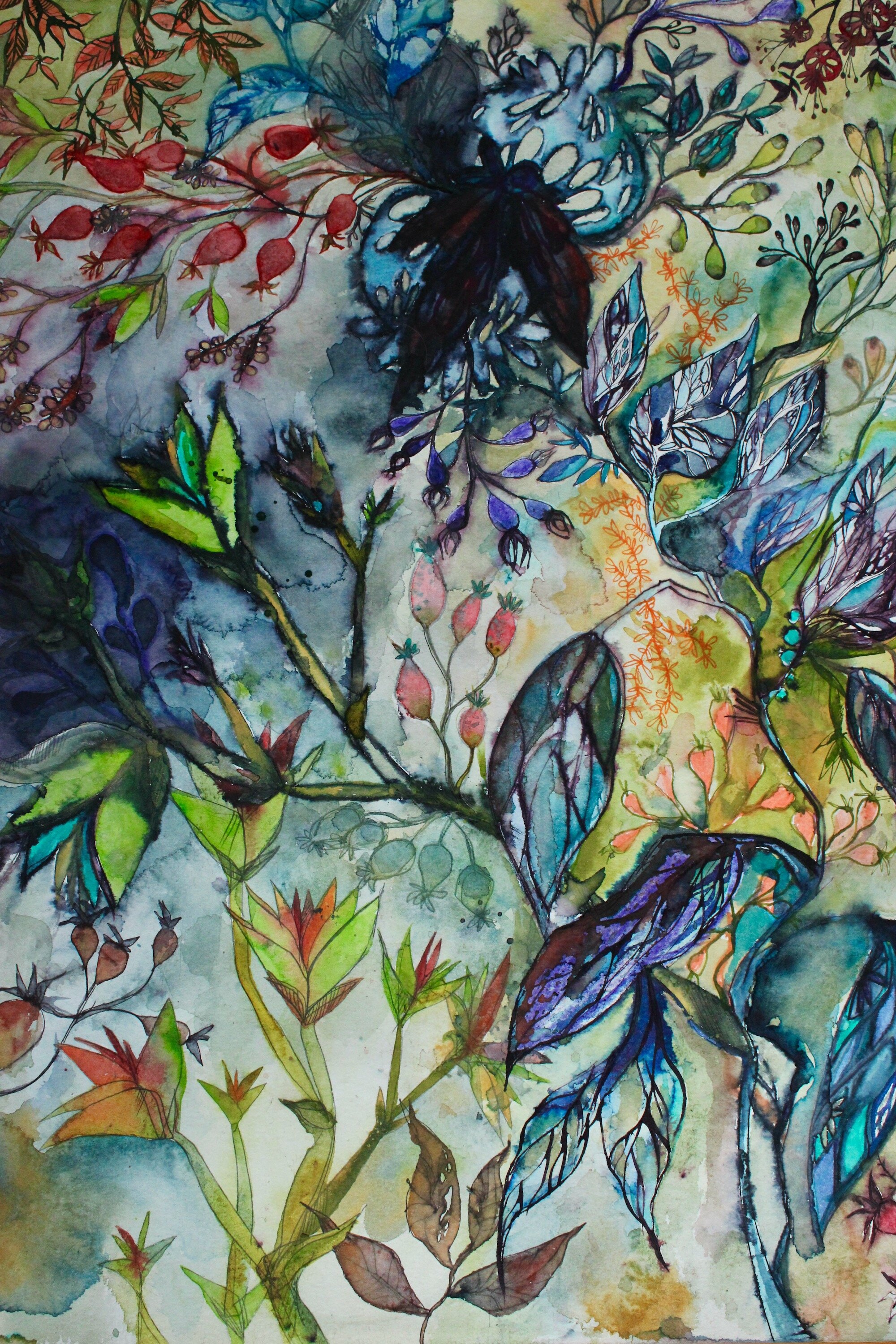
Nora Kovats. Of Untamed Gardens & Thoughts. 2019-2020. Watercolour, graphite, wax and ink painting on Hahnemühle aquarelle paper. This painting will be available as a postcard soon. Copyright © Nora Kovats.
I recently read a biography of one of my favourite female scientific artists: Maria Sybilla Merian (1647-1717). Based in Frankfurt am Main, Nürnberg and later Amsterdam, was a an influential etymologist, botanist, copperplate artist and explorer of the 17th and early 18th century. She found her way into art in her (step-)father’s etching workshop, partly through stubborn determination and partly because no-one was better suited to take over the business once her stepfather passed away, although, as a woman in Southern Germany at that time, she had no business being independent in any way. She became particularly famous for her butterfly and moth studies, and later, when she lived in Amsterdam, for travelling to Suriname to study tropical butterflies.

Jacob Marrel: Bildnis der Maria Sibylla Merian, 1679 (Kunstmuseum Basel).
I’ve always found the chaos of the 17th century particularly compelling. Political, scientific and religious ideas were turned completely upside down multiple times and interwoven in the most fascinating way. While ancient knowledge was still revered, society struggled to reconcile it with new scientific discoveries. Ideas we now consider to be scientific truths were ridiculed, while theological doctrines were hallowed as unquestionable, sacred knowledge. While half the Western world believed the ancient Greek postulation that ‘vermin’, critters like insects, worms and small reptiles, were the devil’s creatures born from poisonous mud, Merian observed caterpillars turning into butterflies and dared to suggest that worms were ‘God’s creatures’ too. While some supported her work, others suggested that her research was blasphemous and that she was associated with the devil.
My grandfather has a stunningly hand-coloured reprinted compilation of Merian’s Metamorphosis insectorum Surinamensium. I remember being allowed to look, but never touch, although I yearned to run my eight-year-old fingers over those incredibly fine etched lines and the reds and oranges bleeding into one another. I also remember my grandfather remarking, with a somewhat regrettable shrug, that unfortunately, Merian’s work wasn’t that scientific at all, that she had used her imagination quite a bit (as if that was somehow inferior to copying something that was before your eye), that she had fused plants and animals into aesthetically pleasing compositions. While Maria Sybilla Merian meticulously observed her subjects and did render them faithfully, her plates are all very deliberately structured compositions that reflect a sort of artificial order, imposed on the world she saw. I was left a little crestfallen, since it sounded to me as if that somehow devalued her life’s work.

Title page of Maria Sybilla Merian’s most famous work Metamorphosis insectorum Surinamensium.

Maria Sybilla Merian. Illuminated copper-engraving from Metamorphosis insectorum Surinamensium, Plate XXVII. Musa paradisiaca, 1705.

Maria Sybilla Merian. Illuminated copper-engraving from Metamorphosis insectorum Surinamensium, Plate LX. 1705.
Now, of course, I admire her work for exactly those reasons: Forging one’s own cross-disciplinary path somewhere between existing categories seems very appealing from a 21st century view. I love that idea of merging the outer and inner world to compile a new reality. It’s my own approach to my work.
I have become very interested in exactly that fusion of art and science, the interlocking of objective observation and subjective interpretation. Many people believe that, by definition, one of these viewpoints has to exclude the other to exist. I know people in both camps, but, because of my education in academic art, I know many who believe that everything is only a subjective experience and there is no actual truth that matters in life. I honestly think that’s quite problematic; I suppose I’m not a great fan of post-modernism because it strips our world of meaning.
But both of these modalities exist in our world at the same time – actually, I believe that they have to coexist for us to explain reality in any satisfactory way. To me, that gap between these seemingly unreconcilable approaches to the search for knowledge is spanned by imagination. Scientists need imagination to think of possible solutions to physical problems, artists need imagination to articulate their inner experience of the world. Humans need imagination to empathize, to solve problems, to have hope in unbearable circumstances, to achieve goals. Imagination is fuel for desire, imagination is glue to harmonize paradoxes. Imagination breeds enthusiasm, and cultivates meaning. Imagination truly is a gift that needs to be cultivated.
When I think of a way forward in this world of ours, a way to bridge squabbles and connect opposites and make space for crazy new ideas, imagination is key. We need to leave a little room for us to be surprised, to be awed. We need to make space for that inner garden to grow into something meaningful, hedged by meticulous questioning on one side and aesthetic meanderings on the other.

Nora Kovats. Expedition. 2020. Watercolour and ink painting on Hahnemühle aquarelle paper. This painting will be available as a postcard soon. Copyright © Nora Kovats.

Enamelling Workshop: A glimpse
When I hosted an enamelling workshop in my Berlin studio last month, I allowed outsiders an intimate glimpse into my creative enamelling practice for the first time.

Preparation: Each participant received all necessary copper and sterling silver parts to create their own Pearlcatcher pendant.
When I hosted an enamelling workshop in my Berlin studio last month, I allowed outsiders an intimate glimpse into my creative enamelling practice for the first time. Previous workshops were always at outside locations such as the University of Stellenbosch or Studio San W in Shanghai.
The workshop included demonstrations, ample time for experiments and trials, lunch, many stories, and the completion of a variation of my Pearlcatcher pendant design. The finished piece and all experiments were the participants’ to take home, of course.
I attempted to convey – apart from my own love for colour and an enthusiasm for playful experimentation – how I feel a sense of a physical space (the studio) and a process (the act of enamelling) merging, where the doing becomes a real space in time. It’s a capsule, an entity, a ritual even, a togetherness that is caught on that day between those exact hours in that exact human setup.

Fierce heat emanating from an open enamelling kiln.

I use a solid granite slab for the hot steel tripods coming out of the kiln to cool down.

Workshop setup in the studio’s front room.

We worked with prepared enamel powders - washed and sifted - as well as small glass ornaments, blobs, and splinters that can create fascinating speckled patterns as they melt into the enamel surface.
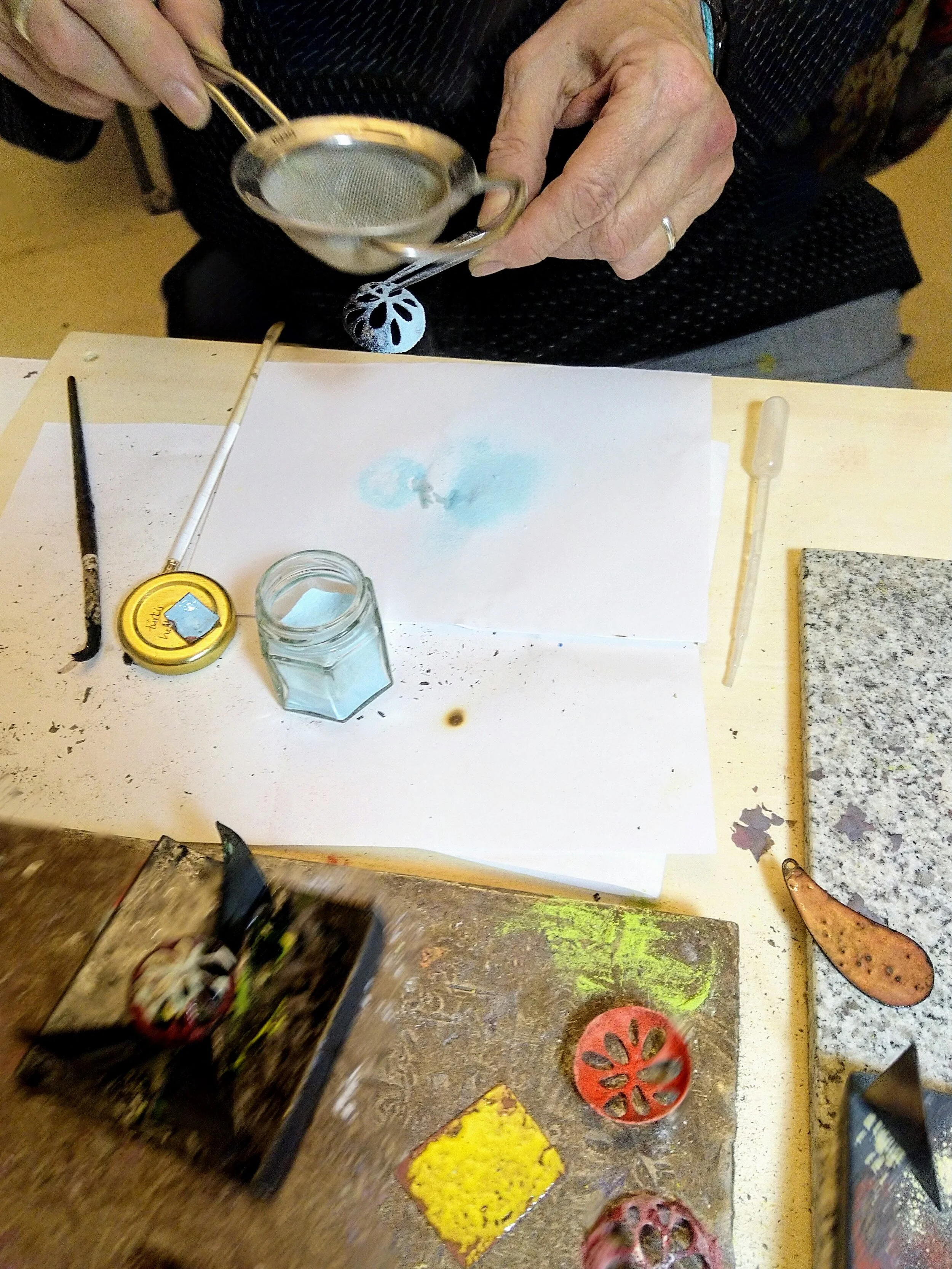
A participant working on her first outside layer in light forget-me-not blue.

A workshop participant setting her enamelled piece into its silver setting, with a large cream-coloured pearl caught inside.
A memory of this space will capture the mood in its entire complexity – the light on a grey January afternoon, the smell of roasted lemon-pepper brussel sprouts for lunch, the heat of the enamelling kiln, the texture of sand-like enamel powders, the subtle differences in colours, the stalling of time as it is swallowed by deep concentration and effort.

A glimpse of our studio kitchen almost ready for our communal lunch, which formed part of hosting the workshop.

A scattered display of different enamelling techniques, tools and a tea tray.
I am definitely planning on repeating this experience soon, so keep an eye out for news and dates on my calendar.
Fire · Colour · Light – On Enamelling and Becoming is a book about engaging with the art of enamelling, about my work set between meticulous craftsmanship and creative intuition, about a mysterious inner source of creativity, Nature as a teacher, and the search for meaning through artmaking.