blog
Welcome to my blog. This is a place where I think out loud, show you what I’m up to in the studio, share impressions of inspiring events or everyday moments that moved me. Some entries are carefully curated essays, others are just a few thoughts, sometimes written in English and sometimes in German.


Featured posts
newest blog entries:








FULL BLOG:
DIE KUNST ZU SCHENKEN: Ausstellung im Historischen Museum Bamberg
DIE KUNST ZU SCHENKEN ist Austausstellung und Verkaufsmesse mit höchstem gestalterisch-handwerklichen Anspruch in einem. Gestalter:innen aus ganz Deutschland zeigen hier ihre zeitgenössischen Arbeiten in Bamberg. Lassen Sie sich inspirieren, kommen Sie mit den Kunstschaffenden ins Gespräch und erwerben Sie exquisite Geschenke.

DIE KUNST ZU SCHENKEN
Wir spüren es intuitiv: Ein handgefertigtes Objekt, in das die gestalterische Kreativität und das außerordentliche handwerkliche Können einer kunstschaffenden Person geflossen ist, lebt; es ist beseelt. Ganz anders als die vielen massengefertigten Fabrik-Produkte, die uns im Alltag umgeben.
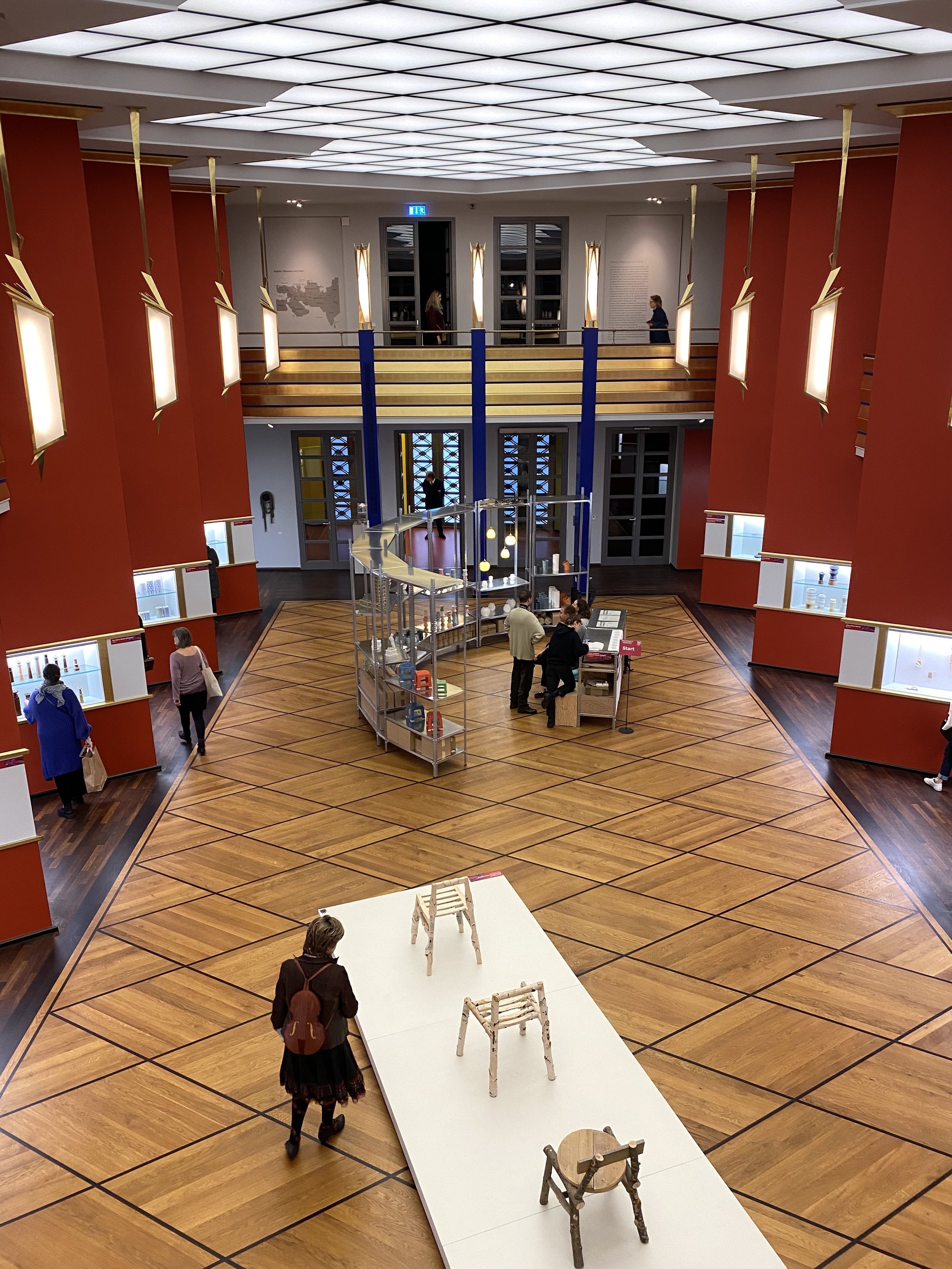
Am zweiten Adventswochenende stellen zwölf Kunstschaffende ihre Arbeiten in den ehemaligen Pferdeställen der Alten Hofhaltung im Historischen Museum Bamberg aus. Von Keramik bis Handweberei, Malerei und Metallgestaltung, Emaille und Holz, vom handgefertigten Schreibgerät bis zum leuchtenden Porzellanobjekt, sind eine Vielzahl verschiedenster Gewerke und Positionen vertreten. Diese Verkaufsausstellung bietet dazu die Möglichkeit, selbst mit den Künstler:innen ins Gespräch zu kommen, in ihre einzigartigen Welten einzutauchen und exquisite Geschenke zu erwerben.
Im Fokus steht die Qualität des handwerklich-gestalterischen Könnens. Besondere oder traditionsreiche Techniken werden von diesen Künstler:innen nicht nur sorgsam gepflegt, sondern in den fertigen Arbeiten auch direkt erlebbar gemacht. Die Ausstellenden 2023 sind:
Elke Eder-Eich, Keramik
Alvaro-Luca Ellwart, Schmuck/Objekt
Dagmar Christina Gerke, Glasdesign
Christiane Hamacher, Malerei/Ikonen
Sophie B. Kloess + Jan Hebach, Metallgestaltung Silber und Stahl
Nora Kovats, Schmuck/Illustration
Nicole v. Lindeiner/ das Tuchwerk, Handweberei
Reinhard Netter, Drechslerei
Frank Pressentin/ Elbwood, Schreibgeräte
Jochen Rüth, Keramik
Christiane Toewe, Studioporzellan
Richard Wientzek, Zeichnung/Printedition
Veranstaltungsort:
Museen der Stadt Bamberg
Historisches Museum in der Alten Hofhaltung
(Ehemalige Pferdeställe)
Domplatz 7, 96049 Bamberg
www.museum.bamberg.de
Öffnungszeiten:
Sa. 9.12.23 10:00 – 19:00 Uhr
So. 10.12.23 10:00 – 17:00 Uhr
(Sonntag Eintritt frei.)
Dieses Projekt ist aus der früheren Künstlermarkt-Initiative LAST MINUTE der Bamberger Porzellankünstlerin Christiane Toewe entstanden. Die neue Ausstellung wird von Toewe gemeinsam mit dem Gestalterpaar Nora Kovats und Alvaro-Luca Ellwart kuratiert, und in Zusammenarbeit mit den Museen der Stadt Bamberg umgesetzt. Sie findet zum ersten Mal in dieser Form in der Alten Hofhaltung statt.
DIE KUNST ZU SCHENKEN soll einen wertvollen Beitrag zur vorweihnachtlichen Kulturlandschaft der Stadt Bamberg leisten.
Wir freuen uns über euren Besuch!


Grassimesse: Impressionen
Grassimesse: Impressionen
Deutsch.
Grassimesse! Einige Eindrücke von unserem spontanen Ausflug nach Leipzig heute.
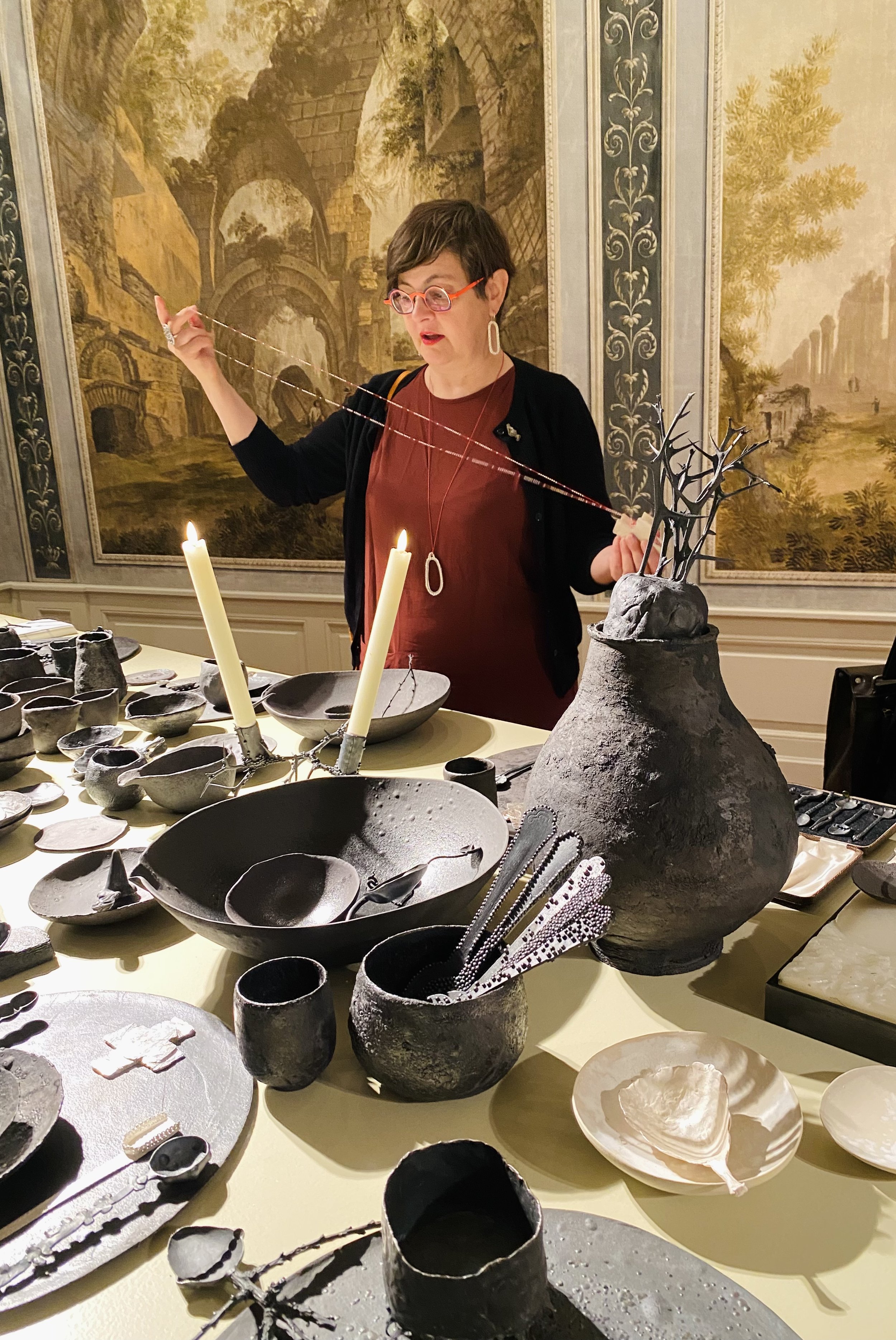
Gabi Veit am ‘Gedeckten Tisch’, einer bankettartigen Installation, die die Schmuck- und Metallkünstlerin in Kooperation mit der Keramikerin Dietlind Wolf zusammengestellt hat.

Keramik von Dietlind Wolf mit Silberlöffeln von Gabi Veit.

Stimmungsvolle Beleuchtung in der Alten Orangerie des Grassimuseums.

Dietlind Wolf + Gabi Veit.

Dietlind Wolf + Gabi Veit.

Dietlind Wolf + Gabi Veit: eine festlich gedeckte Tafel, im Spiegel.

Leuchtendes Glasobjekt von Dagmar Christina Gerke. Das noch flüssige Glas wird in Formen aus Bambus gepresst, die organisch-wellige Abdrücke im Glas hinterlassen.
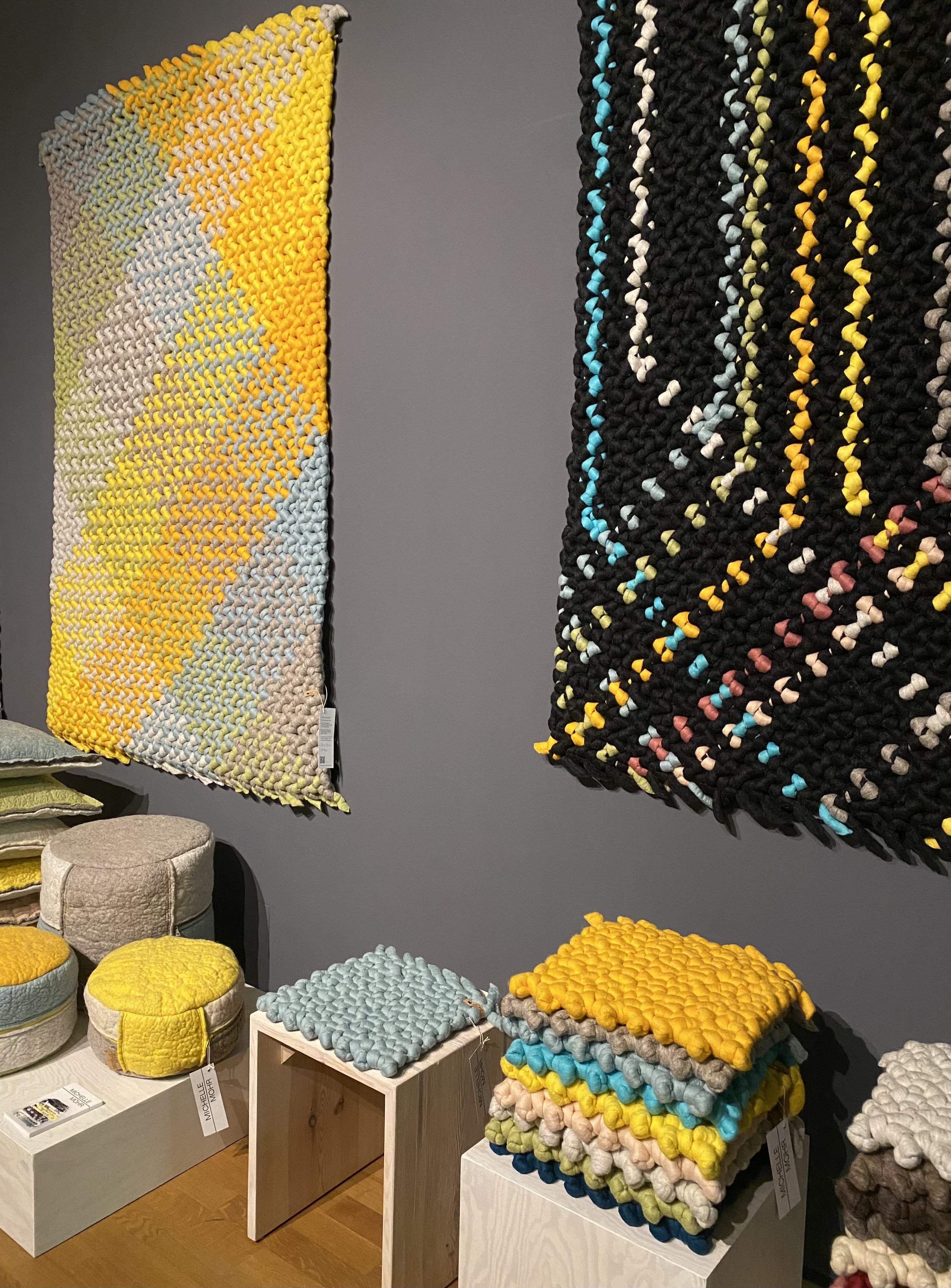
Handgewerbte Teppiche und gefilzte Sitzkissen von Michelle Mohr - aus einheimischer, nachhaltig gewonnener Schafwolle.

Handgewerbter Teppiche von Michelle Mohr.

Glasobjekte mit integrierten Kupferelementen von Federica Sala.

Detail: Glasobjekt mit Kupfer-Kragen von Federica Sala.
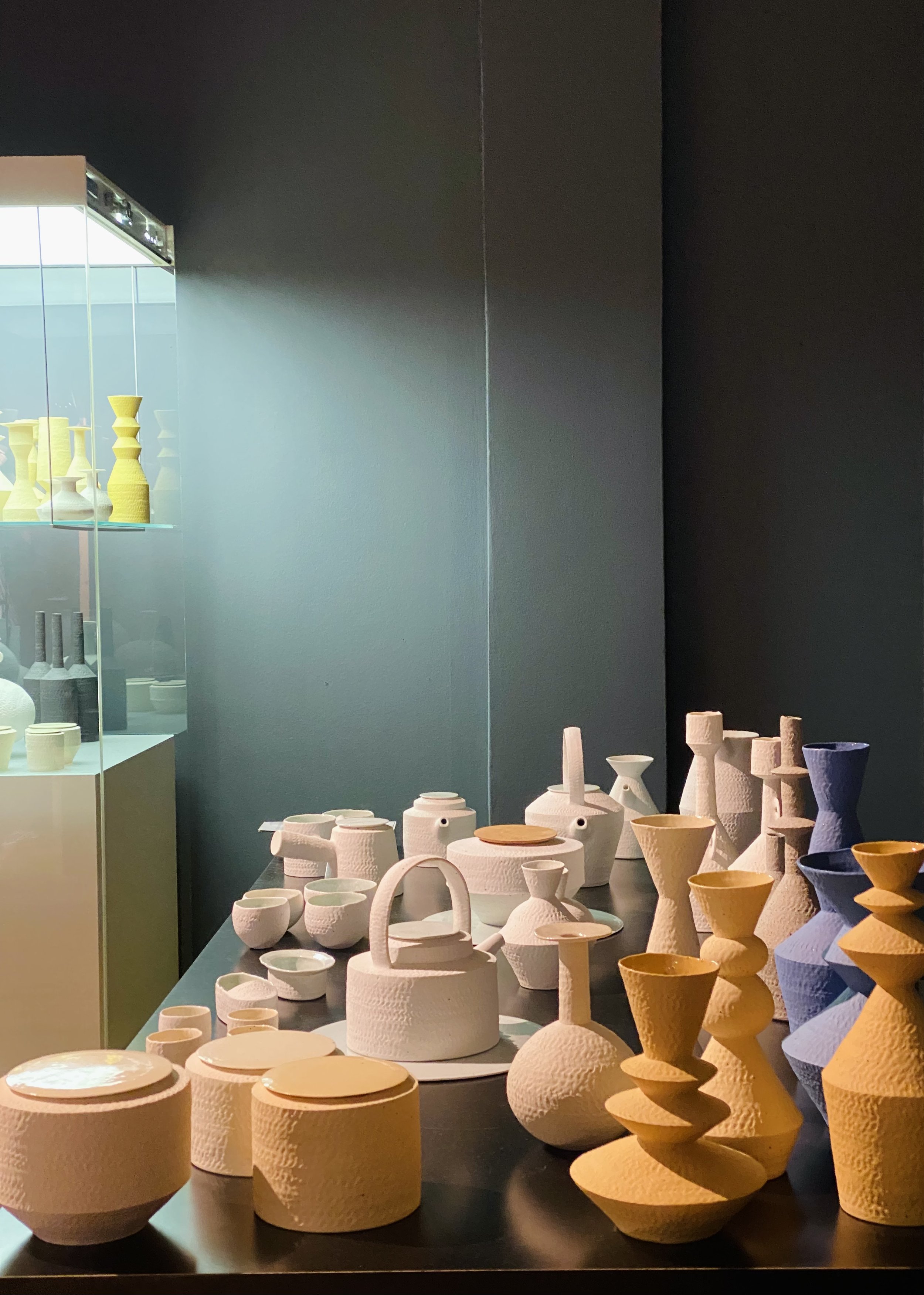
Keramik von Kiho Kang.
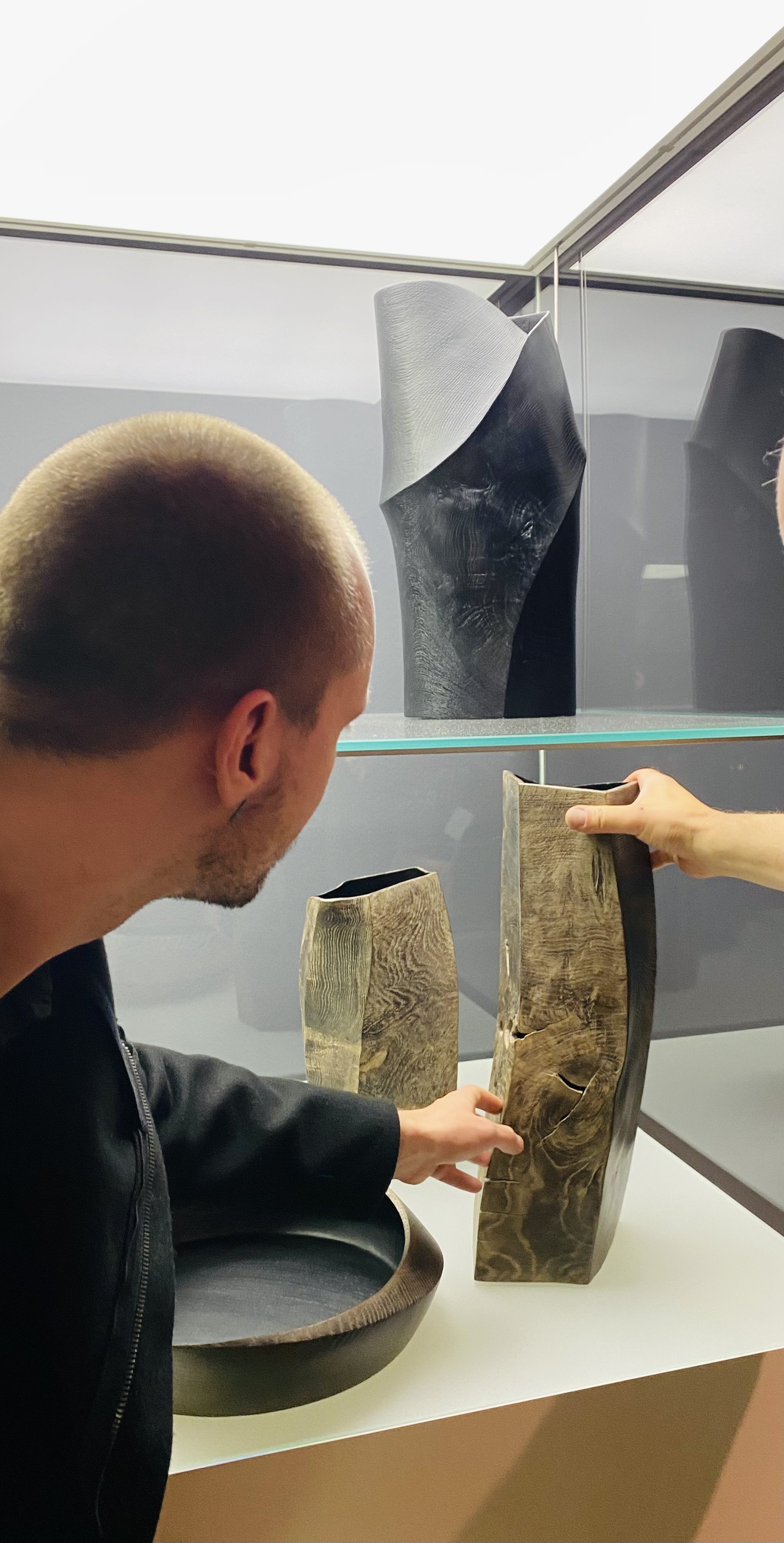
Holzobjekte von Konrad Koppold.
Bumiller Collection: A Hidden Gem
A Hidden Treasure Collection
English.
Did you know that in the heart of Bamberg’s old town, hidden in a medieval building accessible from a narrow side-alley, there’s an incredible collection of Islamic art from the Middle Ages? Neither did I, until recently. The Bumiller Collection includes about 6500 objects, crafted from metal, ceramics and stone, with most of them roughly dating to a period between the 7th and 13th century BCE and originating from what today encompasses Iran, Uzbekistan and Afghanistan.
Today, we spent the morning absorbed in the aura of this meticulously restored historical building and the treasures it contains. Highly recommended.
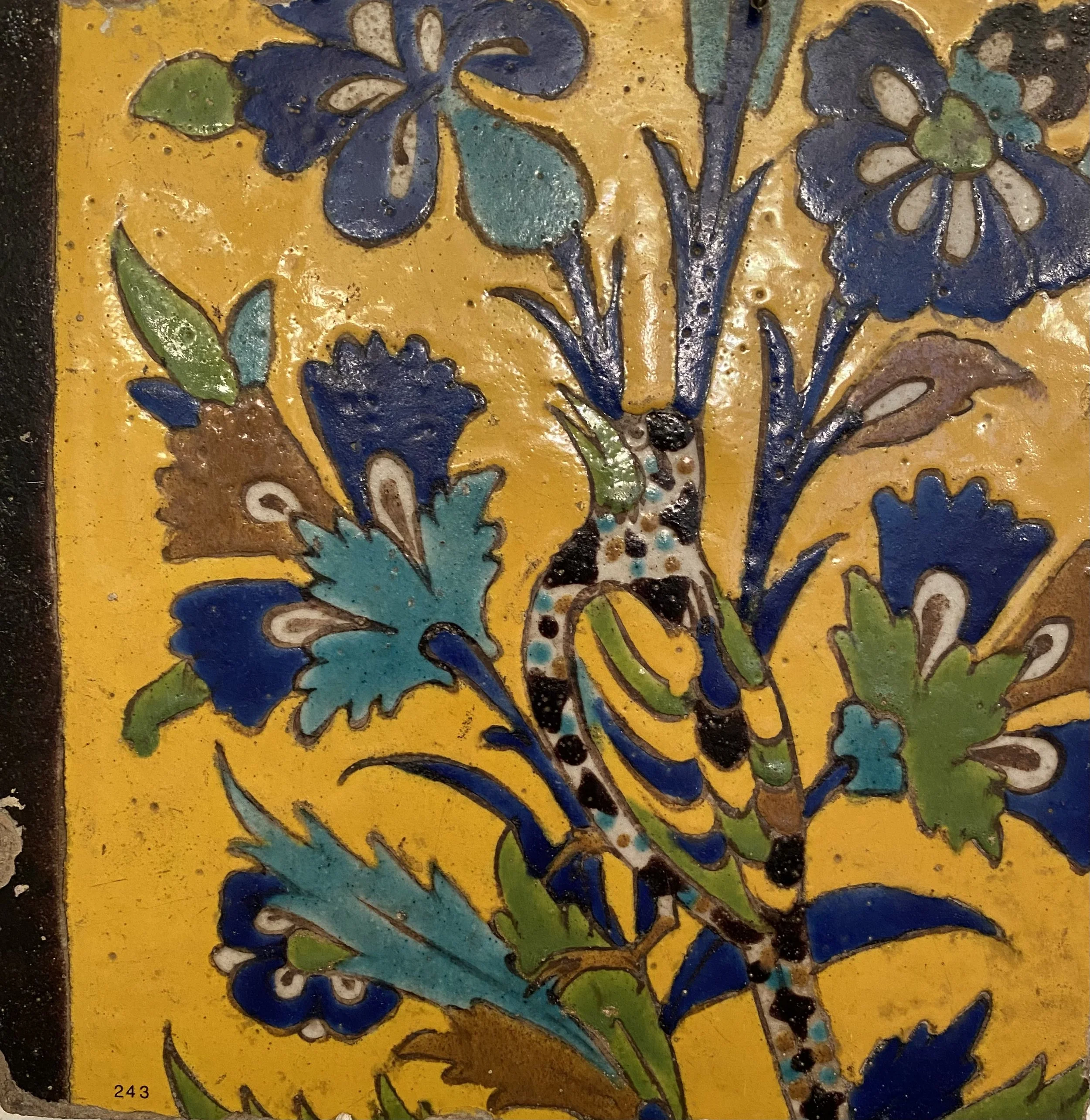
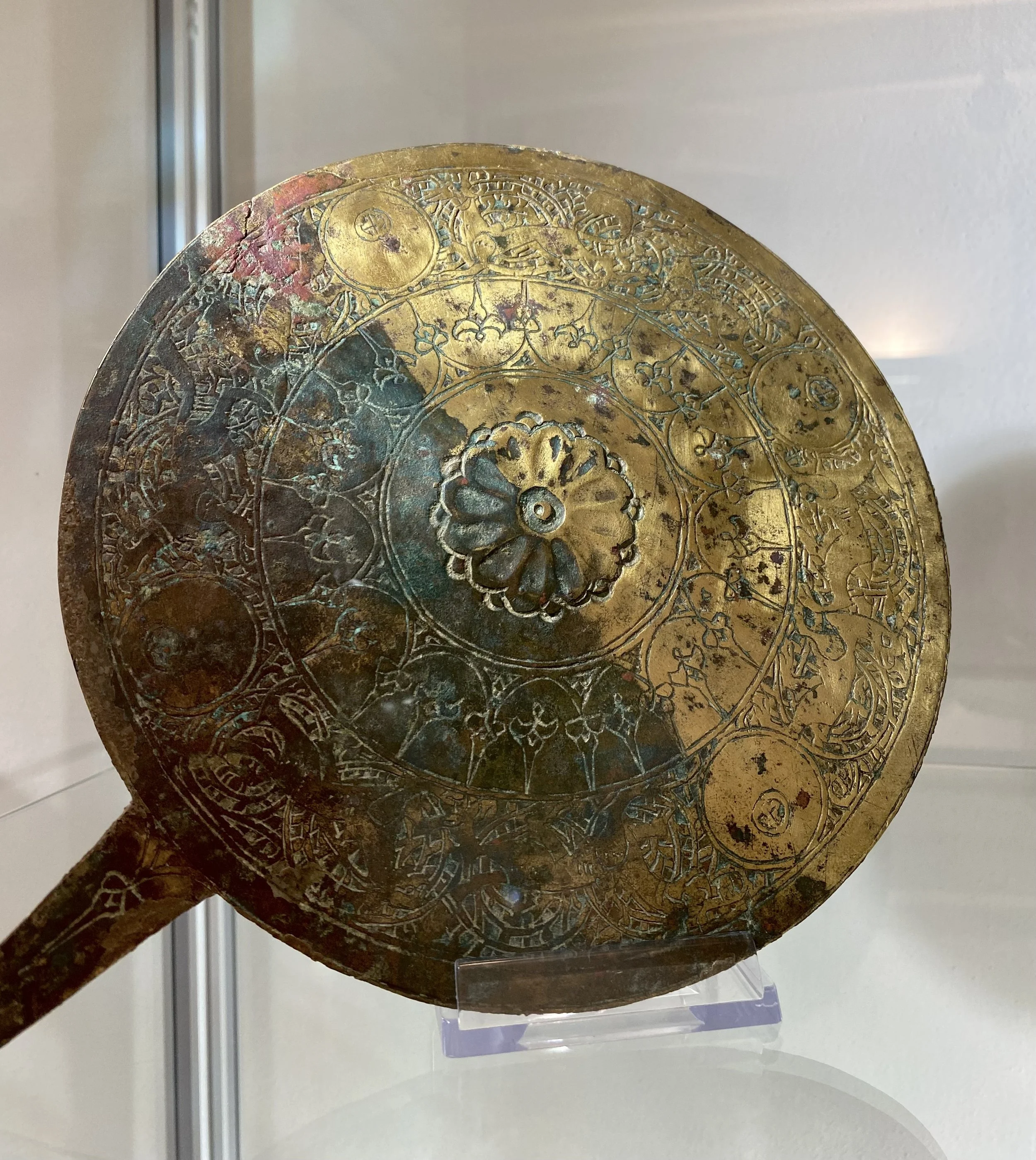
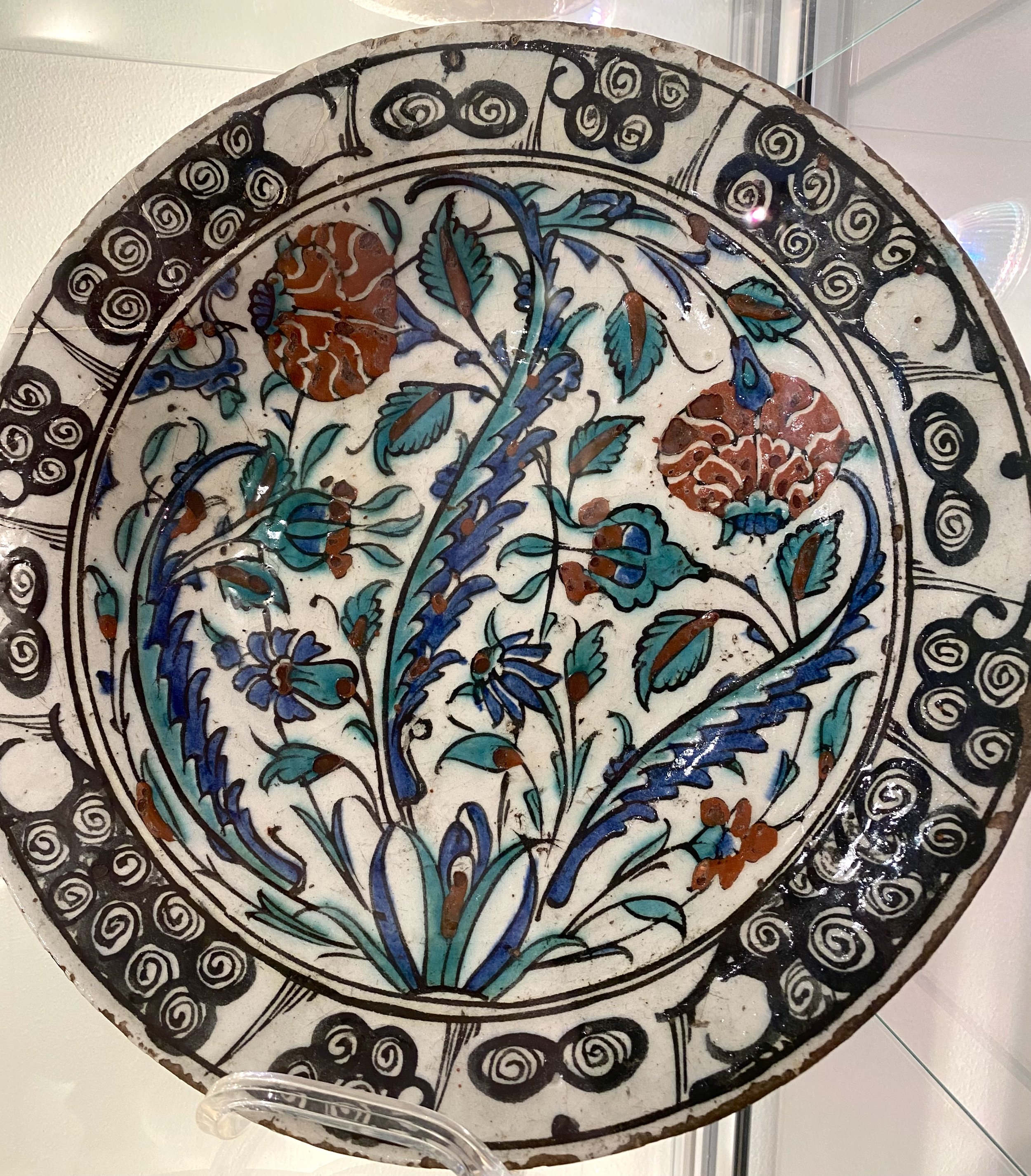
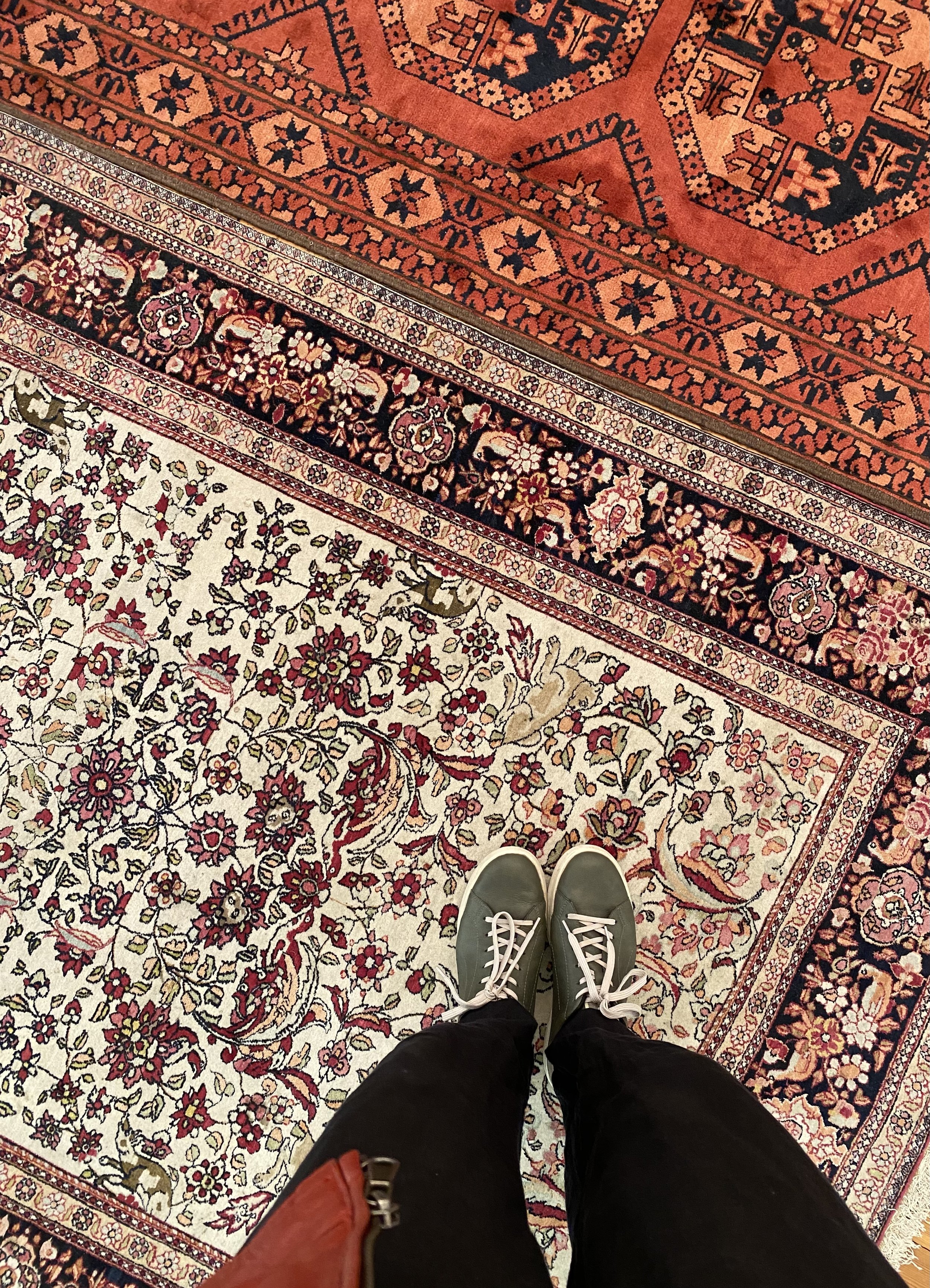
Me hunting for patterns as usual, and pomegranates.

Exquisite little bronze perfume or cosmetics bottles. Beauty paraphernalia was huge in the medieval Islamic world.


Antikmarkt Bamberg: Eindrücke
Antikmarkt 2023
Deutsch.
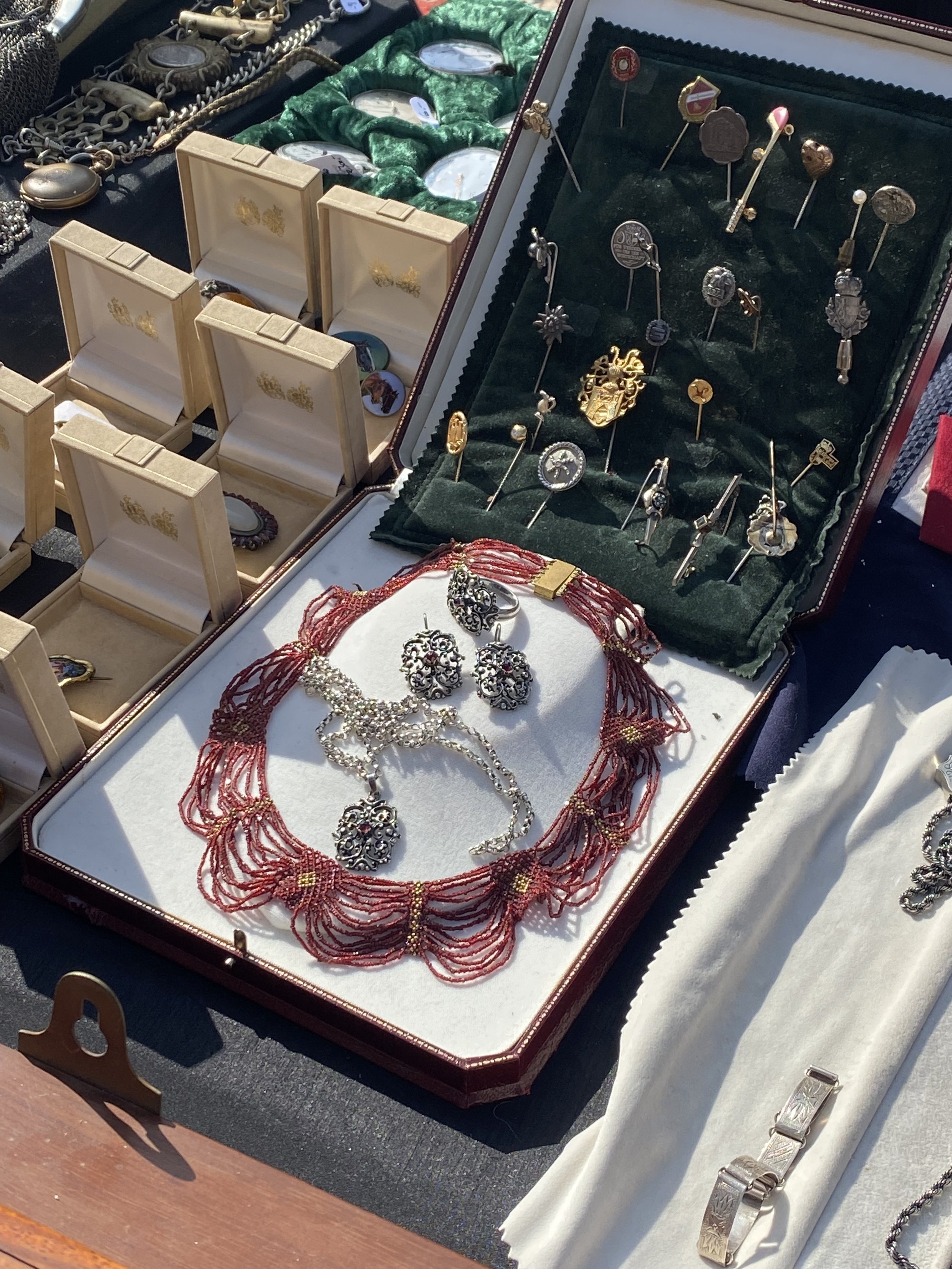
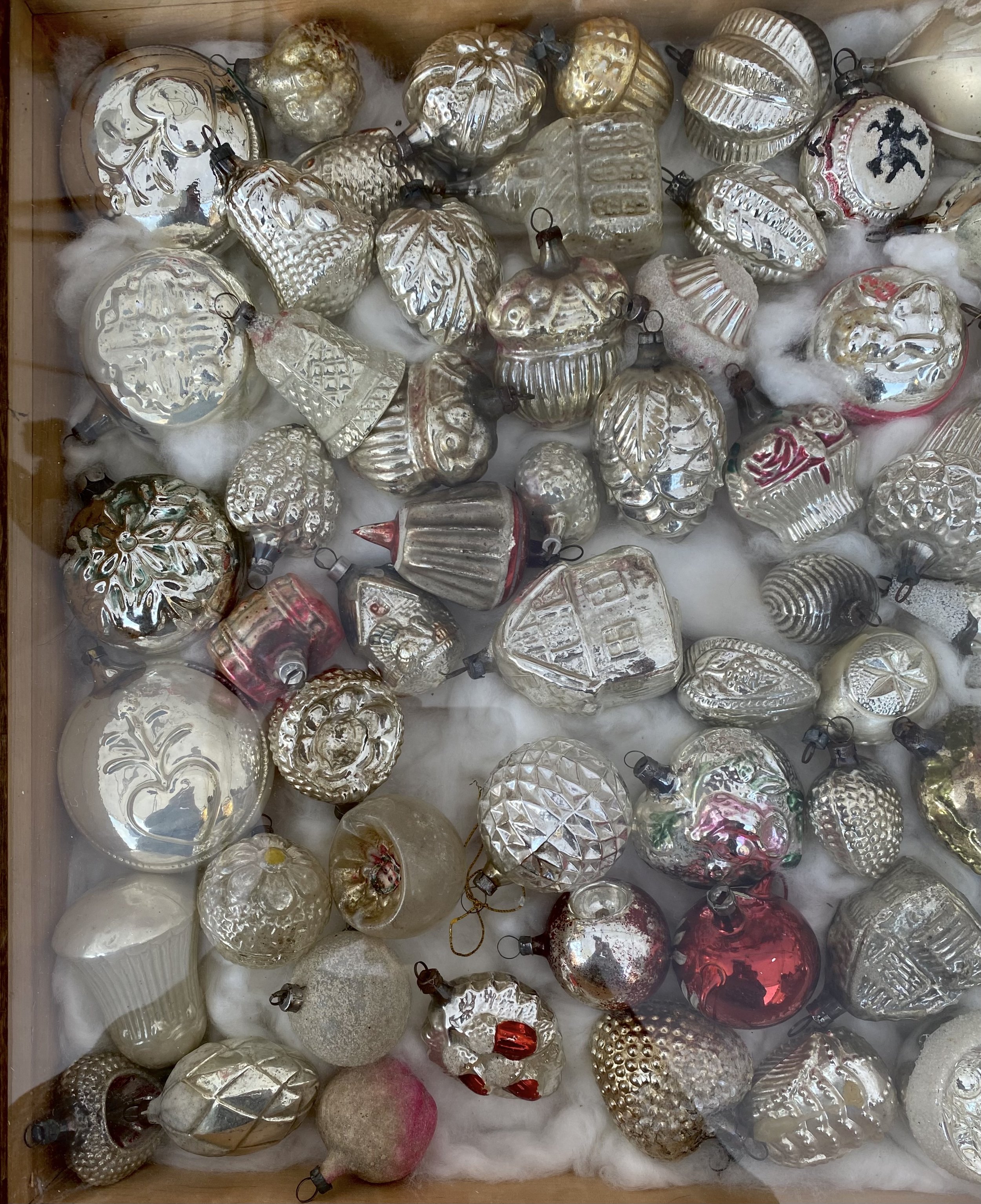
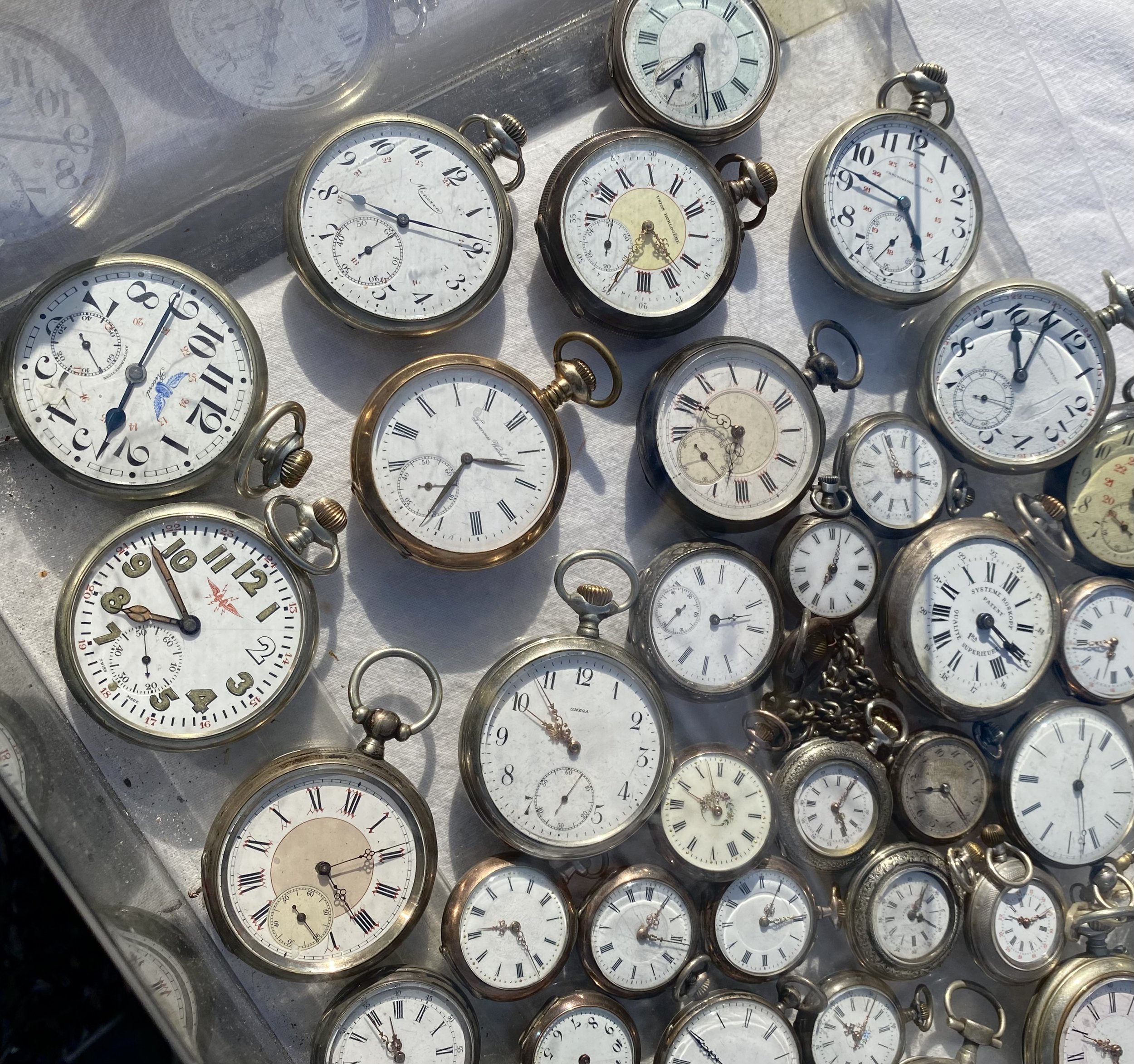
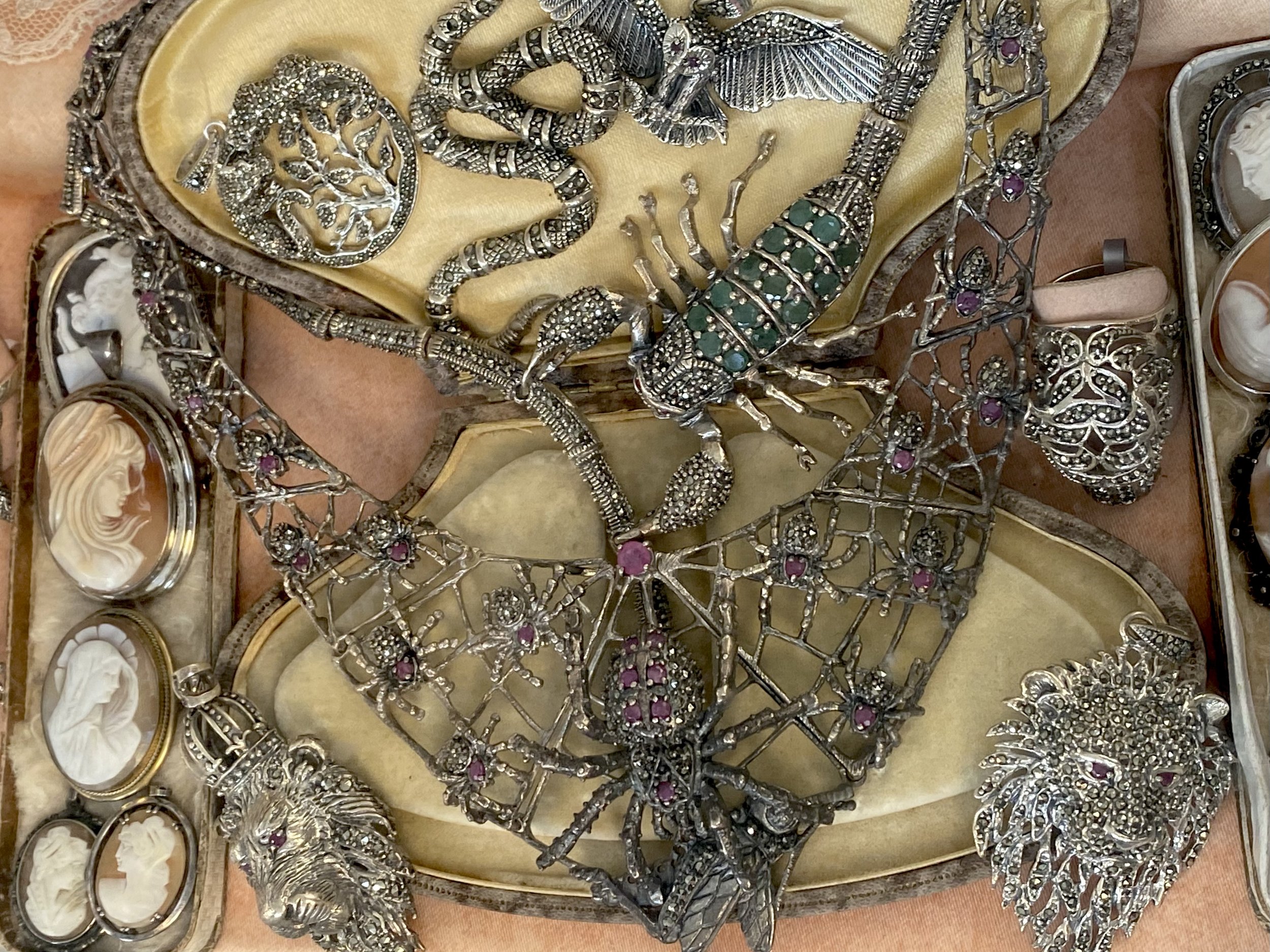
Antikmarkt in Bamberg: Ein zelebrierter Bummeltag, in dem die ganze Stadt mit Antiquitäten aller Art gefüllt ist, und alles von Trödel bis zu echten Kunstschätzen zu finden ist. Dieses Jahr besonders schön im noch fast spätsommerlichen Sonnenschein.


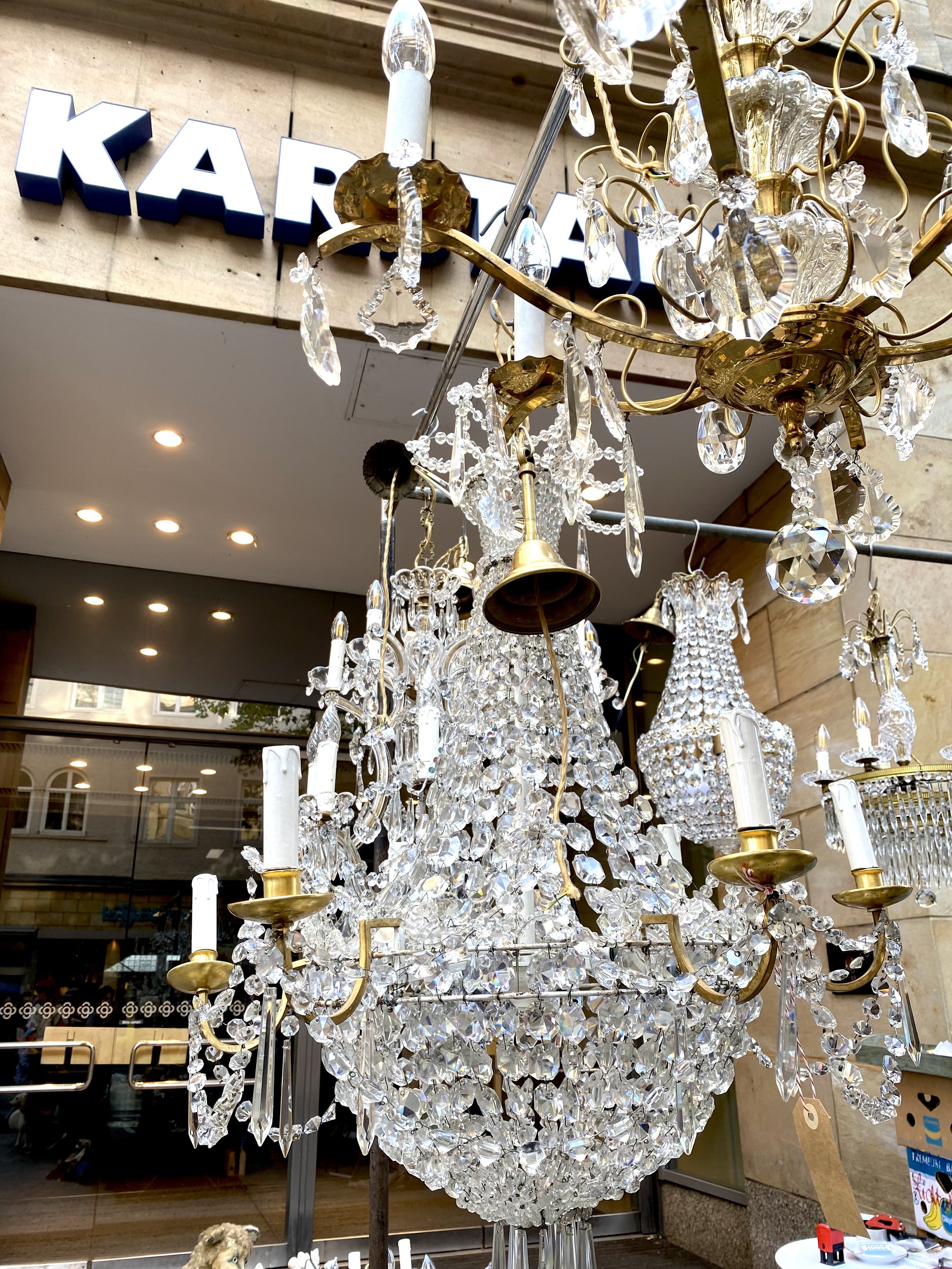
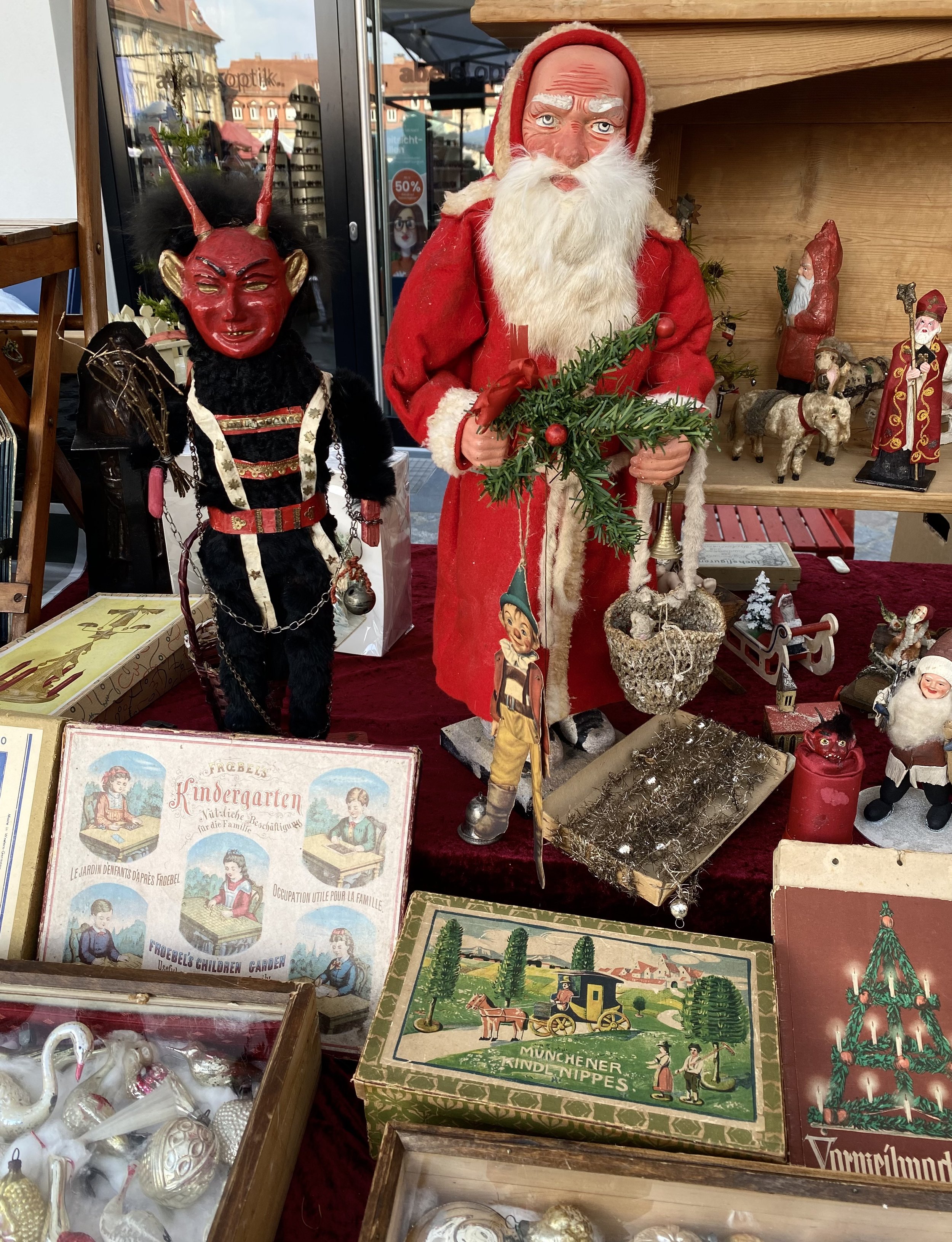
Fies dreinblickende Weihnachtsdeko, teilweise mit handgefertigten Glas-Christbaumverzierungen aus dem 19. Jahrhundert.

Thoughts about Lichens
Thoughts about Lichens
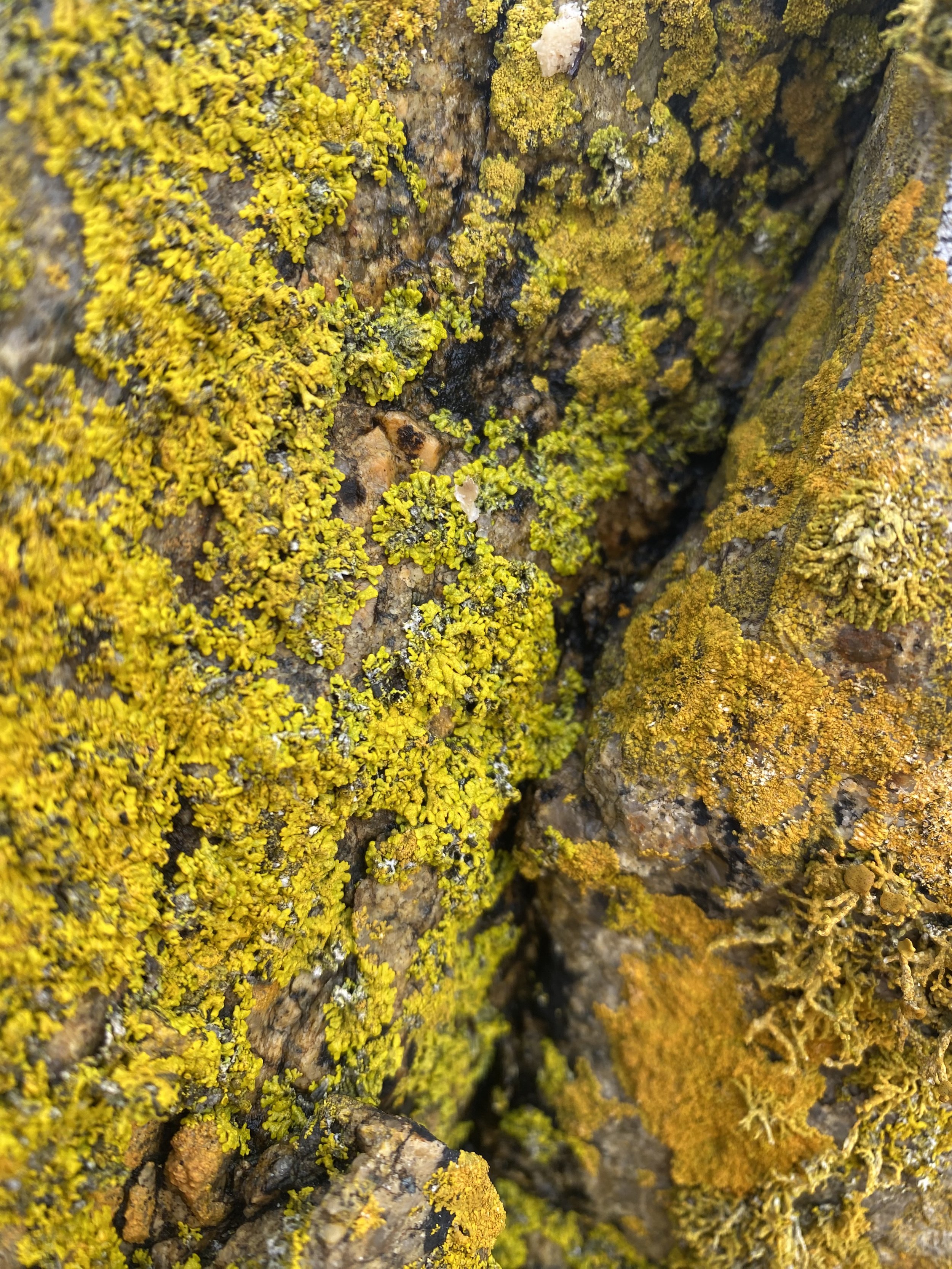
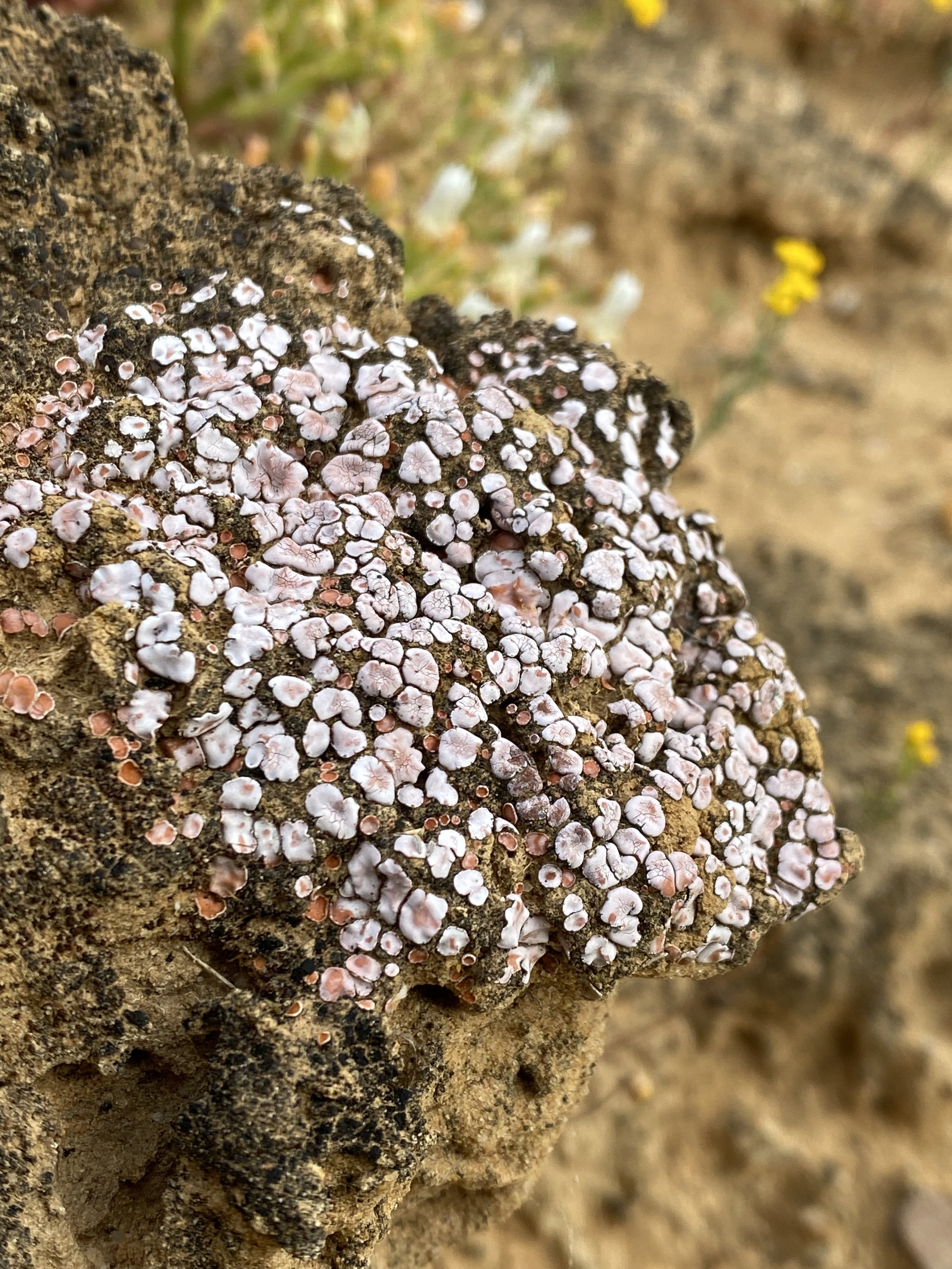
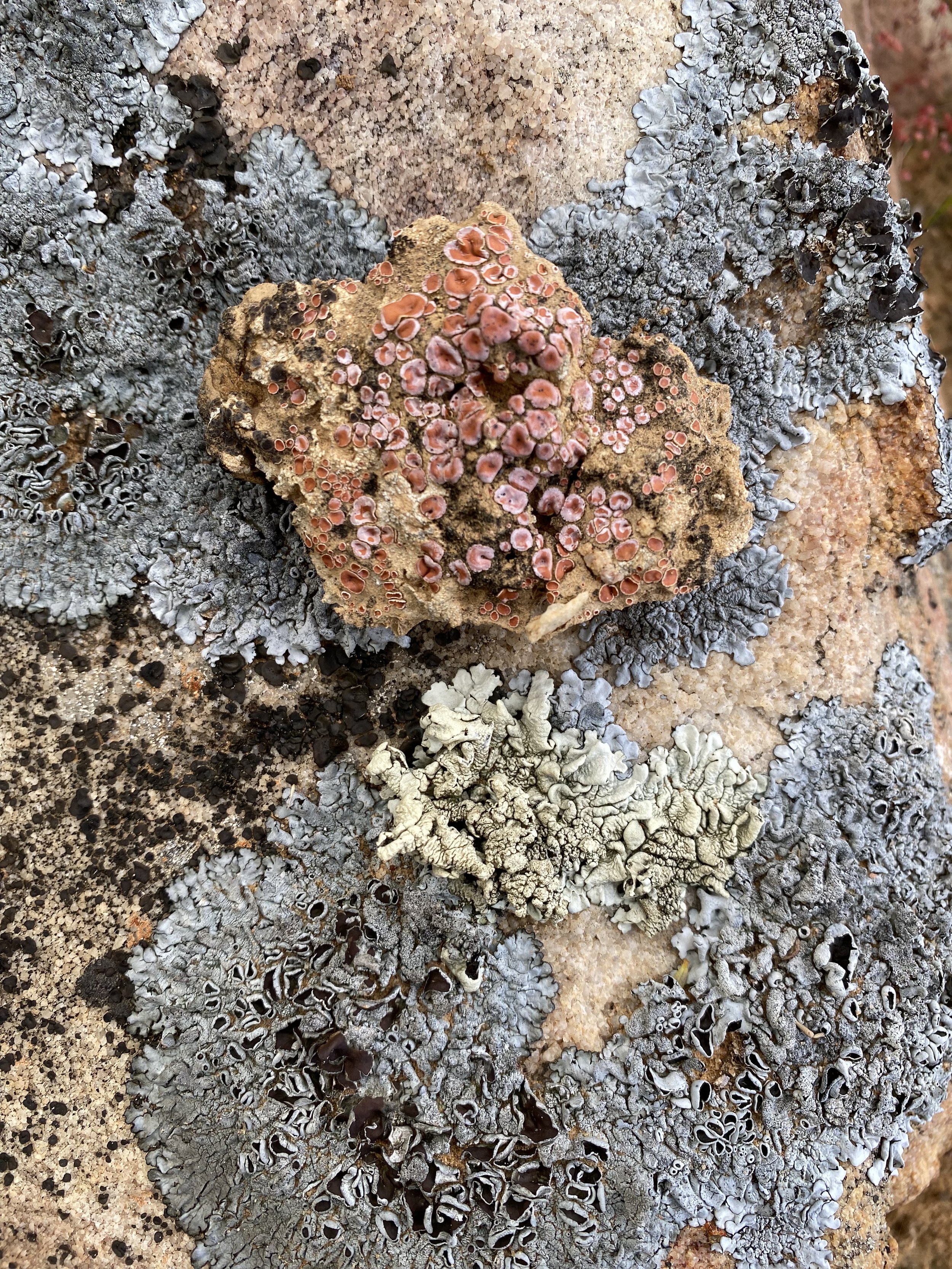
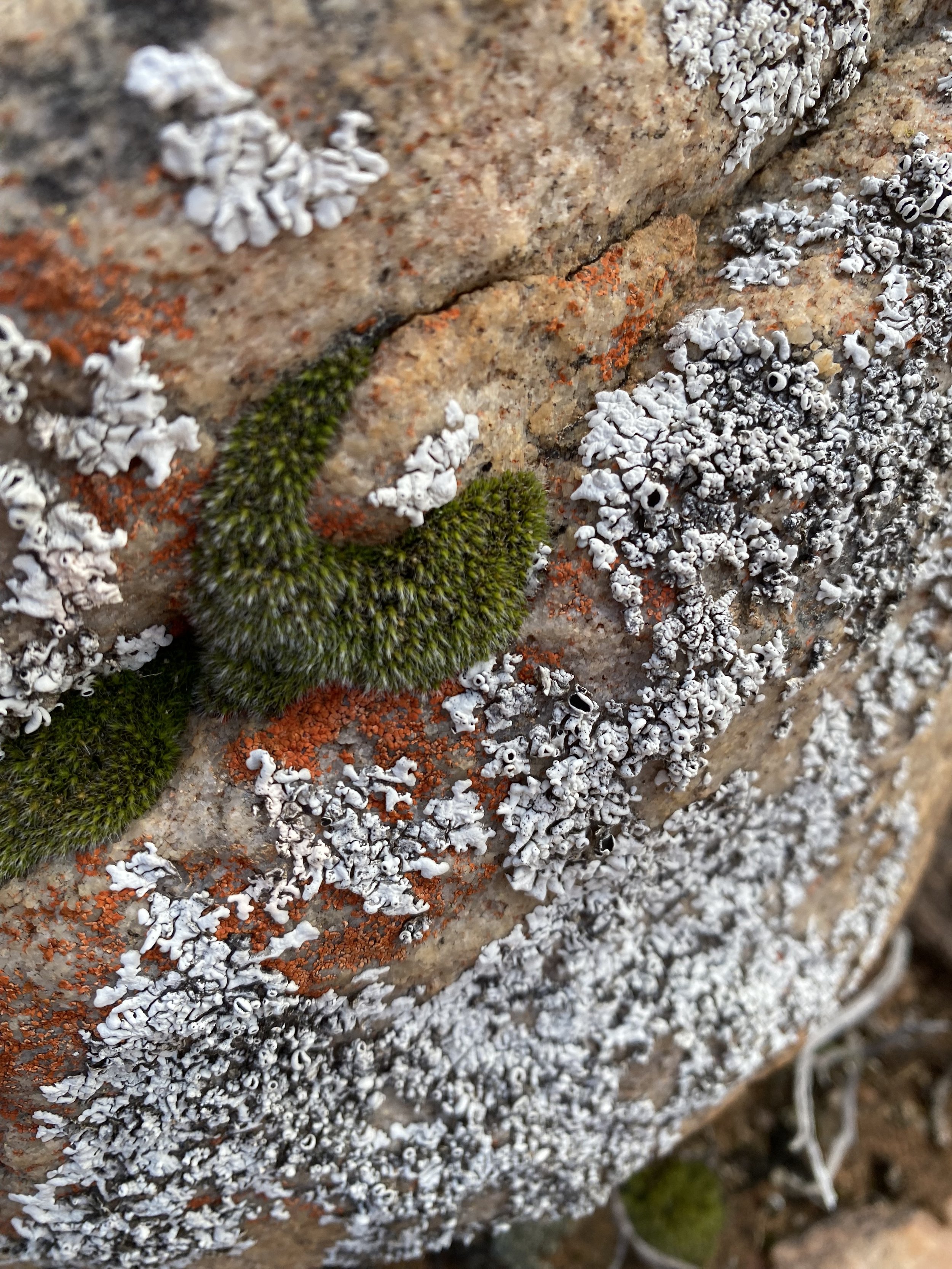
Today, I’m reading about lichens. How they cover as much as 8% of the earth’s surface (more than is covered by tropical rain-forests), how they are ancient composite organisms made up of fungi, algae and cyanobacteria, how they can exist in the extremest conditions. Merlin Sheldrake calls them “small worlds” in his book Entagled Life - How fungi make our worlds, change our minds, and shape our futures. “Lichens are places where an organism unravels into an ecosystem and where an ecosystem congeals into an organism.”
I’m very interested in this miracle of symbiosis and collaboration, not to metion the aesthetic versatility they display. On my recent travels to South Africa, I encountered them everywhere - pink lichen growing directly on the red hard earth in the Cederberg mountain range, bright yellowish-green ones on coastal rocks, exposed to sun and Atlantic sea-spray and salt. What happens when mosses and lichen are neighbours?
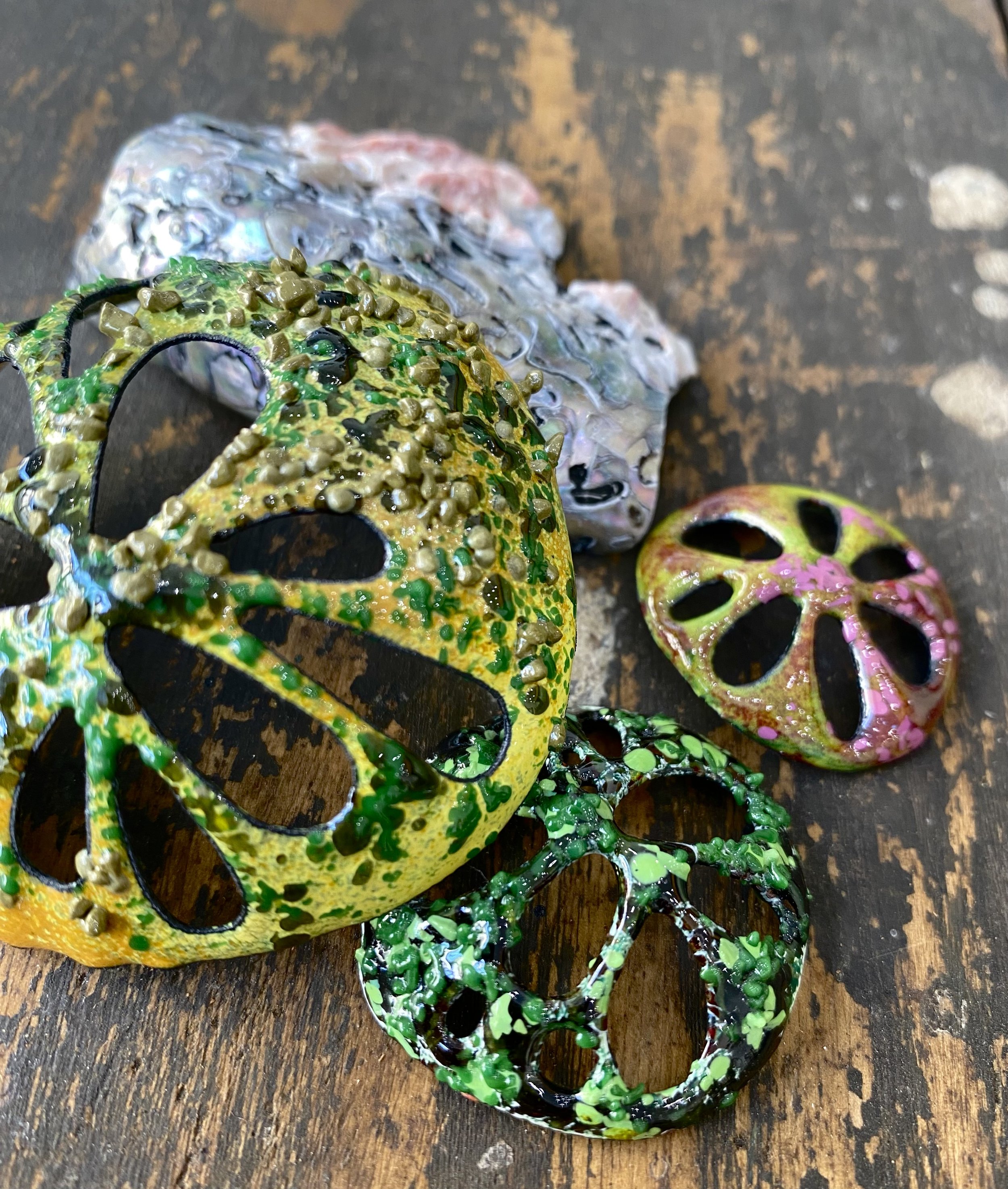
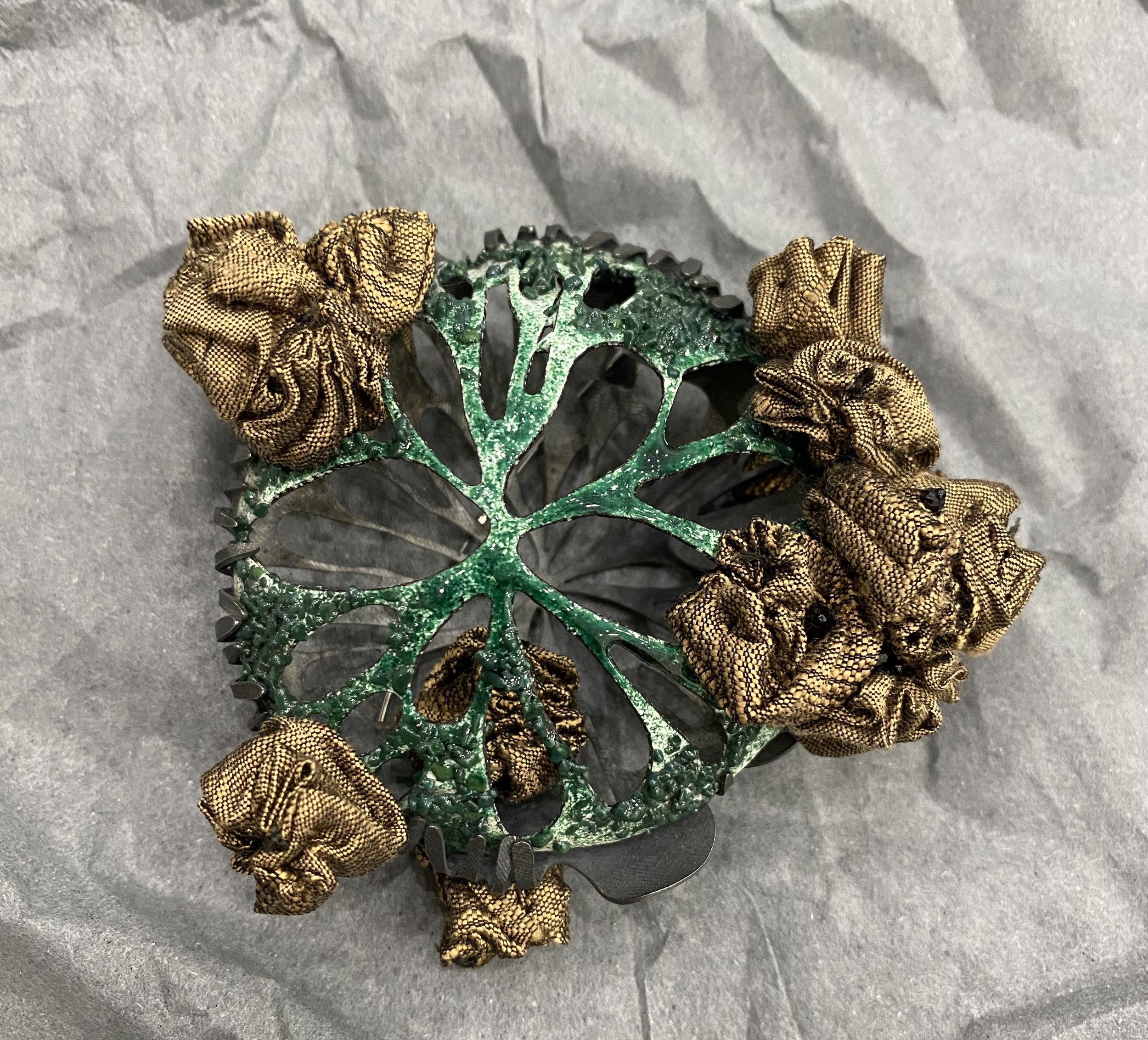
I’m thinking about how to build an impression of organisms-growing-on-other-organisms in my work, how I can play with these soft-hard surfaces, how I can use these textures, colours to create a sense of encrustation, composite beings, colonies (as you can see in my recent experiments below).

My 40 Day Autumn Challenge: 29.09.2023-07.11.2023
These images and thoughts below are fragmentory on purpose; they are intended to capture different snapshots of this season, being edited and expanded with each passing day.
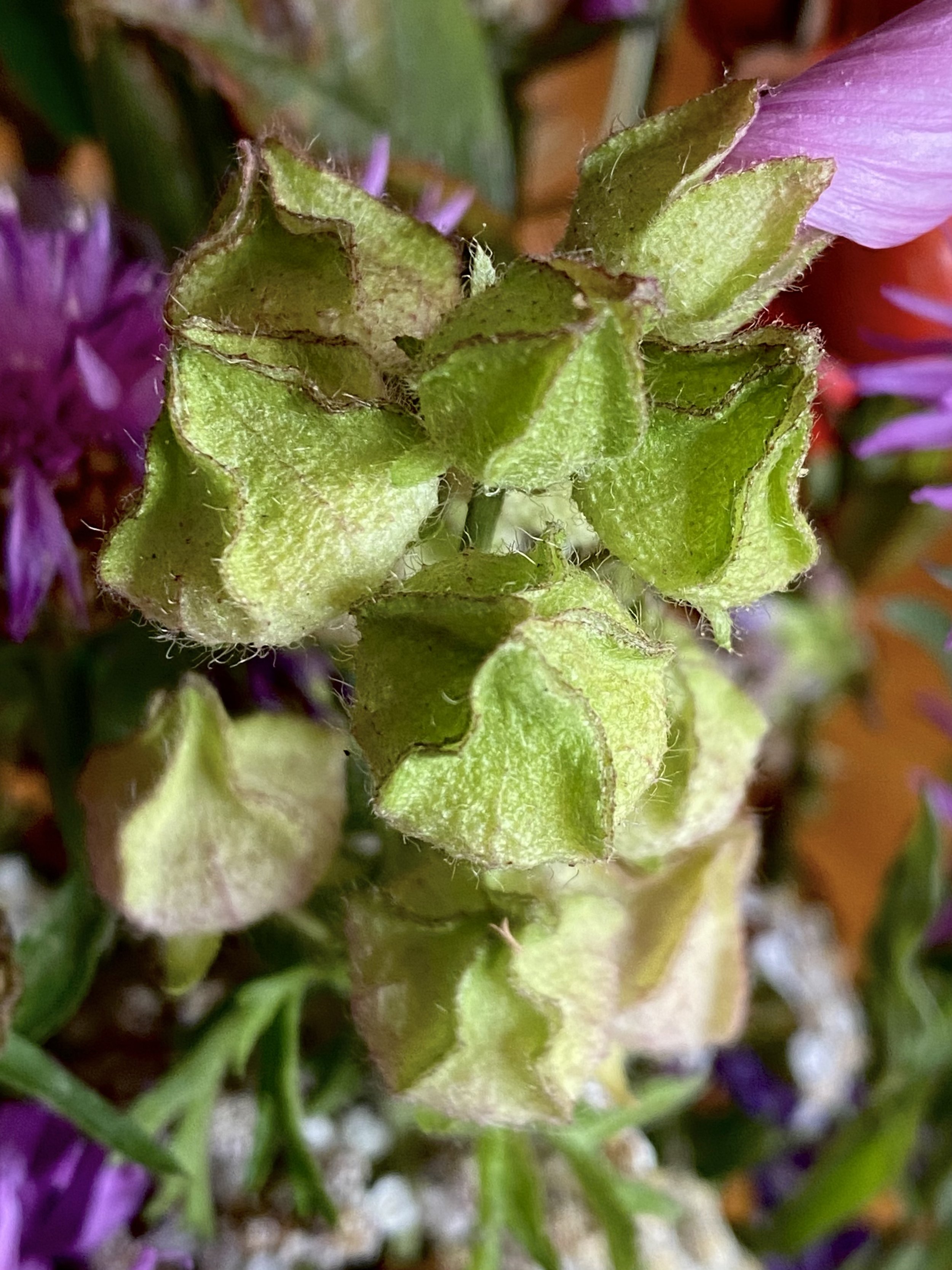
Meadows. Currently one of my biggest joys: exploring the meadows that slope around the Altenburg hill above Bamberg, spending time in that infinite and ever-changing ecosystem, bending down and looking at life up close, moving between grassland and hedges teeming with insects, wildflowers, birds, rosehips, berries. Every season paints these hills in new colours. Right now, a large variety of pale pinks and bluish purples are complemented with creamy white dabs of Queen Anne’s lace flotsam. The meadowflowers’ evocative German names are like poetry; Wiesenflockenblume, Herbstzeitlose, Wiesenschaumkraut, Gamander-Ehrenpreis, Schafgarbe …

Autumn
40 Days ofd Seasonal Thoughts & Impressions
These images and thoughts below are fragmentory on purpose; they are intended to capture different snapshots of this season, being edited and expanded with each passing day.
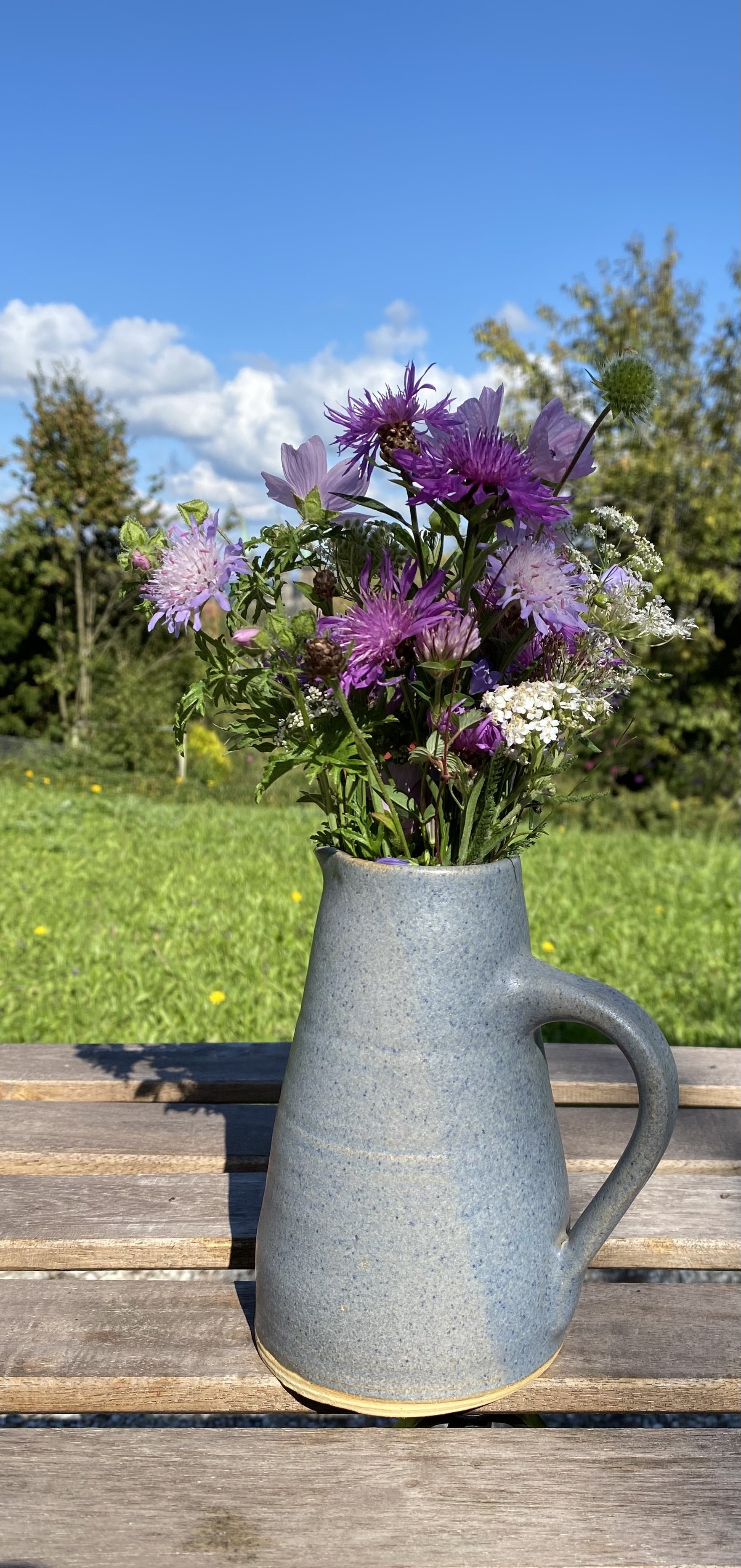
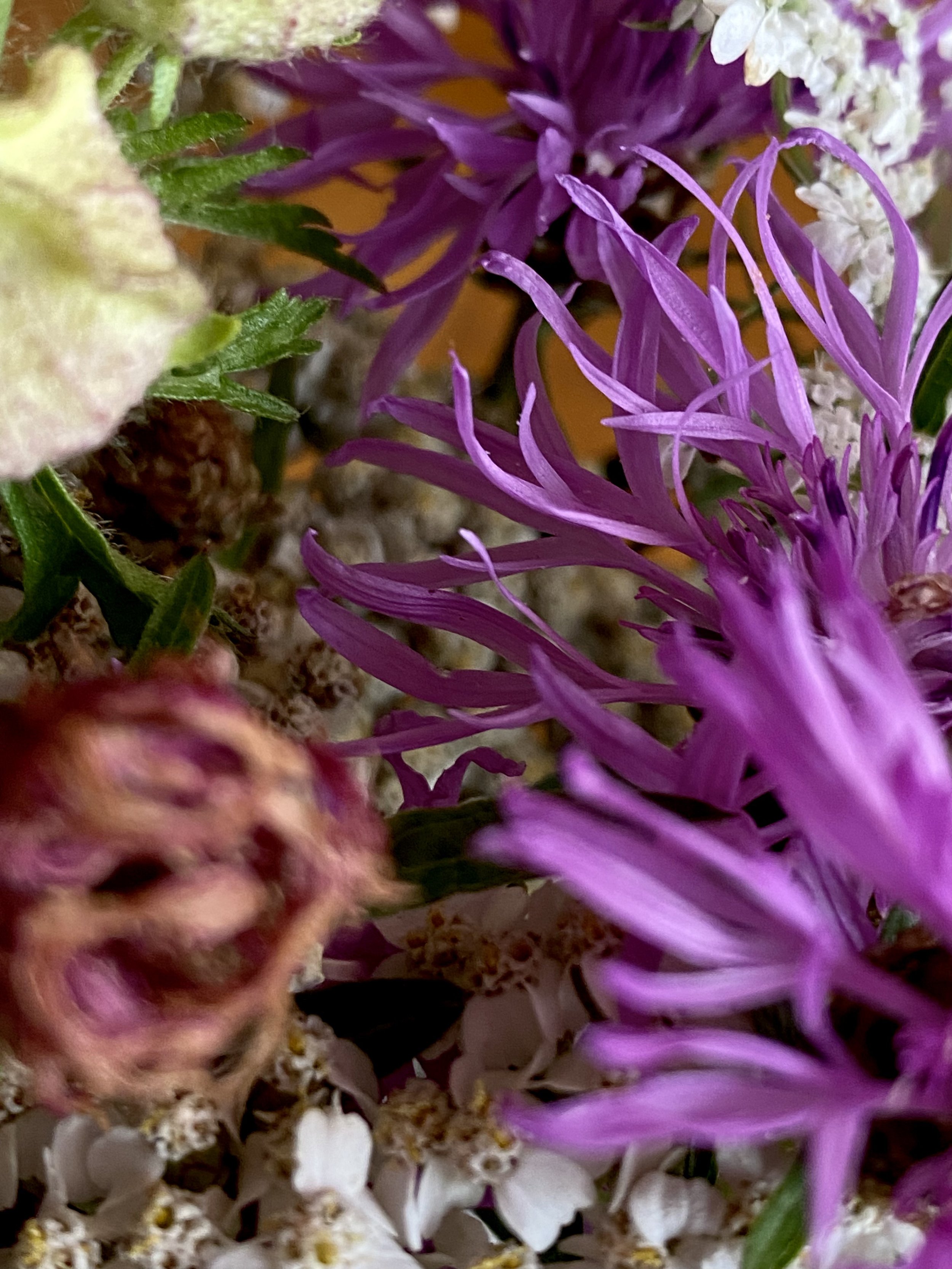
End of September: Meadows. Currently one of my biggest joys: exploring the meadows that slope around the Altenburg hill above Bamberg, spending time in that infinite and ever-changing ecosystem, bending down and looking at life up close, moving between grassland and hedges teeming with insects, wildflowers, birds, rosehips, berries. Every season paints these hills in new colours. Right now, a large variety of pale pinks and bluish purples are complemented with creamy white dabs of Queen Anne’s lace flotsam. The meadowflowers’ evocative German names are like poetry; Wiesenflockenblume, Herbstzeitlose, Wiesenschaumkraut, Gamander-Ehrenpreis, Schafgarbe …
Here, my search for this week’s colour combinations is accompanied by one of my grandmother’s hand-crafted blue stoneware vases.



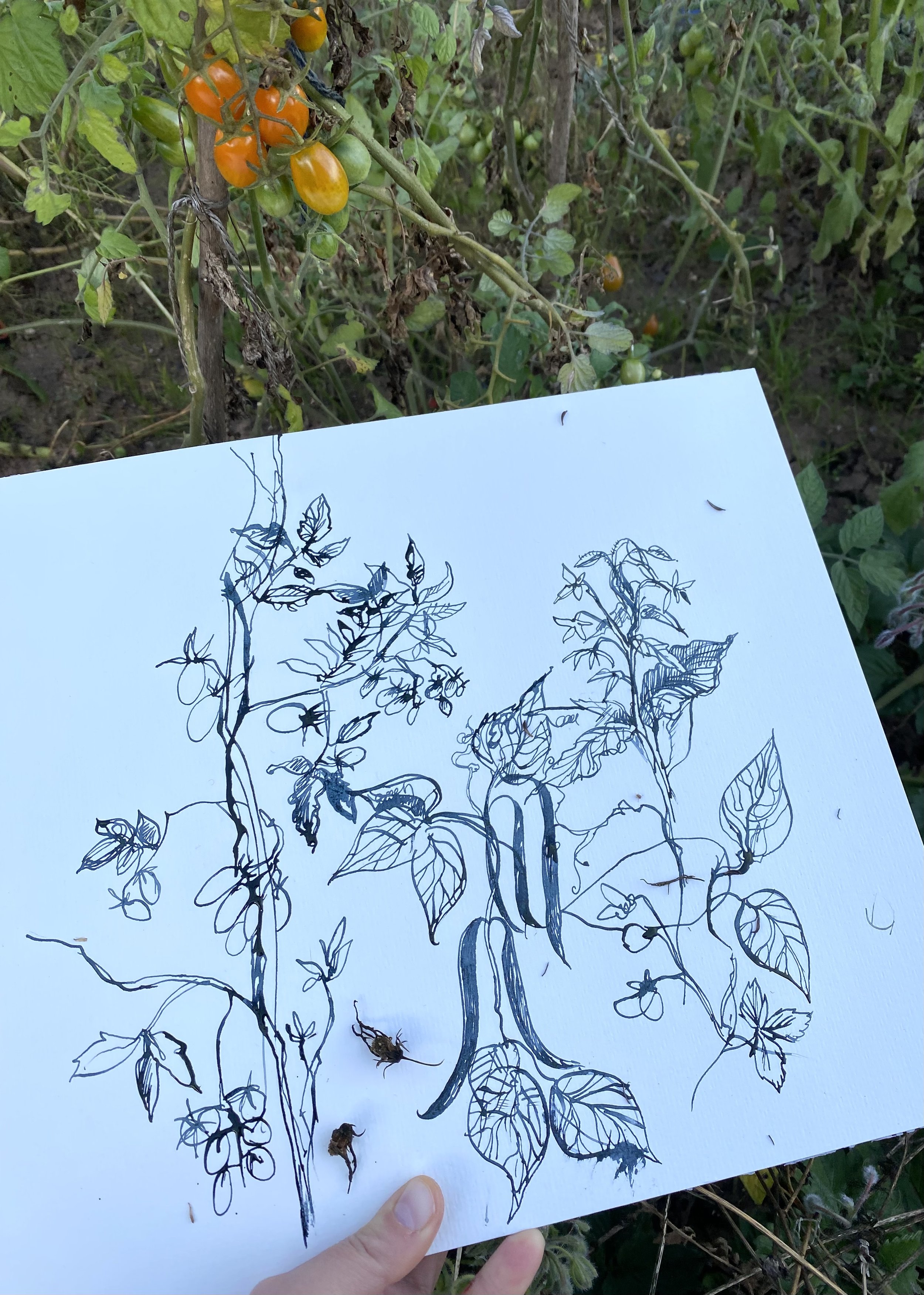
The early October vegetable patch: a place of solace and quiet joy and late-summer-early-autumn abundance, a place to sketch on a Sunday afternoon, a place to tend in meditation.
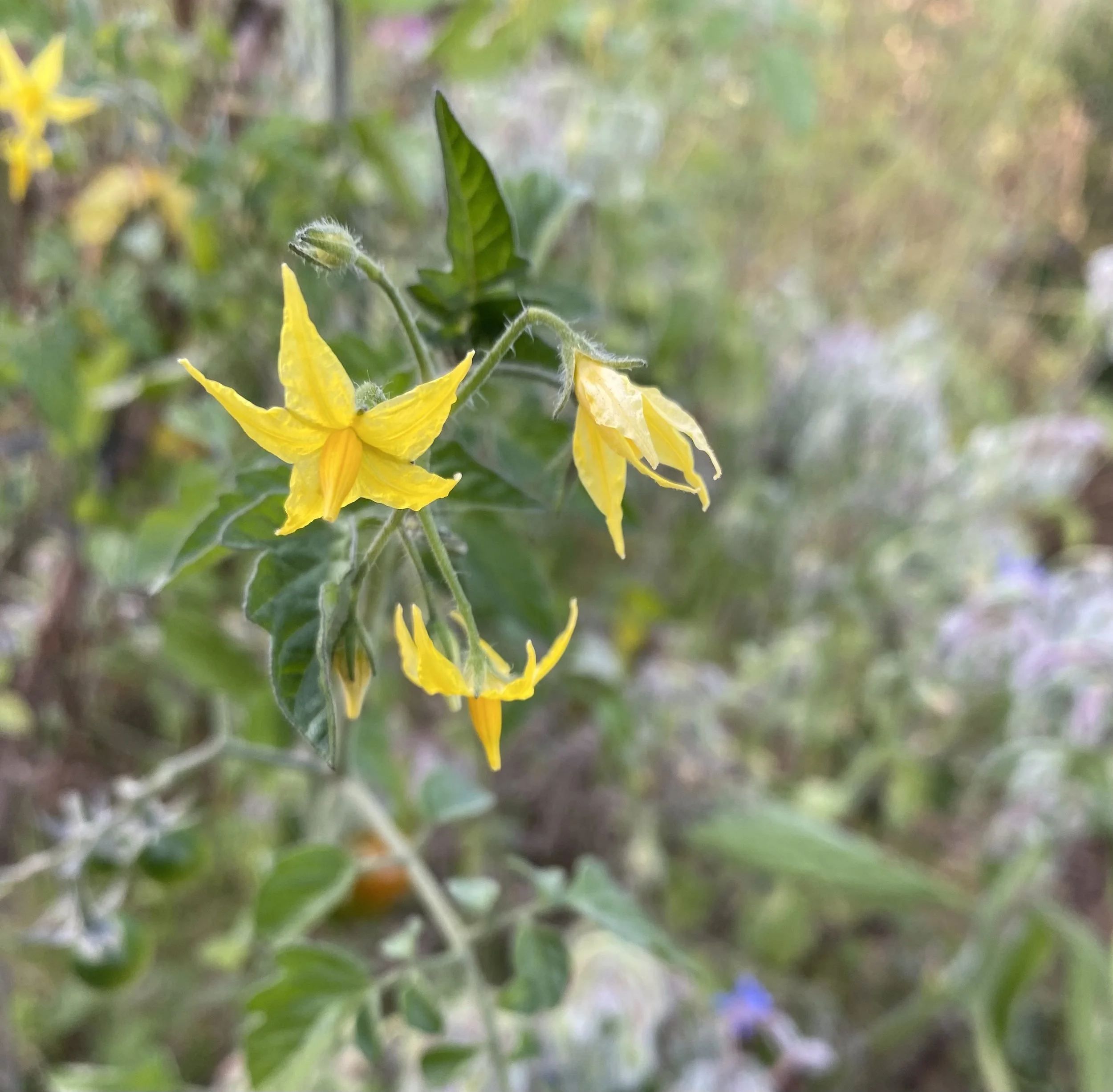
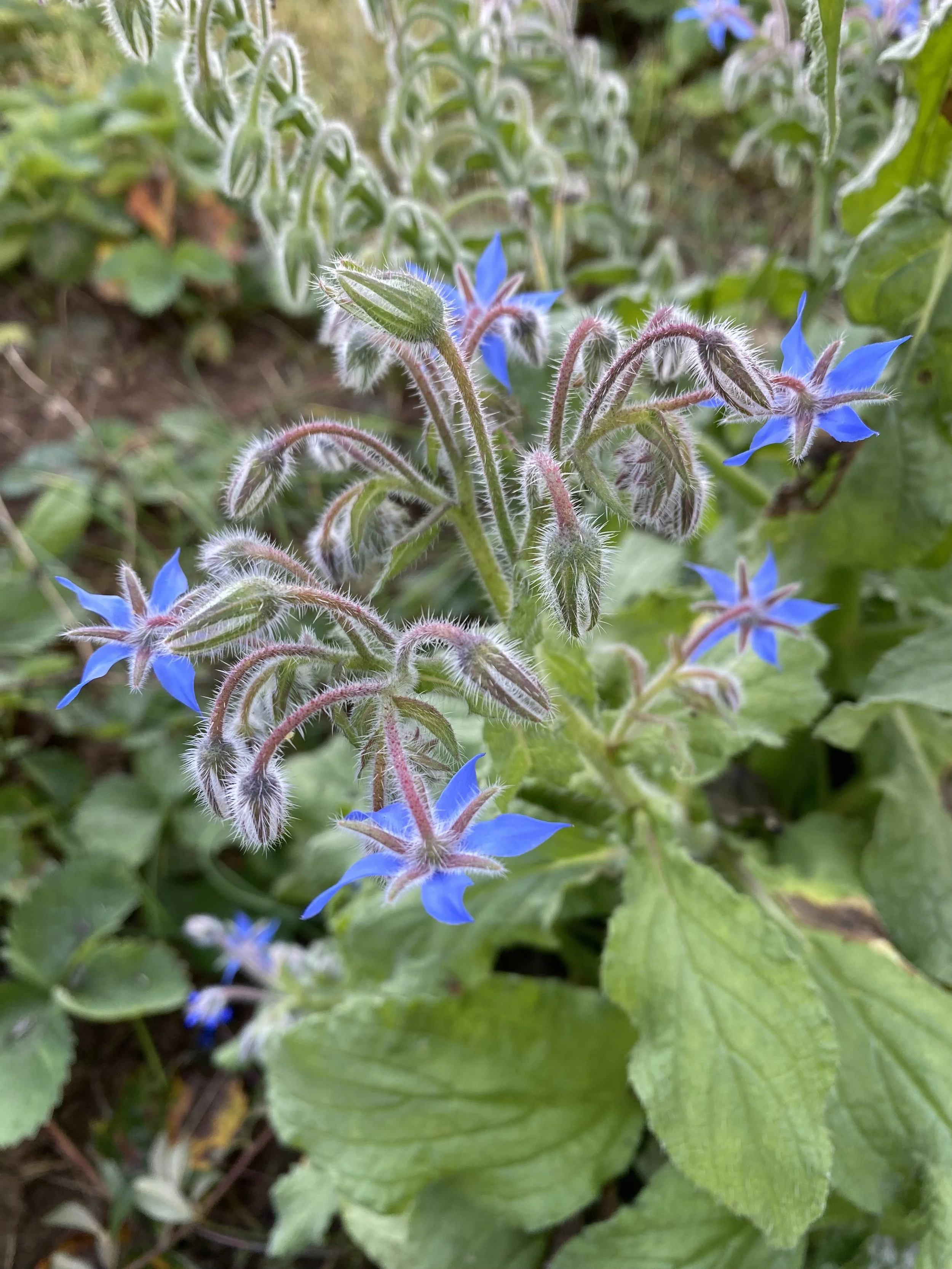
It’s the season for long rambling walks, for the very last of the wild plums, for harvesting apples in the garden, for slow transitions.



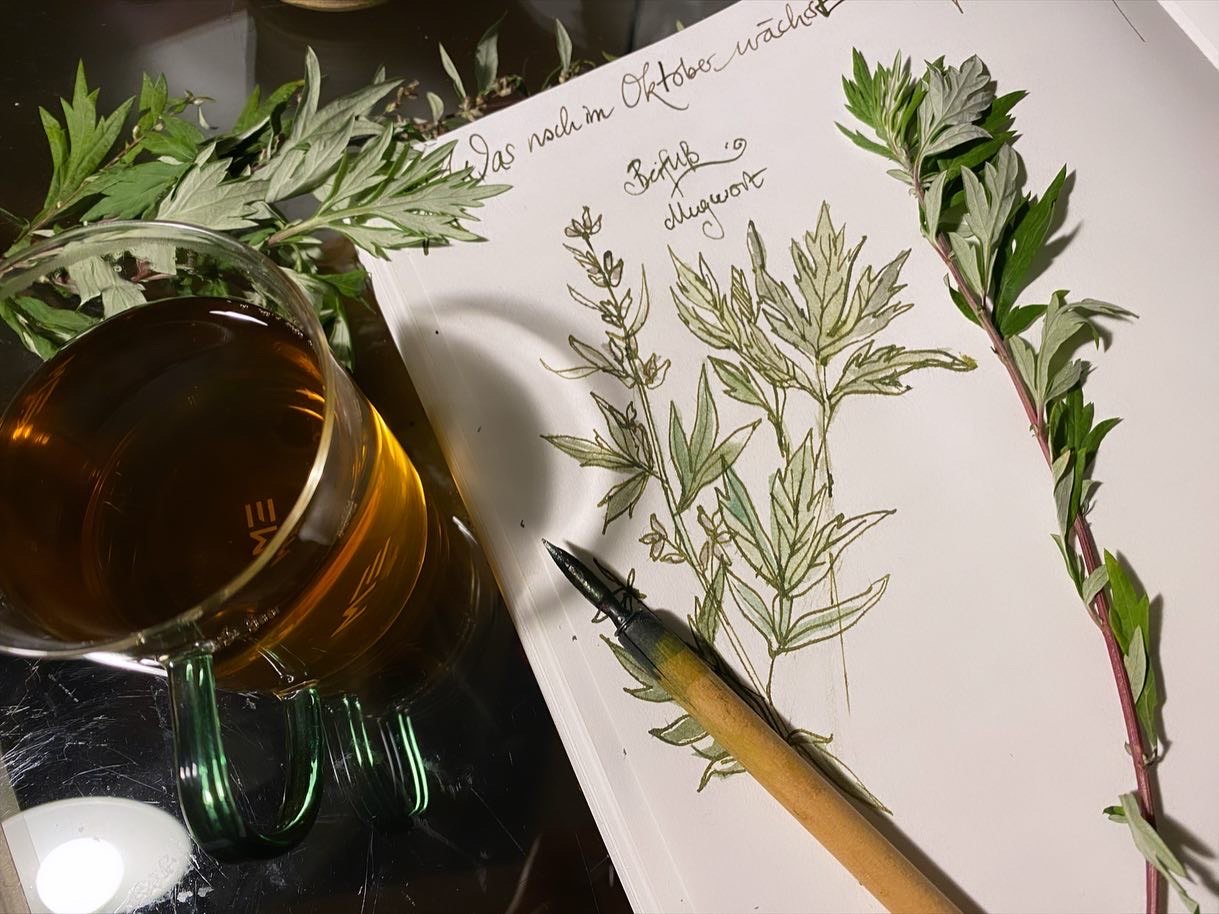
While October marches on and the first night frosts have hit us already, I’m documenting some of the wildflowers in my sketch book that are still to be found in the meadows this late in the season: mugwort, yarrow, knapweed, the occasional Queen Anne’s lace bobbing above the green sea, and some other stragglers too. Most spring and early summer blossoms are long gone.

It’s a time for collecting seeds, in the garden, at the road-side, in the fields. Now that I’ve watched flowers grow and unfold and blossom, I’ve seen their entire cycle of life and know their characteristics inside-out: I know the exact shade of yellow of that clump of St. John’s wort bushes, or the tantalizing aromatic smell of the cinnamon basil on my doorstep, or my favourite type of blue-bell. So it’s time to gather the promise of smells and flavours and colours and potential for next year.
GOLDEN HARVEST - OR MY 40 DAY AUTUMN CHALLENGE
So, I am embarking on an #autumnchallenge for myself. Here is an experiment: For the next 40 days, or until this year’s autumn craft show season starts on the 9th of November, I want to create and post something new every day. A thought, a photograph of my autumn meanderings, a snapshot of my jewellery bench, or a drawing.I will not post these daily snippets on any social media platforms I don’t own, but rather on this blog.
GOLDEN HARVEST - OR MY 40 DAY AUTUMN CHALLENGE
I have become increasingly disillusioned and alarmed by social media. I love seeing a kind of chronicle of my work, with colours, inspirations, studio snapshots and finished artwork curated into that neverending tiled layout. I love selecting images thoughtfully, matching moods and colours. But the perils of social media have become impossible to ignore, and we know it. Yet, we creatives (I) cling to these platforms, thinking that they are essential for reaching more people, for displaying our work. And it’s true, it’s difficult to come up with a benign alternative.
So, I am embarking on an #autumnchallenge for myself. Here is an experiment: For the next 40 days, or until this year’s autumn craftshow season starts on the 9th of November, I want to create and post something new every day. A thought, a photograph of my autumn meanderings, a snapshot of my jewellery bench, or a drawing. Some kind of real creative output. The overarching theme for me now is the changing season around me, harvesting, the golden slanted light, the stark contrast between the living and the dying.
I will not post these daily snippets on any social media platforms I don’t own, but rather on this blog.
The purpose of this 40-day immersion is two-fold.
I want to see if I can create a curated chronicle of ideas that will give me the same sense of satisfaction elsewhere than on my Insta feed. But in an online space without the distractions, without the echochambers, and without the precarious feeling that my creative work is no longer under my own control.
More importantly, I want to generate momentum for another productive period of making, I want to dive into the studio, to draw, to enamel, to saw and bend and solder and compose, to put together what I have gathered over the past few months and watch whatever emerges. I want to share this process with those who want to see, but without making myself dependent on likes and responses. And I want to hold myself accountable, to move against the tide of short attention spans and superficial ideas and lack of concentration and decline in deep though that is spreading across the globe like an epidemic.
If you wish to accompany me on my explorations, you are exactly right here on my blog. I’ll see how I feel and reflect on this period of making - hopefully a rich October harvest - afterwards.

Photograph by Knipserchris.
Stipendium "Junge Kunst und Neue Wege"
Im Sommer 2022 erhielt ich das Stipendium „Junge Kunst und Neue Wege“ des Bayerischen Staatsministeriums für Wissenschaft und Kunst, das mir erlaubte, mich einem größeren künstlerischen Projekt zu widmen. Im Rahmen dieses Stipendienprojekts habe ich die Kollektion SYBILLA entwickelt, die auf den Herbstmessen dieses Jahres zum ersten Mal präsentiert wird.


“JUNGE KUNST UND NEUE WEGE”
Arbeitsergebnisse eines Stipendiums des Bayerischen Staatsministeriums für Wissenschaft und Kunst
Auf Deutsch.
Im Sommer 2022 erhielt ich das Stipendium „Junge Kunst und Neue Wege“ des Bayerischen Staatsministeriums für Wissenschaft und Kunst, das mir erlaubte, mich einem größeren künstlerischen Projekt zu widmen. Im Rahmen dieses Stipendienprojekts habe ich die Kollektion SYBILLA entwickelt, die auf den Herbstmessen dieses Jahres zum ersten Mal präsentiert werden soll. In diesem Blogeintrag folgt eine detaillierte Beschreibungen sowie zahlreiche Abbildungen des Arbeitsprozesses. Mitunter sind weitere Einträge dieses Blogs unterverlinkt, die einige der recherchierten Themen zusätzlich aufgreifen und vertiefen.
Zielsetzung
Ich hatte mir in diesem Projekt zum Ziel gesetzt, eine besonders große und komplexe Arbeit in Angriff zu nehmen, bei der meine Arbeitsweise nicht vom potentiellen wirtschaftlichen Erfolg des Resultats beeinflusst sein sollte. Insbesondere wünschte ich mir Zeit und Mittel, umfangreicher mit verschiedenen Emaillefarben und -techniken experimentieren zu können. Ich wollte durch die Verbindung von tragbarem Schmuck und Installation Arbeiten schaffen, die die Abgrenzung zwischen Angewandter Kunst, Schmuck und Objekt verwischen. Inhaltlich wollte ich mich in das Thema (Paradies-)Gärten vertiefen und einzelne Symbole daraus gestalterisch in meiner Arbeit hervorheben. Die Arbeit sollte in einer Installation gipfeln, mehrschichtig und ganzheitlich wie ein Ökosystem gedacht.

Pinnwand am Arbeitsplatz, bedeckt mit Zeichnungen, Experimenten, halbfertigen Emaille-Elementen und Materialproben.

Erste Entwürfe mit dreiblättrigen Blüten, am Arbeitsplatz an die Wand gepinnt.

Tuschezeichnung. Die archetypische Form wird durch zahllose Wiederholungen immer wieder variiert.
Arbeitsprozess & UMSETZUNG
Die Umsetzung dieses Projekts begann zunächst mit vielen Zeichnungen (freiere Skizzen und lösungsorientierte Entwurfszeichnungen) und Recherchen. Ich beschäftigte mich intensiv mit Themen wie etwa historischen Paradiesvorstellungen, mit der mittelalterliche Suche nach dem Garten Eden, und dem neuzeitliche Interesse am Forschen und Sammeln von (aus westlicher Sicht) „exotischen“ Pflanzen, Tieren und kulturellen Objekten, die in botanischen Sammlungen, Florilegien und Wunderkammern präsentiert wurden. In dieser Zeit rutschte mein Fokus vom Granatapfel (mit dem ich mich schon einige Jahre intensiv beschäftigt hatte) als zentrales Symbol des Paradiesgartens, mehr in Richtung der ästhetisierten botanischen Zeichnungen des 17. und 18. Jahrhunderts im Allgemeinen. Speziell kristallisierte sich die stilisierte drei- oder sechsblättrige Blüte als Symbol der botanischen Neuankömmlinge in Europa für mich als gestalterisches Element heraus. Die achsensymmetrische Blüte ist eine visuelle Verschmelzung von Ordichee, Tulpe, Schwertlilie und anderen Zwiebelgewächsen mit farbenprächtiger und „exotischer“ Blütenfülle.

Ich arbeitete an das Thema heran: Es entstanden sowohl lösungsorientierte Entwurfszeichnungen als auch durch freiere Skizzen und Collagen.
Dabei fasziniert mich speziell der fließende Übergang zwischen Imagination und naturwissenschaftlicher Beobachtung in den botanischen Illustrationen des 17. und 18. Jahrhunderts. Oft sind in Zeichnungen dieser Zeit komplette Ökosysteme dargestellt, wobei die Fantasie Wissenslücken gekonnt ausfüllt oder Beobachtetes frei ausschmückt. Beispielsweise werden Pflanzen und Insekten gemeinsam abgebildet, die in Wirklichkeit keine spezielle Beziehung zueinander haben. Auch werden Pflanzen gleichzeitig blühend, Früchte tragend und Samen formend dargestellt – ein biologisch unmöglicher, mythisch-paradiesischer Zustand also (und gestalterisch von großem Interesse). Komposition und Ästhetisierung sind dabei sehr wichtig. Eine Künstlerin und Naturforscherin, deren Arbeiten hier ganz besonders hervorstechen, ist Maria Sybilla Merian (1647-1717). Meine Kollektion SYBILLA, die hier in diesem Stipendienprojekt ihren Anfang nimmt, ist nach ihr benannt.

Jede Farbe hat ihre eigene Persönlichkeit, ihre eigene Ausstrahlung. Deshalb ist es notwendig, einen Katalog der vorhandenen Farben zu erstellen. Dieses Wandbild, das immer weiter ergänzt werden kann, stellt eine einfache Version dar; komplexere Farbpaletten zeigen dieselbe Emaillefarbe oft auf drei bis sechs verschiedenen Untergründen, denn besonders transparente Farben wirken sehr unterschiedlich je nach Trägermetall und Fondant-Unterlage.
Dem Zeichnen, Skizzieren und Lesen folgten zahlreiche Emaille-Experimente. Ich konnte durch das erhaltene Stipendium eine große Menge neuer Emaillefarben und Zubehör sowie Kupfer und Silber zum Emaillieren erwerben. Aus den neuen Farben fertigte ich als erstes Farbproben, die dazu dienen, die Charaktereigenschaften der Farbe zu testen und als Farb-Referenz für zukünftige Arbeiten zur Verfügung zu haben. Konkret bedeutet das also, dass die pulverisierten Emaillefarben gewaschen, auf kleine Kupfer- oder Silberplättchen aufgetragen und anschließend aufgebrannt und katalogisiert werden müssen. Auf der Suche nach spannenden Kombinationen kombinierte ich in manchen Experimenten mehrere Farben in Lagen übereinander.

Die Emaillefarben werden von mir assoziativ mit persönlichen Farbnamen versehen. Hier ist eine Reihe von Proben abgebildet, die Übergänge verschiedner Farben ineinander zeigen. Ich bin in diesen Experimenten auf der Suche nach sanften, magisch schimmernden Farbübergängen, die im Betrachter eine emotionale Reaktion auslösen.

Historische Emaille-Farbpaletten aus den 60er oder 70er Jahren, die ich mit einem alten Emaillekonvolut übernommen habe. Hier sieht man links den Test auf Silber, mit verschiedenen Unterlagen, und rechts auf Kupfer, ebenfalls mit und ohne Fondant.
Experimente dieser Art sind immer sehr arbeitsintensiv, aber nur so sind auch zufällige und neue Entdeckungen möglich. Da die zu emaillierenden Elemente meiner Kunstobjekte ebenfalls sehr zeitaufwendig goldschmiedisch gefertigt werden (ausnahmslos von Hand ausgesägt, aufgetieft, gelötet, konstruiert), möchte ich natürlich vorher sicher sein, mit welchen Farbkombinationen die gewünschten Effekte erzielt werden können. Trotzdem ist der Emailleprozess selbst von vielen Variablen beeinflusst und das Arbeitsergebnis oft unvorhersehbar. Genau dieses Zusammenspiel von Planung und Spontanität macht für mich den Reiz am Emaillieren aus: Dem Arbeitsprozess wohnt für mich eine Magie inne, die es hervorzulocken gilt. Das funktioniert nicht mit Wille und Gewalt, sondern nur durch Zeit und Zuwendung, Geduld, Demut, und dem Wissen, dass dieser Emailleprozess mir ein Tor zu etwas Größerem, Mitreißenden öffnen kann.

Mit einem Aushauer und Hammer werden Ronden aus Kupfer für Emailleproben geschlagen.
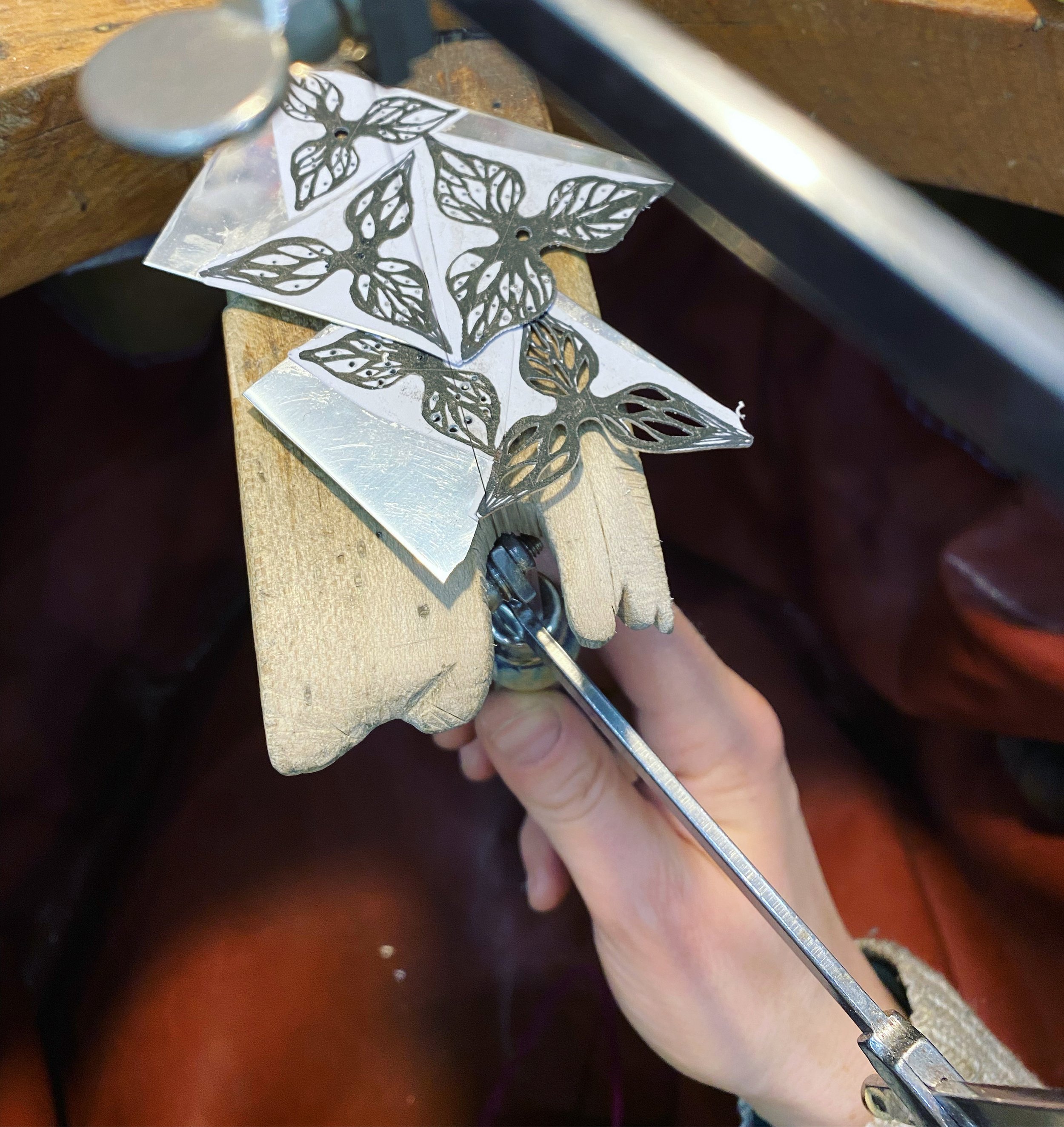
Vorbereitung: Blüten mit Fraßlöchern werden sorgfältig mit der Goldschmiedesäge ausgesägt. Dabei muss das Sägeblatt für jede einzelne Öffnung ausgespannt, durch ein Loch gefädelt und wieder festgezogen werden. Die Spuren des Handgemachten verleihen dem Stück eine spürbare Lebendigkeit, die nicht mit lasergeschnittenen Alternativen zu erreichen wäre.

Collier SYBILLA I auf der Werkbank, nur noch die allerletzten Handgriffe sind zu tun. Der Reigen aus Emailleblüten ist in patiniertes Silber gefasst und mit üppigen Granatsträngen und grauen Perlen kombiniert.
Im Herbst 2022 hatte ich einen ersten großen Halsschmuck der Kollektion SYBILLA entwickelt: Ein barock anmutendes, opulentes, bordeauxrot emailliertes Collier aus archetypischen dreiblättrigen Blüten, teils durchbrochen, wie von Insekten zerfressen, die mit mehrsträngigen Granatketten verbunden sind. Die dreifach gespiegelte achsensymmetrische Blüte als Archetyp der „exotischen“, aus fernen Ländern importierten Blume steht im Zentrum des Colliers. Gefasst sind die Blüten in weitere, noch stärker zerfressene Blüten aus patiniertem Silber. Es ist ein Reigen aus Ordnung und Chaos, aus Schönheit und Zerfall, aus Fressen und Gefressenwerden.

SYBILLA I - die erste Kreation der neuen barock Kollektion.

Zum Jahresende hin ergab sich eine spannende Kooperation mit der Schneidermeisterin und Modegestalterin Sonja Schön, die das neue SYBILLA-Collier mit diesem Outfit der Kollektion SPREAD YOUR WINGS kombinierte.
Model: Imke Hout; Fotograf: Joao Pinheiro; Maske: Sophie Schütt.
Ein zweiter Halsschmuck ist aktuell im Entstehen, sowie parallel mehrere kleinere Stücke wie Statement-Ohrringe und Tischobjekte. SYBILLA II ist noch ausladender, mit zart changierenden rosa-schwarz-opalweißen Blütenblättern, die mit Süßwasserperlen zu einer opulenten Komposition zusammengefügt werden sollen. Dieses Stück wird in ein größeres Aquarellkunstwerk eingefügt, sodass die emaillierte Blütenelemente eine Verwischung zwischen zweidimensionalen und dreidimensionalen Darstellungen, zwischen Objekt, Angewandter Kunst und Schmuck bewirken.

Zentrale Blüte des Statement-Colliers SYBILLA II im Emaillierprozess.

In einer Mischung aus opalisierendem Weiß, Hellrosa (das den Namen “Geisha Blush” trägt) und rotstichigem Schwarz entsteht diese betörende Farbenkombination.

Entwurf für das Collier SYBILLA II aus (zerfressenen) emaillierten Blüten, Silber, üppigen Strängen von Süßwasserperlen, und eleganten Tropfen aus schwarzem Spinell.

Auf dem Arbeitstisch: SYBILLA OHRSCHMUCK aus blau-violett emaillierten Blüten, mit patiniertem Silber, kostbaren Tahitiperlen bläulichen Süßwasserperlen und blassgelben Diamanten im Rosenschliff kombiniert. Die Edelsteine und Perlen erstand ich teilweise auf einer Studienreise nach Pforzheim im Juli 2022, wo ich im Lager der Firma SCHÜTT in bezaubernde Edelsteinwelten eintauchen durfte.

SYBILLA OHRSCHMUCK aus blau-violett emaillierten Blüten, mit patiniertem Silber, kostbaren Tahitiperlen, bläulichen Süßwasserperlen und blassgelben Diamanten im Rosenschliff kombiniert.
Pandemie, Stipendium & Weiterentwicklung
Die Corona-Pandemie bedeutete für mich, wie für so viele im Kreativbereich, einen großen Einschnitt in meinen Arbeitsprozess. Mir fehlte es an Zeit, Freiraum und Material, mich an etwas Größeres zu wagen, das nicht zwangsläufig mit wirtschaftlichen Erfolgen verknüpft war. Diese Freiheit hat mir nun das Stipendienprogramm „Junge Kunst und Neue Wege“ geschenkt.
Ich konnte mit Hilfe des Stipendiums eine ganz neue Kollektion zu entwickeln. Die hier abgebildeten Arbeiten sind nur der Anfang; in den nachfolgenden Monaten sind noch weitere Arbeiten dieser Kollektion entstanden und werden kontinuierlich weiterentwickelt - sowohl kleinere Stücke und ausladende Statement-Colliers, als auch multidisziplinäre Installationen. Hier dazu einige Beispiele:

SYBILLA. Doppelbrosche. 2023. Emaille, Sterlingsilber, Kupfer, Perlen (Süßwasser und Barock), Labradorit, Onyx, Amethyst, 750er Gold, fleckfreier Stahldraht. Emailliert, handgesägt, gelötet.

Detail: SYBILLA Collier. 2022-2023. Emaille, Kupfer, Silber, Granat, Spinell, schwarze Barockperle, 750er Gold. Emailliert, handgesägt, konstruiert.

SYBILLA Ohrschmuck. 2023. Emaille auf Feinsilber, Amethysttropfen (nachhaltig, von der Firma SCHÜTT), rosa Süßwasserperlen, 750er Gold, Sterlingsilber. Von Hand gesägt, emailliert, konstruiert.
SAILING FOR EDEN
Christian paradise was understood by many medieval theologists as a very specific place on earth that marked the beginning of human time. Medieval mapmakers took up the challenge to locate the mysterious Garden of Eden cartographically.

Sailing for Eden
Columbus & the Medieval Search for Paradise
Written in English.
In July 1498, after a perilous sea journey, a Genoese admiral and his crew sighted land, at long last. The admiral was Christopher Columbus and this was the third of his four voyages of discovery, venturing further south than on his previous expeditions. The official reason for his expedition was to discover a sea route to Asia; however, Columbus also nurtured more private ambitions concerning the whereabouts of paradise.
Although famous for discovering America, Columbus never realised that he had indeed found a continent unknown to Europeans. He believed himself to be near Asia’s easternmost part, having calculated that Asia must be a few thousand nautical miles to the west of Europe (Scafi 2013:80). The fleet had been becalmed for weeks in scorching temperatures; fearing the threat of mutiny and sickness (perhaps the crew were adherents of the wide-spread medieval belief that the equatorial zone, or the ‘torrid zone’, was inhabitable to humans and that, as the Greek scholar Erastothenes believed, the sun would burn men alive (Rushby 2006:68)), Columbus eventually turned west and reached modern-day Trinidad.
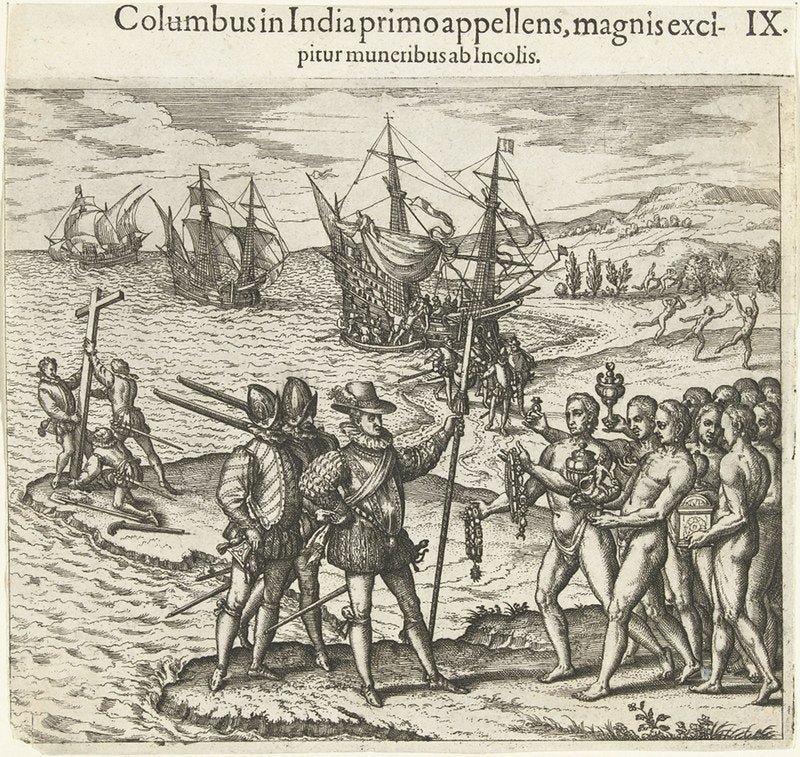
This iconic engraving by Theodore de Bry, from 1592, shows Columbus disembarking on the Caribbean island of Hispaniola in 1492. Source: Public Domain Review.
Calculations based on his probably erratic compass readings lead him to the peculiar postulation that he was sailing up a slope (Rushby 2006:67). He later wrote to King Ferdinand and Queen Isabella of Spain, who had partly funded his mission: “I have found such great irregularities that I have come to the following conclusions concerning the world: that it is not round as they describe it, but the shape of a pear, which is round everywhere except at the stalk, where it juts out a long way, […] something like a woman’s nipple” (cited in Rushby 2006:68). Columbus concluded that this great earthly nipple was the exact point where the long-lost Garden of Eden was to be found, and that he was going to play a pivotal, and possibly well-rewarded, role in its discovery (Rushby 2006:68).
Christian paradise was understood by many medieval theologists as a very specific place on earth that marked the beginning of human time. Medieval mapmakers took up the challenge to locate the mysterious Garden of Eden cartographically. This endeavour entails a fascinating fragment of Western intellectual history, not least “because of the inherent paradox of mapping the unmappable” (Scafi 2013:30). Towards the end of the 15th century, the idea of an earthly paradise in a real, geographical location somewhere in the east was still very much ingrained in the public imagination. Paradise was believed to be inaccessible as it was situated on top of a very high mountain, thus Columbus’ conclusion of sailing upwards led him to the belief that he was advancing towards paradise.
Christian interest in the location and mapping of an earthly paradise, sparked in the fifth century CE by St Augustine’s literal interpretation of Genesis, was more or less restricted to Latin Christian Europe. Eastern Christians preferred a more symbolic reading of the paradise narrative (Scafi 2013:30). Early debating on the nature and location of the Garden of Eden resulted in two main approaches, one allegorical and one literal. The literal interpretation produced a story of paradise tied closely to the plane of human history; it brought the divine almost into reach. St Augustine believed that to doubt the historicity of the Bible implied that Scripture could be questioned; and to deny the historical existence of Adam and Eve and the story of the Fall was to risk the whole Christian dogma falling apart (Scafi 2013:43). Such a literal approach would imply a very real site for paradise. The question of paradise’s whereabouts caught the imagination of biblical exegetes “who drew out of Augustine’s writings the latent geographical discourse and who named the place where mapmakers could put paradise” (Scafi 2013:44).
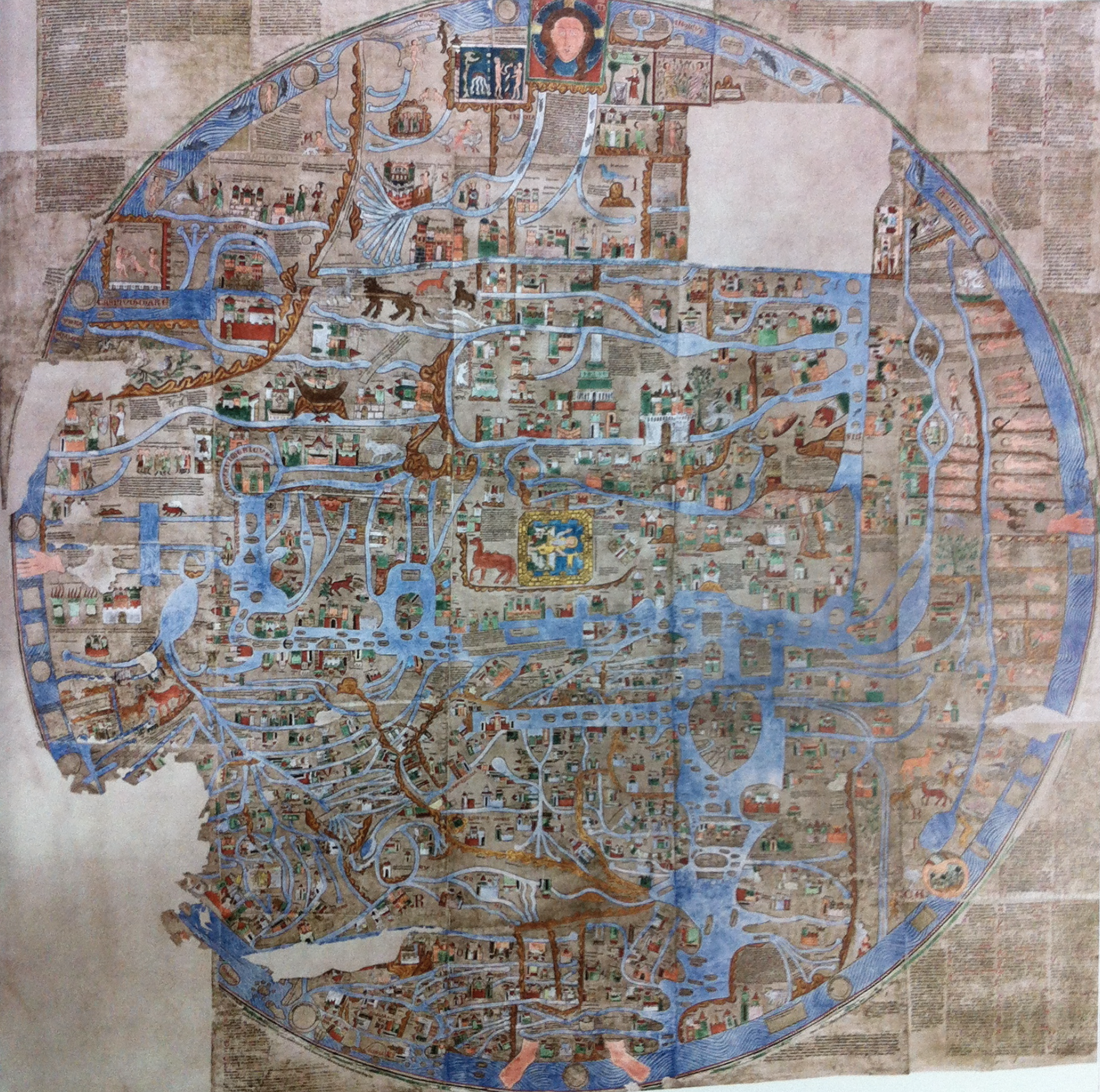
Ebstorf Mappa Mundi, late 13th to early 14th century, discovered in the Abbey of Ebstorf near Lüneburg in Northern Germany. Source: Lanschaftsmuseum.de.
The Ebstorf World Map is a splendid example of medieval ideas of paradise. Possibly made in Ebstorf in Northern Germany and dated between the late thirteenth and early fourteenth century, the Ebstorf world map depicts the Garden of Eden as an “event-place at the very boundary of time and space” (Scafi 2013:72). It is represented at the very top of the map by a rectangle enclosing Adam and Eve, the four rivers of paradise as they disappear into the ground, the Tree of Life and the Tree of Knowledge of Good and Evil. The mysterious garden is located in the East, near India. Unlike modern maps, it is oriented with east is the top, signifying it as the most important direction because of the presence of paradise. A giant Christ is embracing the world; his feet can be seen sticking out at very bottom in the west.
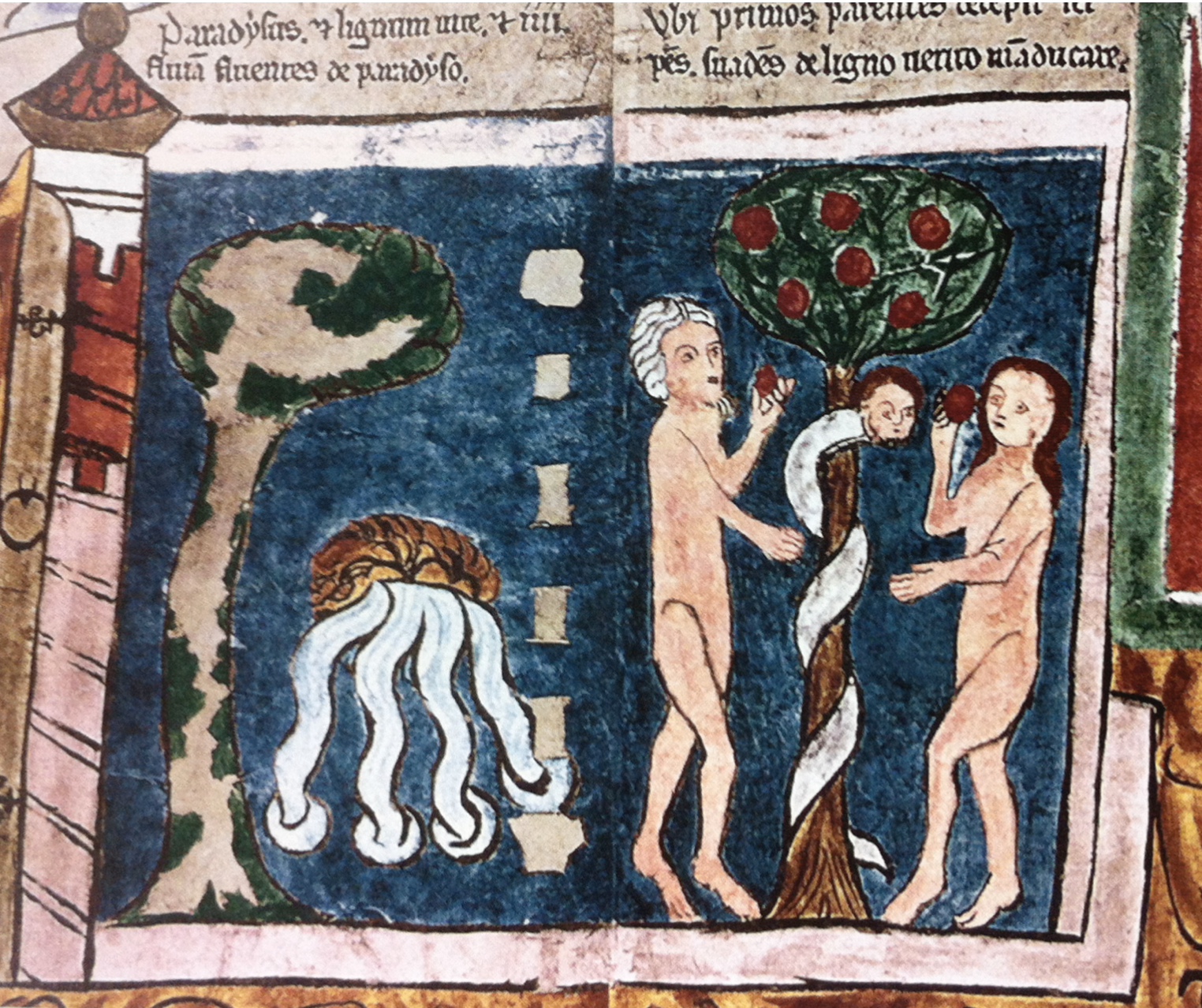
Detail of the Ebstorf Mappa Mundi: Adam and Eve in the Garden of Eden.
While Columbus certainly had more modern navigational maps at his disposal, he did believe – rightly so – that by sailing westward around the globe, he could reach what lay East of Europe. Finding himself approaching the mouth of the Orinoco river, Columbus was amazed by the vast quantities of freshwater flowing into the ocean. Contemporary depictions of paradise imagined a great river near paradise, the source of the four paradisiacal rivers that connected earth and paradise. This, together with the fertility and beauty of the land they sailed alongside, convinced Columbus that he was on the outskirts of the actual Garden of Eden, as he wrote in his log: “All this provides great evidence of the Earthly Paradise, because the situation agrees with the beliefs of those holy and wise theologians” (cited in Rushby 2006:69). An encounter with this blessed land’s inhabitants swept away all remaining doubts: “Canoes came to greet them and Columbus noted the finely proportioned people who wore pearls and gold on their necks and arms” (Rushby 2006:69) and who heaped the explorers with gifts of maize, fruits and tame parrots. The inhabitants seemed to have no sense of private property or ownership – something that amazed the Europeans navigators beyond measure. Although not new to Columbus, those parrots seemed significant. In Latin Christian theology, all animals could speak before the Fall. Now, “they were on the very doorstep of Eden and talking birds appeared” (Rushby 2006:69).
Although Columbus was a devout Christian, he was most certainly also influenced by other, more ancient, models of paradise: Ovid’s description of the Golden Age in his Metamorphosis when men and women lived together peacefully without the need for laws in a perpetually fruitful rural idyll, the “rough-hewn place of innocence and rugged virtue” (Rushby 2006:70) of Arcadia, and the more refined perfection of Elysium. Features of these classical myths had been incorporated into Christian iconography for centuries.
Having reached his staggering conclusion of paradise’s proximity, Columbus never attempted to reach paradise itself; obviously it was inaccessible and beyond the horizon for ordinary humans (Scafi 2013:80). As he wrote in his log, he assumed the stream leading up to the summit to be impossible to navigate (Scafi 2013:80). For him, the “mystery that paradise could be simultaneously present on earth and also in the beyond was sufficient in itself” (Scafi 2013:80). Christian belief in an earthly Eden rested on its inherent duality: its separateness and simultaneous connectedness (through the four rivers) is the key to understanding the medieval worldview.
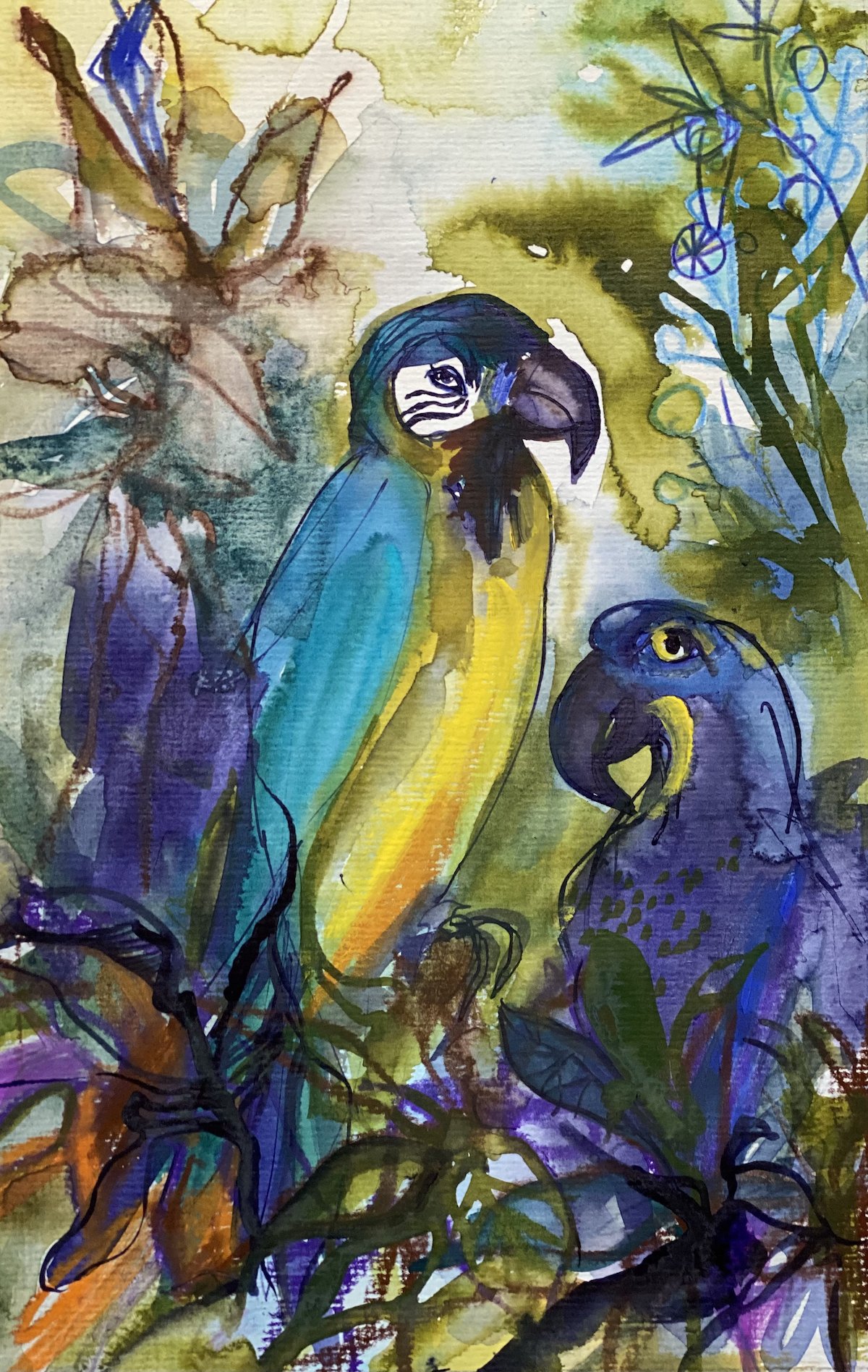
Talking Birds, watercolour illustration by Nora Kovats.
By attempting to unravel the geographical contradictions of paradise, renaissance Christian scholars found that they had set themselves a near impossible task. The notion of an earthly paradise was essentially a paradox, part of a real geography yet escaping ‘normal’ conditions such as climactic zones and scientific laws (Scafi 2013:82). In paradise there were no seasons, just a perpetual spring-summer, with fruits and flowers thriving simultaneously all year round. The question where on earth such a perfectly temperate place could be found pre-occupied many scholars and explorers; as did it eventually fuel Columbus’ imagination. Towards the end of the middle ages, the problem of earthly paradise’s exact location assumed greater significance in light of the recovery of astronomical geography – a part of the overall intellectual revolution indebted to Arab intellectuals in Spain, who (re)introduced ancient Greek and Islamic learning to Europe (Scafi 2013:82). The new geographical and astronomical data, allowing for more detailed maps and greater navigating precision, distanced the notion of earthly paradise further and further from any real terrestrial location. Ultimately, “deprived of its aura of mystery and being dissected as a topographical feature, the Garden of Eden was to prove to be in an inaccessible nowhere (Scafi 2013:83).
In his mistaken discovery of Eden, Columbus had indeed marked a turning point in the history of paradise-seeking (Rushby 2006:77). Broken in health and raving with religious obsession regarding the cataclysmic end of time and restoration of paradise on earth, Columbus died in 1509, “steadfastly believing that Cuba was part of Asia, also that he had located the Garden of Eden somewhere to the south of it, and that Christ was coming soon, thanks to his own efforts” (Rushby 2006:76). The wonderful possibilities of the new land, America, drew European minds away from old struggles between Islam and Christianity – at least for a while. The focus had “shifted away from the apocalyptic fever of religious battles in the Holy Land and towards nature and America” (Rushby 2006:77). Suddenly, earth had wider, unexplored spaces filled with novelties and distractions; spaces that needed to be explored, treasures of discoveries to be hauled back and re-assembled at home in a paradisiac microcosm of the known world: the birth of the cabinet of curiosities, the botanical garden and private ‘natural science’ collections.
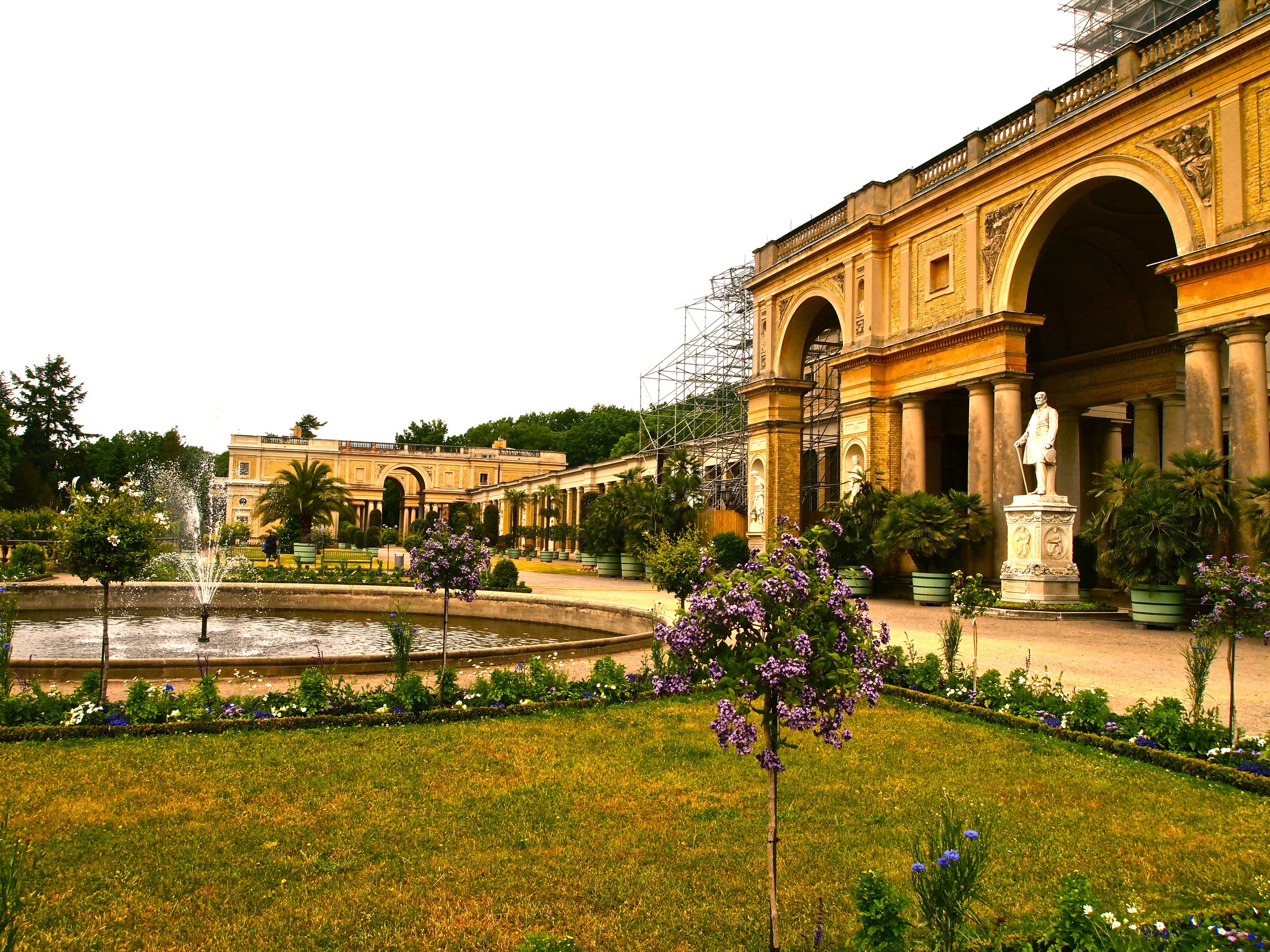
Orangery at the Botanical Gardens in Florence. The Orto Botanico is among the earliest botanical gardens, founded in 1545 by Grand Duke Cosimo dei Medici for the purpose of collecting and cataloging interesting plants, especially plants with medicinal properties. Photograph by Nora Kovats, 2015.
Sources:
· Hobhouse, Penelope, with Edwards, Ambra. 2019. The Story of Gardening. United Kingdom: Pavilion Books Company Ltd.
· Rushby, K. 2006. Paradise – A History of the Idea that Rules the World. United Kingdom: Constable Publishers.
· Scafi, A. 2013. Maps of Paradise. London: The British Library.
Fire · Colour · Light – On Enamelling and Becoming is a book about engaging with the art of enamelling, about my work set between meticulous craftsmanship and creative intuition, about a mysterious inner source of creativity, Nature as a teacher, and the search for meaning through artmaking.